
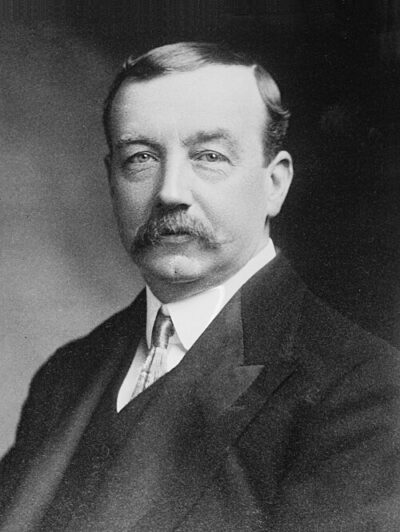
Arthur Henderson
Arthur Henderson was a British politician. Born September 13, 1863, in Anderston. Died October 20, 1935, in London. Positions held include Leader of the Opposition (1931–1932), Secretary of State for Foreign and Commonwealth Affairs (1929–1931) and Leader of the Labour Party (3 times) (1908–1932). Awards include Nobel Peace Prize and Wateler Peace Prize.
Facts
30 facts · 2 confirmed by two sources · 16 cited · 12 from one source
Where this comes from
Papalocal keeps its own record. It started from these sources; what each one said is kept here as it was copied, so a change on their side never changes this page by itself. Tap one to read its version.
What Wikidata says · copied November 16, 2026 · revision 2565458314
- Described as
- British politician (1863-1935)
- Other names
- Rt. Hon. Arthur Henderson
- Born
- September 13, 1863 · 9 references
- Died
- October 20, 1935 · 8 references
- Born in
- Anderston · 1 reference
- Died in
- London · 2 references
- Buried in
- Golders Green Crematorium · 1 reference
- Citizen of
- United Kingdom
- Occupation
- politician · 1 reference; trade unionist; Nobel Prize winner · 1 reference; minister · 1 reference
- Positions held
- Leader of the Opposition (1931–1932); Secretary of State for Foreign and Commonwealth Affairs (1929–1931); Leader of the Labour Party (3 times) (1908–1932); Labour Chief Whip (1925–1927); Secretary of State for Education (1915–1916); Member of the Privy Council of the United Kingdom (1915–) · 1 reference; Home Secretary (1924); Paymaster General (1916); member of the 36th Parliament of the United Kingdom (1933–1935); member of the 35th Parliament of the United Kingdom (1929–1931) · 1 reference; member of the 34th Parliament of the United Kingdom (1924–1929) · 1 reference; member of the 32nd Parliament of the United Kingdom (1923) · 1 reference; member of the 31st Parliament of the United Kingdom (1919–1922) · 1 reference; member of the 30th Parliament of the United Kingdom (1910–1918) · 1 reference; member of the 29th Parliament of the United Kingdom (1910) · 1 reference
- Political party
- Labour Party
- Awards
- Nobel Peace Prize (1934) · 2 references; Wateler Peace Prize (1933)
- Children
- William Henderson, 1st Baron Henderson · 1 reference; Arthur Henderson, Baron Rowley · 1 reference
- Wikipedias with a page
- 55
Wikidata item Q208665 (wikidata.org/wiki/Q208665), public domain (CC0). Copied November 16, 2026.
What Wikipedia says · copied November 16, 2026 · revision 1383763257
Arthur Henderson (13 September 1863 – 20 October 1935) was a British iron moulder and Labour politician. He was the first Labour cabinet minister, won the Nobel Peace Prize in 1934 and, uniquely, served three separate terms as Leader of the Labour Party in three different decades, and was elected to parliament in five by-elections in different constituencies. He was popular among his colleagues, who called him "Uncle Arthur" in acknowledgement of his integrity, his devotion to the cause and his imperturbability. He was a transitional figure whose policies were, at first, close to those of the Liberal Party. The trades unions rejected his emphasis on arbitration and conciliation, and thwarted his goal of unifying the Labour Party and the trade unions.
- Born, in its opening lines
- September 13, 1863
- Died, in its opening lines
- October 20, 1935
From the Wikipedia article “Arthur Henderson” (en.wikipedia.org/wiki/Arthur_Henderson), by its contributors, under CC BY-SA 4.0 (creativecommons.org/licenses/by-sa/4.0/). Copied November 16, 2026; not changed.
Confirmed Two sources agree. Cited One source, and it names where it got it. One source One source, without a reference of its own. Sources disagree The sources disagree. We show the best-supported value and keep theirs below.
