
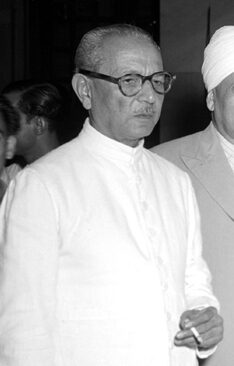
Asaf Ali
Asaf Ali was an Indian politician. Born May 11, 1888, in Seohara. Died April 1, 1953, in Bern. Positions held include Governor of Odisha (1948–1952) and Member of the Constituent Assembly of India (1946–). Educated at St. Stephen's College.
Facts
17 facts · 1 confirmed by two sources · 1 cited · 14 from one source · 1 where the sources disagree
What’s different
- Died: we show April 1, 1953 (Sources disagree). Wikipedia says April 2, 1953
Where this comes from
Papalocal keeps its own record. It started from these sources; what each one said is kept here as it was copied, so a change on their side never changes this page by itself. Tap one to read its version.
What Wikidata says · copied November 18, 2026 · revision 2553860793
- Described as
- Indian politician (1888-1953)
- Born
- May 11, 1888
- Died
- April 1, 1953
- Born in
- Seohara
- Died in
- Bern
- Citizen of
- British Raj (–1947); Dominion of India (1947–1950); India (1950–)
- Occupation
- lawyer; diplomat; jurist; politician
- Positions held
- Governor of Odisha (1948–1952); Member of the Constituent Assembly of India (1946–) · 1 reference
- Political party
- Indian National Congress
- Education
- St. Stephen's College
- Spouse
- Aruna Asaf Ali (1928–1953)
- Religion
- Islam
- Wikipedias with a page
- 20
Wikidata item Q684845 (wikidata.org/wiki/Q684845), public domain (CC0). Copied November 18, 2026.
What Wikipedia says · copied November 18, 2026 · revision 1377833104
Asaf Ali (11 May 1888 – 2 April 1953) was an Indian independence activist and noted lawyer. He was the first Indian Ambassador to the United States. He also served as the Governor of Odisha. Asaf Ali was born on 11 May 1888 AD in Seohara town of Bijnor district in British India (now Uttar Pradesh, India).
- Born, in its opening lines
- May 11, 1888
- Died, in its opening lines
- April 2, 1953
From the Wikipedia article “Asaf Ali” (en.wikipedia.org/wiki/Asaf_Ali), by its contributors, under CC BY-SA 4.0 (creativecommons.org/licenses/by-sa/4.0/). Copied November 18, 2026; not changed.
Confirmed Two sources agree. Cited One source, and it names where it got it. One source One source, without a reference of its own. Sources disagree The sources disagree. We show the best-supported value and keep theirs below.
