
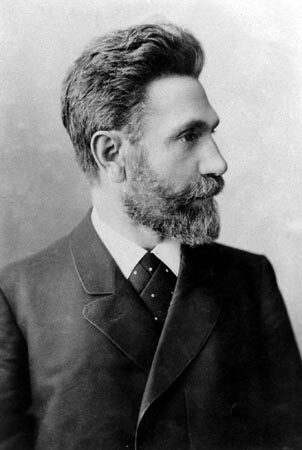
August Bebel
August Bebel was a German social democrat politician. Born February 22, 1840, in Deutz. Died August 13, 1913, in Passugg. Positions held include member of the Reichstag of the North German Confederation (1867–1871), member of the Reichstag of the German Empire (1871–1913) and Member of the Customs Parliament. Known for Women under Socialism.
Facts
23 facts · 2 confirmed by two sources · 9 cited · 12 from one source
Where this comes from
Papalocal keeps its own record. It started from these sources; what each one said is kept here as it was copied, so a change on their side never changes this page by itself. Tap one to read its version.
What Wikidata says · copied November 16, 2026 · revision 2563973798
- Described as
- German social democrat politician (1840–1913)
- Other names
- August Ferdinand Bebel, Ferdinand August Bebel
- Born
- February 22, 1840 · 12 references
- Died
- August 13, 1913 · 9 references
- Born in
- Deutz · 1 reference
- Died in
- Passugg · 1 reference
- Buried in
- Cemetery Sihlfeld · 1 reference
- Cause of death
- myocardial infarction
- Citizen of
- Kingdom of Prussia
- Occupation
- politician · 2 references; writer · 1 reference; turner · 1 reference; social democrat · 1 reference; party leader · 1 reference
- Positions held
- member of the Reichstag of the North German Confederation (1867–1871); member of the Reichstag of the German Empire (1871–1913); Member of the Customs Parliament; member of parliament · 1 reference
- Political party
- Social Democratic Party of Germany (1875–); Social Democratic Workers' Party of Germany (1869–1875); Saxon People's Party (1866–1869)
- Member of
- International Workingmen's Association
- Known for
- Women under Socialism
- Spouse
- Julie Bebel
- Children
- Bertha Friederike Bebel
- Wikipedias with a page
- 72
Wikidata item Q76520 (wikidata.org/wiki/Q76520), public domain (CC0). Copied November 16, 2026.
What Wikipedia says · copied November 16, 2026 · revision 1377048413
Ferdinand August Bebel (22 February 1840 – 13 August 1913) was a German social democratic politician. One of the founders of the Social Democratic Party of Germany (SPD), he was a leader of the German workers' movement for over four decades. Bebel served as a member of parliament in the North German Confederation from 1867 to 1870 and in the German Empire from 1871 until his death in 1913 (excepting 1881-1883), becoming the movement's leading parliamentary voice.
Born into poverty in Prussia, Bebel was orphaned at a young age and apprenticed as a woodturner. His experiences as a traveling journeyman exposed him to the hardships of the working class and led him to socialist politics in the 1860s. With Wilhelm Liebknecht, he was a founder of the Social Democratic Workers' Party of Germany (SDAP) in 1869, which in 1875 merged with the General German Workers' Association to form what would become the SPD. Bebel became a central figure in the German socialist movement, opposing the nationalist and state-oriented socialism of Ferdinand Lassalle in favor of a more orthodox Marxist, internationalist position. During the Franco-Prussian War, he gained notoriety for his opposition to the annexation of Alsace-Lorraine, which led to his conviction for high treason in 1872.
During the era of the Anti-Socialist Laws (1878–1890), when the SPD was outlawed, Bebel became the party's central figure, guiding it through years of persecution from both within Germany and from exile in Switzerland. He was instrumental in maintaining party unity, purging anarchist influences, and establishing the party's official newspaper, Der Sozialdemokrat. After the repeal of the laws in 1890, Bebel oversaw the SPD's transformation into a mass party, helping to draft its influential Erfurt Program in 1891. In his later years, he defended the party's orthodox Marxist principles against the revisionist theories of Eduard Bernstein while simultaneously pursuing a pragmatic, reformist course in the Reichstag. His work, particularly his influential 1879 book Woman and Socialism, established him as a leading figure in the socialist movement's advocacy for women's rights.
By the time of his death in 1913, Bebel was revered by the German working class and recognized internationally as a major political figure. His funeral in Zurich was a major international event, attended by leaders of the Second International. He left behind a party that had grown into the largest in Germany, and his legacy influenced the course of both West and East German politics in the 20th century.
- Born, in its opening lines
- February 22, 1840
- Died, in its opening lines
- August 13, 1913
From the Wikipedia article “August Bebel” (en.wikipedia.org/wiki/August_Bebel), by its contributors, under CC BY-SA 4.0 (creativecommons.org/licenses/by-sa/4.0/). Copied November 16, 2026; not changed.
Confirmed Two sources agree. Cited One source, and it names where it got it. One source One source, without a reference of its own. Sources disagree The sources disagree. We show the best-supported value and keep theirs below.
