
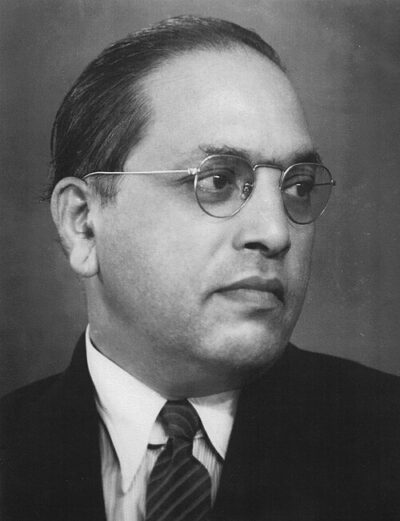
B. R. Ambedkar
B. R. Ambedkar was an Indian jurist, economist, and social reformer. Born April 14, 1891, in Dr. Ambedkar Nagar. Died December 6, 1956, in Dr. Ambedkar National Memorial. Positions held include member of Rajya Sabha (1952–1956), Minister of Law and Justice of India (1947–1951) and chairperson (1946–1950). Known for Annihilation of Caste, Castes in India: Their Mechanism, Genesis and Development and Who Were the Shudras?. Educated at Columbia University and London School of Economics and Political Science. Awards include Bharat Ratna, The Greatest Indian and honorary doctorate from Columbia University.
Facts
66 facts · 2 confirmed by two sources · 30 cited · 31 from one source · 3 where the sources disagree
What’s different
- Born in: we show Dr. Ambedkar Nagar (Sources disagree). Wikidata also lists Bhim Janmabhoomi
- Buried in: we show Chaitya Bhoomi (Sources disagree). Wikidata also lists Mumbai
- Name at birth: we show Bhīvā Rāmjī Sakpāḷ (Sources disagree). Wikidata also lists भीवा रामजी सकपाळ
Where this comes from
Papalocal keeps its own record. It started from these sources; what each one said is kept here as it was copied, so a change on their side never changes this page by itself. Tap one to read its version.
What Wikidata says · copied November 16, 2026 · revision 2562968672
- Described as
- Indian jurist, economist, and social reformer (1891–1956)
- Other names
- Ambedkar, Babasaheb Ambedkar, Bhimrao Ramji Ambedkar, Babasaheb, Dr Ambedkar, Dr Bhimrao Ramji Ambedkar, Dr B. R. Ambedkar, Bhimrao Ambedkar, Bhimrao Sakpal, Bhimrao Ramji Sakpal, Sakpal, Bhiva Ramji Sakpal
- Born
- April 14, 1891 · 8 references
- Died
- December 6, 1956 · 8 references
- Born in
- Bhim Janmabhoomi; Dr. Ambedkar Nagar · 1 reference
- Died in
- Dr. Ambedkar National Memorial · 3 references
- Buried in
- Chaitya Bhoomi · 1 reference; Mumbai
- Cause of death
- disease
- Name at birth
- Bhīvā Rāmjī Sakpāḷ; भीवा रामजी सकपाळ
- Citizen of
- British Raj (–1947); India (1947–); Dominion of India (1947–1950)
- Occupation
- economist · 3 references; politician · 1 reference; constitutionalist; barrister; jurist · 1 reference; sociologist; anthropologist; writer
- Positions held
- member of Rajya Sabha (1952–1956); Minister of Law and Justice of India (1947–1951); chairperson (1946–1950); Member of the Constituent Assembly of India (1946–1950); Member of the Advisory Committee of the Constituent Assembly of India (1947–1950) · 1 reference; minister of labor (1942–1946); leader of the opposition (1937–1942); member (1926–1942); member of the Negotiating Committee of the Constituent Assembly of India (1947–1950) · 1 reference; member of the Committee on Subjects Assigned to the Union Centre (1947–1950) · 1 reference; member of the Steering Committee of the Constituent Assembly of India (1947–1950) · 1 reference
- Political party
- Scheduled Castes Federation (1942–1956) · 3 references; Independent Labour Party (1936–1942) · 3 references; Republican Party of India (1956–) · 1 reference
- Education
- Columbia University; London School of Economics and Political Science · 1 reference; Elphinstone College
- Known for
- Annihilation of Caste · 3 references; Castes in India: Their Mechanism, Genesis and Development · 2 references; Who Were the Shudras? · 1 reference; The Buddha and His Dhamma · 2 references; Waiting for a Visa · 1 reference; Small Holdings in India and Their Remedies · 2 references; The Problem of the Rupees: Its Origin and Its Solution · 2 references; The Evolution of Provincial Finance in British India · 1 reference; Pakistan or Partition of India · 1 reference; Ranade, Gandhi and Jinnah · 2 references
- Awards
- Bharat Ratna · 1 reference; The Greatest Indian · 1 reference; honorary doctorate from Columbia University (1952) · 3 references; honorary doctor of Osmania University (1953) · 1 reference
- Field
- economics; law; philosophy; human rights; anthropology; politics
- Spouse
- Ramabai Ambedkar (1906–1935) · 1 reference; Savita Ambedkar (1948–1956) · 1 reference
- Children
- Yashwant Ambedkar
- Father
- Ramji Maloji Sakpal · 2 references
- Mother
- Bhimabai Ramji Sakpal · 1 reference
- Religion
- Hinduism (1891–1956); Navayana (1956)
- Lived in
- India (1891–1956); United States (1913–1916); London (2 times) (1916–1922)
- Height
- 1.78 m (5 ft 10 in)
- Wikipedias with a page
- 149
Wikidata item Q231690 (wikidata.org/wiki/Q231690), public domain (CC0). Copied November 16, 2026.
What Wikipedia says · copied November 16, 2026 · revision 1384427632
Bhimrao Ramji Ambedkar (14 April 1891 – 6 December 1956) was an Indian jurist, economist, social reformer and politician who chaired the committee that drafted the Constitution of India based on the debates of the Constituent Assembly of India and the first draft of Sir Benegal Narsing Rau. Ambedkar served as Law and Justice minister in the first cabinet of Jawaharlal Nehru. He later renounced Hinduism and converted to Buddhism, inspiring the Dalit Buddhist movement.
After graduating from Elphinstone College, University of Bombay, Ambedkar studied economics at Columbia University and the London School of Economics, receiving doctorates in 1927 and 1923, respectively, and was among a handful of Indian students to have done so at either institution in the 1920s. During his time at Columbia University, Ambedkar came under the influence of John Dewey and his philosophy of pragmatism. He also trained in the law at Gray's Inn, London. In his early career, he was an economist, professor, and lawyer. His later life was marked by his political activities; he became involved in campaigning and negotiations for partition, publishing journals, advocating political rights and social freedom for Dalits, and contributing to the establishment of the state of India. In 1956, he converted to Buddhism, initiating mass conversions of Dalits. He was also appointed to work with the Simon Commission.
In 1990, the Bharat Ratna, India's highest civilian award, was posthumously conferred on Ambedkar. The salutation Jai Bhim (lit. "Hail Bhim") is used by his followers to honour him. He is also referred to by the honorific Babasaheb, meaning "Respected Father".
- Born, in its opening lines
- April 14, 1891
- Died, in its opening lines
- December 6, 1956
From the Wikipedia article “B. R. Ambedkar” (en.wikipedia.org/wiki/B._R._Ambedkar), by its contributors, under CC BY-SA 4.0 (creativecommons.org/licenses/by-sa/4.0/). Copied November 16, 2026; not changed.
Confirmed Two sources agree. Cited One source, and it names where it got it. One source One source, without a reference of its own. Sources disagree The sources disagree. We show the best-supported value and keep theirs below.
