
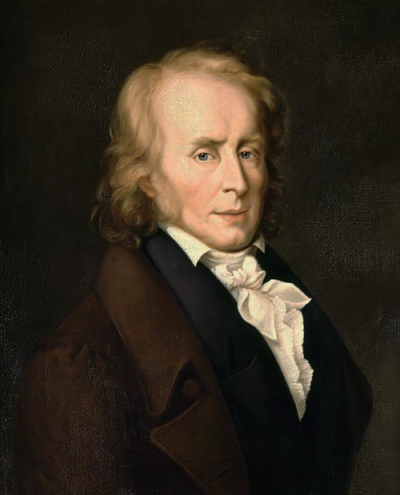
Benjamin Constant
Benjamin Constant was a French-Swiss politician, writer on politics and religion. Born October 25, 1767, in Lausanne. Died December 8, 1830, in Paris. Positions held include Member of the Chambre des députés des départements (2 times) (1819–1830) and member of the National Assembly (1830). Known for Adolphe. Educated at University of Edinburgh.
Facts
24 facts · 2 confirmed by two sources · 8 cited · 14 from one source
Where this comes from
Papalocal keeps its own record. It started from these sources; what each one said is kept here as it was copied, so a change on their side never changes this page by itself. Tap one to read its version.
What Wikidata says · copied November 16, 2026 · revision 2569087408
- Described as
- French-Swiss politician, writer on politics and religion (1767-2011)
- Other names
- Henri-Benjamin Constant de Rebecque
- Born
- October 25, 1767 · 9 references
- Died
- December 8, 1830 · 13 references
- Born in
- Lausanne · 3 references
- Died in
- Paris · 3 references
- Buried in
- Père Lachaise Cemetery · 1 reference
- Name at birth
- Henri-Benjamin Constant de Rebecque
- Citizen of
- Switzerland (1767–1790) · 2 references; France (1790–1830) · 1 reference
- Occupation
- philosopher; politician · 1 reference; writer · 2 references; diarist; scientist · 1 reference; chamberlain · 1 reference
- Positions held
- Member of the Chambre des députés des départements (2 times) (1819–1830); member of the National Assembly (1830)
- Education
- University of Edinburgh
- Known for
- Adolphe
- Spouse
- Charlotte Constant de Rebecque (1769-1845); Wilhelmine von Cramm (1789–) · 1 reference
- Father
- Juste de Constant Rebecque
- Mother
- Henriette von Chandieu · 1 reference
- Siblings
- Louise Marie Anne d'Estournelles Constant de Rebecque · 1 reference
- Religion
- reformed · 1 reference
- Wikipedias with a page
- 69
Wikidata item Q123089 (wikidata.org/wiki/Q123089), public domain (CC0). Copied November 16, 2026.
What Wikipedia says · copied November 16, 2026 · revision 1385047349
Henri-Benjamin Constant de Rebecque (French: [bɛ̃ʒamɛ̃ kɔ̃stɑ̃]; 25 October 1767 – 8 December 1830), or simply Benjamin Constant, was a Swiss and French political thinker, activist and writer on political theory and religion.
A committed republican from 1795, Constant backed the coup d'état of 18 Fructidor (4 September 1797) and the following one on 18 Brumaire (9 November 1799). He became the leader of the Liberal opposition in 1800, during the Consulate. Having upset Napoleon and left France to go to Switzerland then to the Kingdom of Saxony, Constant nonetheless sided with him during the Hundred Days, drafting the Charter of 1815, and became politically active again during the Bourbon Restoration. He was elected to the Chamber of Deputies in 1818 and remained in office until his death in 1830. As the head of the Liberal opposition, known as Indépendants, Constant was one of the most notable orators of the Chamber as a proponent of the parliamentary system. During the July Revolution, he was a supporter of Louis Philippe I ascending the throne.
Besides his numerous essays on political and religious themes, Constant also wrote on romantic love. His autobiographical Le Cahier rouge (1807) gives an account of his love for Madame de Staël, whose protégé and collaborator he became, especially in the Coppet circle, and a successful novella, Adolphe (1816), are good examples of his work on this topic. Constant was a fervent liberal of the early 19th century. He refined the concept of liberty, defining it as a condition of existence that allowed the individual to turn away interference from the state or society.
- Born, in its opening lines
- October 25, 1767
- Died, in its opening lines
- December 8, 1830
From the Wikipedia article “Benjamin Constant” (en.wikipedia.org/wiki/Benjamin_Constant), by its contributors, under CC BY-SA 4.0 (creativecommons.org/licenses/by-sa/4.0/). Copied November 16, 2026; not changed.
Confirmed Two sources agree. Cited One source, and it names where it got it. One source One source, without a reference of its own. Sources disagree The sources disagree. We show the best-supported value and keep theirs below.
