
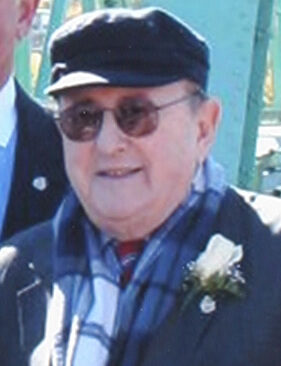
Bernard Lown
Bernard Lown was an American cardiologist, developer of the DC defibrillator and the cardioverter. Born June 7, 1921, in Utena. Died February 16, 2021, in Chestnut Hill. Educated at University of Maine and Johns Hopkins School of Medicine. Awards include Gandhi Peace Award, honorary doctor of the Autonomous University of Barcelona and Commander of the Order of the Lithuanian Grand Duke Gediminas.
Facts
26 facts · 2 confirmed by two sources · 11 cited · 13 from one source
Where this comes from
Papalocal keeps its own record. It started from these sources; what each one said is kept here as it was copied, so a change on their side never changes this page by itself. Tap one to read its version.
What Wikidata says · copied November 16, 2026 · revision 2553486499
- Described as
- American cardiologist, developer of the DC defibrillator and the cardioverter (1921-2021)
- Born
- June 7, 1921 · 4 references
- Died
- February 16, 2021 · 1 reference
- Born in
- Utena · 1 reference
- Died in
- Chestnut Hill · 1 reference
- Name at birth
- Борух Лац
- Citizen of
- Lithuania; United States
- Occupation
- cardiologist · 1 reference; peace activist; inventor · 1 reference; physician · 2 references; scientist · 1 reference
- Worked for
- Harvard University
- Education
- University of Maine; Johns Hopkins School of Medicine
- Member of
- American Academy of Arts and Sciences (1987–) · 1 reference; Hungarian Academy of Sciences; Croatian Academy of Sciences and Arts (1992–) · 1 reference
- Awards
- Gandhi Peace Award (1986) · 1 reference; honorary doctor of the Autonomous University of Barcelona; Commander of the Order of the Lithuanian Grand Duke Gediminas
- Field
- medicine · 1 reference; internal medicine · 1 reference; cardiology · 1 reference
- Lived in
- Newton · 1 reference
- Website
- https://bernardlown.org
- Wikipedias with a page
- 20
Wikidata item Q723263 (wikidata.org/wiki/Q723263), public domain (CC0). Copied November 16, 2026.
What Wikipedia says · copied November 16, 2026 · revision 1379665018
Bernard Lown (June 7, 1921 – February 16, 2021) was a Lithuanian-American cardiologist and inventor. Lown was the original developer of the direct current defibrillator for cardiac resuscitation, and the cardioverter for correcting rapid disordered heart rhythms. He introduced a new use for the drug lidocaine to control heartbeat disturbances.
Throughout his medical career, Lown focused on two major medical challenges: the problem of sudden cardiac death and the role of psychological stress on the cardiovascular system. His investigations led to many medical break-throughs, among them the coronary care unit. His work made possible and safe much of modern cardiac surgery, as well as a host of other innovations. In 1985, Lown accepted the Nobel Peace Prize on behalf of the International Physicians for the Prevention of Nuclear War, an organization he co-founded with Soviet cardiologist Yevgeny Chazov, who later was Minister Of Health of the USSR.
Lown was Professor of Cardiology Emeritus at the Harvard T.H. Chan School of Public Health, and Senior Physician Emeritus at the Brigham and Women’s Hospital, Boston, Massachusetts. He was the founder of the Lown Cardiovascular Center and Lown Cardiovascular Research Foundation. He also founded the Lown Institute, which aims to reform both the healthcare system and society.
- Born, in its opening lines
- June 7, 1921
- Died, in its opening lines
- February 16, 2021
From the Wikipedia article “Bernard Lown” (en.wikipedia.org/wiki/Bernard_Lown), by its contributors, under CC BY-SA 4.0 (creativecommons.org/licenses/by-sa/4.0/). Copied November 16, 2026; not changed.
Confirmed Two sources agree. Cited One source, and it names where it got it. One source One source, without a reference of its own. Sources disagree The sources disagree. We show the best-supported value and keep theirs below.
