
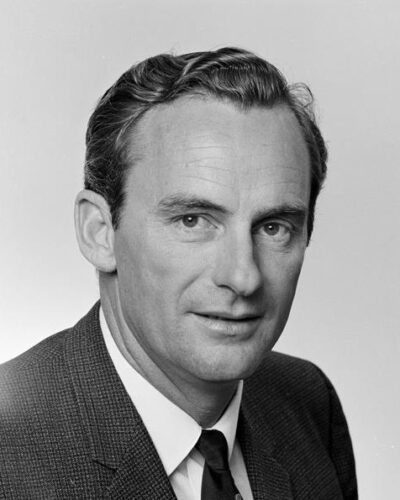
Bill Hayden
Bill Hayden was a former Governor-General of Australia from 1989 to 1996. Born January 23, 1933, in Brisbane. Died October 21, 2023, in Queensland. Positions held include member of the Australian House of Representatives (1961–1988), Governor-General of Australia (1989–1996) and Minister for Foreign Affairs (Australia) (1983–1988). Educated at University of Queensland and Brisbane State High School. Awards include Order of the Three Stars and Companion of the Order of Australia.
Facts
20 facts · 2 confirmed by two sources · 6 cited · 12 from one source
Where this comes from
Papalocal keeps its own record. It started from these sources; what each one said is kept here as it was copied, so a change on their side never changes this page by itself. Tap one to read its version.
What Wikidata says · copied November 17, 2026 · revision 2562803091
- Described as
- former Governor-General of Australia from 1989 to 1996
- Other names
- William Hayden, William George Hayden, William George "Bill" Hayden
- Born
- January 23, 1933 · 2 references
- Died
- October 21, 2023 · 1 reference
- Born in
- Brisbane
- Died in
- Queensland · 1 reference
- Citizen of
- Australia
- Occupation
- diplomat; politician · 1 reference; governor-general · 1 reference; foreign minister · 1 reference
- Positions held
- member of the Australian House of Representatives (1961–1988); Governor-General of Australia (1989–1996); Minister for Foreign Affairs (Australia) (1983–1988); Treasurer of Australia (1975); Minister for Human Services (1972–1975)
- Political party
- Australian Labor Party
- Education
- University of Queensland; Brisbane State High School
- Awards
- Order of the Three Stars; Companion of the Order of Australia (1989) · 1 reference
- Religion
- Catholic · 1 reference
- Wikipedias with a page
- 26
Wikidata item Q250087 (wikidata.org/wiki/Q250087), public domain (CC0). Copied November 17, 2026.
What Wikipedia says · copied November 17, 2026 · revision 1384122063
William George Hayden (23 January 1933 – 21 October 2023) was an Australian politician who served as the 21st governor-general of Australia from 1989 to 1996. He was Leader of the Labor Party and Leader of the Opposition from 1977 to 1983, and served as Minister for Foreign Affairs and Trade from 1983 to 1988 under Bob Hawke and as Treasurer of Australia in 1975 under Gough Whitlam.
Hayden was born in Brisbane, Queensland. He attended Brisbane State High School and then joined the Queensland Police, working as a police officer for eight years while studying economics part-time at the University of Queensland. Hayden was elected to the House of Representatives at the 1961 federal election, aged 28 – along with Manfred Cross and Doug McClelland, Hayden was the earliest elected Labor MP still alive at the time of his death. When Gough Whitlam led the Labor Party to victory in 1972, Hayden was made Minister for Social Security. He replaced Jim Cairns as treasurer in 1975, but served for only five months before the government was dismissed.
In early 1977, Hayden challenged Whitlam for the party leadership and was defeated by just two votes. He defeated Lionel Bowen to succeed Whitlam as Leader of the Opposition at the end of the year, following Labor's defeat at the 1977 election. Hayden led the party to the 1980 election, recording a substantial swing but falling short of victory. He was replaced by Bob Hawke just a few weeks before the 1983 election, after months of speculation. Hayden served as Minister for Foreign Affairs and Trade from 1983 to 1988, then left parliament to assume the governor-generalship. He held that position for seven years; only Lord Gowrie has served for longer.
- Born, in its opening lines
- January 23, 1933
- Died, in its opening lines
- October 21, 2023
From the Wikipedia article “Bill Hayden” (en.wikipedia.org/wiki/Bill_Hayden), by its contributors, under CC BY-SA 4.0 (creativecommons.org/licenses/by-sa/4.0/). Copied November 17, 2026; not changed.
Confirmed Two sources agree. Cited One source, and it names where it got it. One source One source, without a reference of its own. Sources disagree The sources disagree. We show the best-supported value and keep theirs below.
