
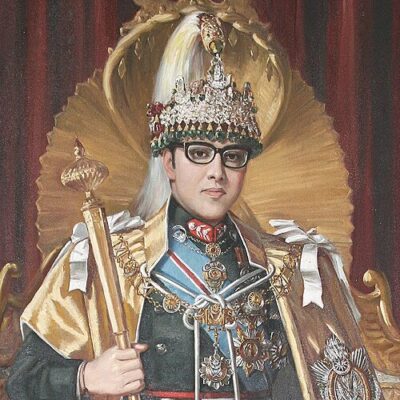
Birendra of Nepal
Birendra of Nepal was a king of Nepal. Born December 28, 1945, in Kathmandu. Died June 1, 2001, in Kathmandu. Positions held include King of Nepal (1972–2001). Educated at Harvard University and Eton College. Awards include Grand Cross of the Legion of Honour, Grand Cross of the Order of the Star of Romania and Royal Victorian Chain.
Facts
44 facts · 1 confirmed by two sources · 4 cited · 38 from one source · 1 where the sources disagree
What’s different
- Born: we show December 28, 1945 (Sources disagree). Wikipedia says December 29, 1945
Where this comes from
Papalocal keeps its own record. It started from these sources; what each one said is kept here as it was copied, so a change on their side never changes this page by itself. Tap one to read its version.
What Wikidata says · copied November 16, 2026 · revision 2557815492
- Described as
- king of Nepal (1945–2001)
- Other names
- Birendra Bir Bikram Shah Dev, Birendra Bir Vikram, King of Nepal Shah Deva, Sir Birendra of Nepal, Sir Birendra Shah, Virendra Shah, Virendra Shaha, Birendra Vikram Shah, Birendra Bikram Shah Dev
- Born
- December 28, 1945 · 3 references
- Died
- June 1, 2001 · 4 references
- Born in
- Kathmandu · 1 reference
- Died in
- Kathmandu · 1 reference
- Buried in
- Pashupatinath Temple · 1 reference
- Cause of death
- gunshot wound
- Citizen of
- Nepal
- Occupation
- monarch
- Positions held
- King of Nepal (1972–2001)
- Education
- Harvard University; Eton College; University of Tokyo; Loreto Convent; St. Joseph's School, Darjeeling; St Joseph's College, Darjeeling
- Awards
- Grand Cross of the Legion of Honour; Grand Cross of the Order of the Star of Romania; Royal Victorian Chain (1975); Grand Cross Special Class of the Order of Merit of the Federal Republic of Germany (1986); Collar of the Supreme Order of the Chrysanthemum; Order of Tri Shakti Patta · 1 reference; Order of the Star of Nepal · 1 reference; Order of Gorkha Dakshina Bahu · 1 reference; Order of the Yugoslav Star · 1 reference; Order of Merit · 1 reference; Order of the Elephant · 1 reference; Order of the Nile · 1 reference; Grand Cross with Collar of the Order of the White Rose of Finland (1989) · 1 reference; Knight Grand Cross in the Order of the Netherlands Lion; Order of the Million Elephants and the White Parasol · 1 reference
- Spouse
- Aishwarya of Nepal (1970–)
- Children
- Princess Shruti of Nepal; Dipendra of Nepal; Prince Nirajan of Nepal · 1 reference
- Father
- Mahendra I of Nepal
- Mother
- Indra, Crown Princess of Nepal
- Siblings
- Gyanendra of Nepal; Princess Sharada Shah of Nepal; Princess Shova Shahi of Nepal; Dhirendra of Nepal · 1 reference
- Religion
- Hinduism
- Military branch
- British Army
- Military rank
- field marshal
- Lived in
- Narayanhiti Palace · 1 reference
- Wikipedias with a page
- 53
Wikidata item Q162306 (wikidata.org/wiki/Q162306), public domain (CC0). Copied November 16, 2026.
What Wikipedia says · copied November 16, 2026 · revision 1384484356
Sri Panch Birendra Bir Bikram Shah Dev (Nepali: श्री५ वीरेन्द्र वीर विक्रम शाह देव; 29 December 1945 – 1 June 2001) was King of Nepal from 1972 until his assassination in the 2001 Nepalese royal massacre.
Birendra was the first son of King Mahendra and crown princess Indra. He inherited the panchayat system from his father when he acceded the throne in 1972, ruling as Nepal's absolute monarch. Following the 1990 revolution, he disbanded the system, lifted the concurrent ban on political parties and promulgated a new constitution in which he served as head of state of a democratic constitutional monarchy. The Nepalese Civil War began in the latter part of his reign when the Communist Party of Nepal (Maoist) launched an insurgency in 1996.
- Born, in its opening lines
- December 29, 1945
- Died, in its opening lines
- June 1, 2001
From the Wikipedia article “Birendra of Nepal” (en.wikipedia.org/wiki/Birendra_of_Nepal), by its contributors, under CC BY-SA 4.0 (creativecommons.org/licenses/by-sa/4.0/). Copied November 16, 2026; not changed.
Confirmed Two sources agree. Cited One source, and it names where it got it. One source One source, without a reference of its own. Sources disagree The sources disagree. We show the best-supported value and keep theirs below.
