
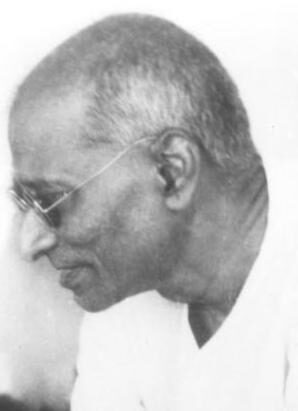
C. Rajagopalachari
C. Rajagopalachari was an Indian politician and activist. Born December 10, 1878, in Thorapalli. Died December 25, 1972, in Chennai. Positions held include Governor-General of India (1948–1950), Minister of Home Affairs (1950–1951) and Governor of West Bengal (1947–1948). Educated at Bangalore University and Presidency College. Awards include Sahitya Akademi Award, Bharat Ratna and honorary doctor of the University of Calcutta.
Facts
34 facts · 2 confirmed by two sources · 6 cited · 26 from one source
Where this comes from
Papalocal keeps its own record. It started from these sources; what each one said is kept here as it was copied, so a change on their side never changes this page by itself. Tap one to read its version.
What Wikidata says · copied November 16, 2026 · revision 2562769632
- Described as
- Indian politician and activist (1878–1972)
- Other names
- Chakravarti Rajagopalachari
- Born
- December 10, 1878 · 2 references
- Died
- December 25, 1972 · 4 references
- Born in
- Thorapalli
- Died in
- Chennai
- Citizen of
- India (1950–); British Raj (–1947); Dominion of India (1947–1950)
- Occupation
- lawyer; linguist; translator; composer; writer · 1 reference; peace activist · 1 reference; politician · 2 references; freedom fighter
- Positions held
- Governor-General of India (1948–1950); Minister of Home Affairs (1950–1951); Governor of West Bengal (1947–1948); Chief Minister of Tamil Nadu (2 times) (1937–1954); Member of the Constituent Assembly of India (1946–) · 1 reference; Member of the Advisory Committee of the Constituent Assembly of India (1947–) · 1 reference
- Political party
- Swatantra Party (1959–); Indian National Congress (–1957); Indian National Democratic Congress (1957–1959)
- Education
- Bangalore University; Presidency College; University of Madras; Central College of Bengaluru
- Awards
- Sahitya Akademi Award (1958) · 1 reference; Bharat Ratna (1954); honorary doctor of the University of Calcutta
- Children
- C. R. Narasimhan; Lakshmi Rajagopalachari
- Religion
- Hinduism
- Wikipedias with a page
- 48
Wikidata item Q378404 (wikidata.org/wiki/Q378404), public domain (CC0). Copied November 16, 2026.
What Wikipedia says · copied November 16, 2026 · revision 1380966881
Chakravarti Rajagopalachari (10 December 1878 – 25 December 1972), popularly known as Rajaji or C.R., also known as Mootharignar Rajaji (Rajaji, the Scholar Emeritus), was an Indian statesman, writer, lawyer, and Indian independence activist. Rajagopalachari was the last Governor-General of India, serving until the abolition of that office upon India becoming a republic in 1950. He was the only Indian-born Governor-General or Viceroy of India; all previous holders of these posts had been British nationals. He was an accomplished writer and one of the first recipients of India's highest civilian award, the Bharat Ratna. He was close to both Gandhi and Nehru. He vehemently opposed the use of nuclear weapons, and was a proponent of world peace and disarmament, until his death at the age of 94 in 1972.
Rajagopalachari also served—at different times—as leader of the Indian National Congress, Premier of the Madras Presidency, Governor of West Bengal (he was serving in this post when appointed by the King to take over from Lord Mountbatten), a member of the national cabinet as Minister for Home Affairs of the Indian Union, and as Chief Minister of Madras State. Rajagopalachari founded the Swatantra Party in 1959.
Rajagopalachari was born in the Thorapalli village of Hosur taluk in the Krishnagiri district of Tamil Nadu. He was a sickly child, and his parents constantly feared that he might not live long. He was educated at Central College, Bengaluru, and Presidency College, Madras. In the 1900s he started legal practice at the Salem court. On entering politics, he became a member and later Chairperson of the Salem municipality. One of Mahatma Gandhi's earliest political lieutenants, he joined the Indian National Congress and participated in the agitations against the Rowlatt Act, joining the non-cooperation movement, the Vaikom Satyagraha, and the Civil Disobedience movement. In 1930, Rajagopalachari risked imprisonment when he led the Vedaranyam Salt Satyagraha in response to the Dandi March. In 1937, Rajagopalachari was elected Prime minister of the Madras Presidency and served until 1940, when he resigned due to Britain's declaration of war on Germany. He later advocated co-operation over Britain's war effort and opposed the Quit India Movement. He favoured talks with both Muhammad Ali Jinnah and the Muslim League and proposed what later came to be known as the C. R. formula. In 1946, Rajagopalachari was appointed Minister of Industry, Supply, Education and Finance in the Interim Government of India, and then as the Governor of West Bengal from 1947 to 1948, Governor-General of India from 1948 to 1950, Union Home Minister from 1951 to 1952 and as Chief Minister of Madras State from 1952 to 1954. In 1959, he resigned from the Indian National Congress and founded the Swatantra Party, which fought against Congress in the 1962, 1967 and 1971 elections. Rajagopalachari was instrumental in setting up a united Anti-Congress front in Madras State under C. N. Annadurai, which swept the 1967 elections. He died on 25 December 1972 at the age of 94 and received a state funeral.
Rajagopalachari was an accomplished writer who made lasting contributions to Indian English literature and is also credited with the composition of the song Kurai Onrum Illai set to Carnatic music. He pioneered temperance and temple entry movements in India and advocated Dalit upliftment. He has been criticized for introducing the compulsory study of Hindi and the Madras Scheme of Elementary Education in Madras State, which have been criticised as hereditary education policy designed to perpetuate caste hierarchy. Critics have often attributed his pre-eminence in politics to his standing as a favourite of both Mahatma Gandhi and Jawaharlal Nehru. Rajagopalachari was described by Gandhi as the "keeper of my conscience". During his lifetime, he also acquired the nickname 'Mango of Salem'.
- Born, in its opening lines
- December 10, 1878
- Died, in its opening lines
- December 25, 1972
From the Wikipedia article “C. Rajagopalachari” (en.wikipedia.org/wiki/C._Rajagopalachari), by its contributors, under CC BY-SA 4.0 (creativecommons.org/licenses/by-sa/4.0/). Copied November 16, 2026; not changed.
Confirmed Two sources agree. Cited One source, and it names where it got it. One source One source, without a reference of its own. Sources disagree The sources disagree. We show the best-supported value and keep theirs below.
