
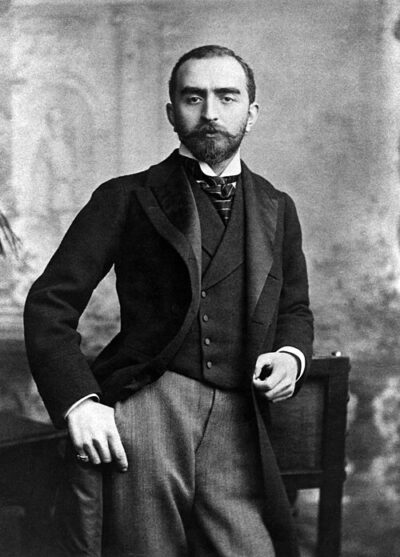
Calouste Gulbenkian
Calouste Gulbenkian was an Armenian businessman, art collector and philanthropist. Born March 23, 1869, in Üsküdar. Died July 20, 1955, in Lisbon. Positions held include president (1930–1932). Known for La Transcaucasie et la péninsule d'Apchéron. Educated at St. Joseph High School and King's College London. Awards include Grand Cross of the Military Order of Christ.
Facts
25 facts · 2 confirmed by two sources · 7 cited · 16 from one source
Where this comes from
Papalocal keeps its own record. It started from these sources; what each one said is kept here as it was copied, so a change on their side never changes this page by itself. Tap one to read its version.
What Wikidata says · copied November 16, 2026 · revision 2559952450
- Described as
- Armenian businessman, art collector and philanthropist (1869-1955)
- Other names
- Calouste Sarkis Gulbenkian, Calouste S. Gulbenkian
- Born
- March 23, 1869 · 3 references
- Died
- July 20, 1955 · 10 references
- Born in
- Üsküdar · 1 reference
- Died in
- Lisbon · 3 references
- Buried in
- St Sarkis, Kensington
- Name at birth
- Գալուստ Սարգիս Կիւլպէնկեան
- Citizen of
- Ottoman Empire; United Kingdom of Great Britain and Ireland (1902–1927); Portugal
- Occupation
- businessperson · 1 reference; entrepreneur; engineer · 2 references; diplomat; patron of the arts; adventurer; smuggler; art collector
- Positions held
- president (1930–1932) · 1 reference
- Worked for
- National Bank of Turkey
- Education
- St. Joseph High School; King's College London (–1887)
- Known for
- La Transcaucasie et la péninsule d'Apchéron
- Awards
- Grand Cross of the Military Order of Christ (1950) · 1 reference
- Children
- Nubar Gulbenkian; Rita Sirvante Gulbenkian · 1 reference
- Wikipedias with a page
- 39
Wikidata item Q345538 (wikidata.org/wiki/Q345538), public domain (CC0). Copied November 16, 2026.
What Wikipedia says · copied November 16, 2026 · revision 1382518493
Calouste Sarkis Gulbenkian (English pronunciation /kæˈluːst ɡʊlˈbɛŋkiən/; Western Armenian: Գալուստ Սարգիս Կիւլպէնկեան, romanized: Kalousd Sarkis Giulbêngean, pronounced [kʰɑlust ɡʏlbɛŋɡjɑn]; 23 March 1869 – 20 July 1955) was an Armenian-British businessman. He played a major role in making the petroleum reserves of the Middle East available to Western development and is credited with being the first person to exploit Iraqi oil. Following the "Red Line Agreement" (said by some accounts to have been drafted by himself), a fixed 5% of the shares of the Turkish Petroleum Company (later renamed the Iraqi Petroleum Company) were to be consistently owned by him, for which he earned the nickname "Mr. Five Per Cent". Gulbenkian travelled extensively and lived in a number of cities including his birth city of Constantinople and later London, Paris, and finally Lisbon.
Throughout his life, Gulbenkian was involved with many philanthropic activities including the establishment of schools, hospitals, and churches. The Calouste Gulbenkian Foundation, a private foundation based in Portugal, was created in 1956 by his bequest and continues to promote arts, charity, education, and science throughout the world. It is now among the largest foundations in Europe. By the end of his life he had become one of the world's wealthiest people and his art acquisitions one of the greatest private collections.
- Born, in its opening lines
- March 23, 1869
- Died, in its opening lines
- July 20, 1955
From the Wikipedia article “Calouste Gulbenkian” (en.wikipedia.org/wiki/Calouste_Gulbenkian), by its contributors, under CC BY-SA 4.0 (creativecommons.org/licenses/by-sa/4.0/). Copied November 16, 2026; not changed.
Confirmed Two sources agree. Cited One source, and it names where it got it. One source One source, without a reference of its own. Sources disagree The sources disagree. We show the best-supported value and keep theirs below.
