
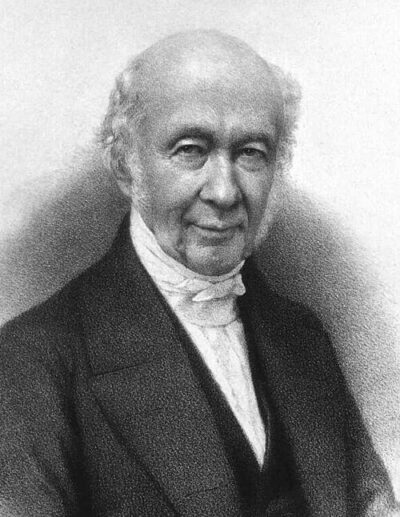
Carl Reichenbach
Carl Reichenbach was a German scientist and philosopher. Born February 12, 1788, in Stuttgart. Died January 19, 1869, in Leipzig. Educated at University of Tübingen.
Facts
20 facts · 2 confirmed by two sources · 6 cited · 12 from one source
Where this comes from
Papalocal keeps its own record. It started from these sources; what each one said is kept here as it was copied, so a change on their side never changes this page by itself. Tap one to read its version.
What Wikidata says · copied November 16, 2026 · revision 2568956037
- Described as
- German scientist and philosopher (1788–1869)
- Other names
- C.Rchb., Karl Reichenbach, Karl, Baron von Reichenbach, Carl Ludwig von Reichenbach
- Born
- February 12, 1788 · 4 references
- Died
- January 19, 1869 · 1 reference
- Born in
- Stuttgart · 1 reference
- Died in
- Leipzig · 1 reference
- Citizen of
- Kingdom of Württemberg
- Occupation
- chemist · 2 references; engineer; entrepreneur · 1 reference; geologist; metallurgist; botanist; astrologer; philosopher · 1 reference
- Education
- University of Tübingen
- Member of
- German Academy of Sciences Leopoldina
- Field
- chemistry · 1 reference
- Spouse
- Friederike Luise Erhard
- Children
- Hermine von Reichenbach · 2 references; Reinhold Freiherr von Reichenbach · 1 reference
- Father
- Carl Ludwig Reichenbach · 1 reference
- Wikipedias with a page
- 28
Wikidata item Q61147 (wikidata.org/wiki/Q61147), public domain (CC0). Copied November 16, 2026.
What Wikipedia says · copied November 16, 2026 · revision 1379066397
Karl Ludwig Freiherr von Reichenbach (German pronunciation: [ˈkaʁl ˈluːtvɪç ˈfʁaɪhɛʁ fɔn ˈʁaɪçn̩bax]; February 12, 1788 – January 19, 1869), known as Carl Reichenbach, was a German chemist, geologist, metallurgist, naturalist, industrialist and philosopher, and a member of the Prussian Academy of Sciences. He is best known for his discoveries of several chemical products of economic importance, extracted from tar, such as eupione, waxy paraffin, pittacal (the first synthetic dye) and phenol (an antiseptic). He also dedicated his last years to researching an unproved field of energy combining electricity, magnetism and heat, emanating from all living things, which he called the Odic force.
- Born, in its opening lines
- February 12, 1788
- Died, in its opening lines
- January 19, 1869
From the Wikipedia article “Carl Reichenbach” (en.wikipedia.org/wiki/Carl_Reichenbach), by its contributors, under CC BY-SA 4.0 (creativecommons.org/licenses/by-sa/4.0/). Copied November 16, 2026; not changed.
Confirmed Two sources agree. Cited One source, and it names where it got it. One source One source, without a reference of its own. Sources disagree The sources disagree. We show the best-supported value and keep theirs below.
