
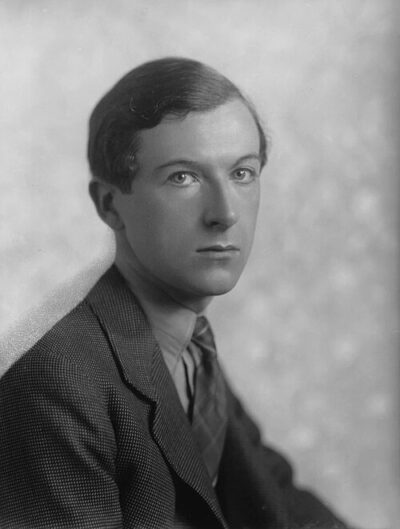
Cecil Beaton
Cecil Beaton was a British photographer, designer, socialite, writer. Born January 14, 1904, in Hampstead. Died January 18, 1980, in Broad Chalke. Educated at Harrow School and St John's College. Awards include Academy Award for Best Costume Design, Academy Award for Best Costume Design, Color and Academy Award for Best Art Direction, Color.
Facts
36 facts · 2 confirmed by two sources · 17 cited · 16 from one source · 1 where the sources disagree
What’s different
- Died in: we show Broad Chalke (Sources disagree). Wikidata also lists Salisbury
Where this comes from
Papalocal keeps its own record. It started from these sources; what each one said is kept here as it was copied, so a change on their side never changes this page by itself. Tap one to read its version.
What Wikidata says · copied November 16, 2026 · revision 2569201093
- Described as
- British photographer, designer, socialite, writer (1904–1980)
- Other names
- Sir Cecil Walter Hardy Beaton, Sir Cecil Beaton, Cecil Walter Hardy Beaton, Cecil Beaton (Sir), Walter Hardy
- Born
- January 14, 1904 · 19 references
- Died
- January 18, 1980 · 17 references
- Born in
- Hampstead · 2 references
- Died in
- Broad Chalke · 2 references; Salisbury · 1 reference
- Buried in
- All Saints Churchyard · 1 reference
- Citizen of
- United Kingdom · 1 reference
- Occupation
- photographer · 3 references; autobiographer; war photographer; diarist; costume designer · 2 references; painter; fashion photographer; designer · 1 reference
- Education
- Harrow School · 1 reference; St John's College; Heath Mount School; St Cyprian's School
- Member of
- Bright Young Things
- Genre
- portrait · 1 reference
- Awards
- Academy Award for Best Costume Design (1959) · 1 reference; Academy Award for Best Costume Design, Color (1965) · 1 reference; Academy Award for Best Art Direction, Color (1965) · 1 reference; Tony Award for Best Costume Design (4 times) (1955, 1957, 1960, 1970); Commander of the Order of the British Empire; Knight Bachelor; Donaldson Awards
- Field
- photography · 1 reference; fashion photography · 1 reference; portrait photography · 1 reference; war photography · 1 reference; costume design · 1 reference
- Father
- Ernest Walter Hardy Beaton · 1 reference
- Mother
- Etty Sisson · 1 reference
- Siblings
- Baba Beaton; Nancy Beaton
- Wikipedias with a page
- 35
Wikidata item Q697096 (wikidata.org/wiki/Q697096), public domain (CC0). Copied November 16, 2026.
What Wikipedia says · copied November 16, 2026 · revision 1386036422
Sir Cecil Walter Hardy Beaton (14 January 1904 – 18 January 1980) was a British photographer, designer, and diarist. Renowned for his elegant and often theatrical style, Beaton's work appeared in leading publications such as Vogue and Harper's Bazaar. He gained international acclaim for his portraits of celebrities, royalty, and socialites, as well as his work in fashion, theatre, and film. Though he is best known for his celebrity portraits, Beaton was also one of the most prolific photographers of life during World War II, taking over 7,000 photographs between 1940 and 1945 in Britain, as well as in China and Africa.
In addition to his photography, Beaton won three Academy Awards, including two for Best Costume Design (Gigi, 1958; My Fair Lady, 1964) and one for Best Art Direction (My Fair Lady, 1964), and received several Tony Awards for his work in theatre. He was also celebrated for his diaries and memoirs, which documented the cultural and social life of his era. Knighted in 1972, he was also recognised with numerous honours for his contributions to photography, design, and the arts, cementing his legacy as one of the 20th century's most influential visual artists.
- Born, in its opening lines
- January 14, 1904
- Died, in its opening lines
- January 18, 1980
From the Wikipedia article “Cecil Beaton” (en.wikipedia.org/wiki/Cecil_Beaton), by its contributors, under CC BY-SA 4.0 (creativecommons.org/licenses/by-sa/4.0/). Copied November 16, 2026; not changed.
Confirmed Two sources agree. Cited One source, and it names where it got it. One source One source, without a reference of its own. Sources disagree The sources disagree. We show the best-supported value and keep theirs below.
