
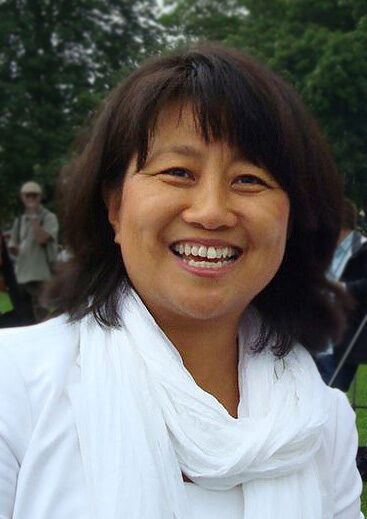
Chai Ling is a Chinese Student Activist. Born April 15, 1966, in Rizhao. Educated at Peking University and Harvard Business School. Awards include Reebok Human Rights Award.
Facts
17 facts · 1 confirmed by two sources · 2 cited · 14 from one source
Where this comes from
Papalocal keeps its own record. It started from these sources; what each one said is kept here as it was copied, so a change on their side never changes this page by itself. Tap one to read its version.
What Wikidata says · copied November 18, 2026 · revision 2557835962
- Described as
- Chinese Student Activist
- Born
- April 15, 1966 · 2 references
- Born in
- Rizhao
- Citizen of
- People's Republic of China (1966–); United States
- Occupation
- human rights defender; businessperson · 1 reference; political scientist · 1 reference; entrepreneur · 1 reference
- Education
- Peking University; Harvard Business School; Harvard University; Princeton University; Beijing Normal University · 1 reference
- Awards
- Reebok Human Rights Award (1989)
- Spouse
- Feng Congde (1988–1990); Robert Maginn
- Website
- http://www.allgirlsallowed.org
- Wikipedias with a page
- 16
Wikidata item Q610332 (wikidata.org/wiki/Q610332), public domain (CC0). Copied November 18, 2026.
What Wikipedia says · copied November 18, 2026 · revision 1383683435
Chai Ling (Chinese: 柴玲; pinyin: Chái Líng; born April 15, 1966) is a Chinese-American psychologist. She rose to prominence while studying at Peking University as one of the leaders of the 1989 Tiananmen Square protests. After moving to the US, she founded All Girls Allowed, an organization dedicated to ending China's one-child policy, and Jenzabar, an enterprise resource planning software firm for educational institutions.
- Born, in its opening lines
- April 15, 1966
From the Wikipedia article “Chai Ling” (en.wikipedia.org/wiki/Chai_Ling), by its contributors, under CC BY-SA 4.0 (creativecommons.org/licenses/by-sa/4.0/). Copied November 18, 2026; not changed.
Confirmed Two sources agree. Cited One source, and it names where it got it. One source One source, without a reference of its own. Sources disagree The sources disagree. We show the best-supported value and keep theirs below.
