
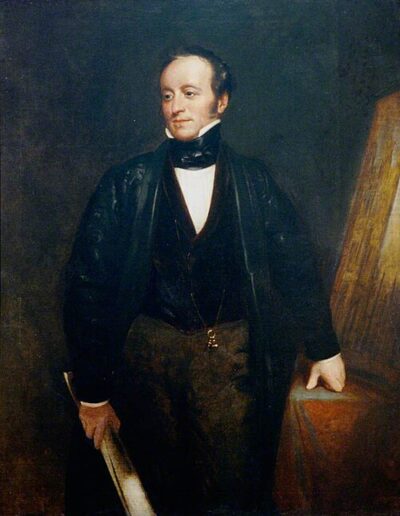
Charles Barry
Charles Barry was a British architect. Born May 23, 1795, in Westminster. Died May 12, 1860, in London. Known for All Saints' Church, Whitefield, Palace of Westminster and St Andrew's Church, Waterloo Street, Hove. Awards include Royal Gold Medal, Fellow of the Royal Society and Knight Bachelor.
Facts
30 facts · 2 confirmed by two sources · 11 cited · 17 from one source
Where this comes from
Papalocal keeps its own record. It started from these sources; what each one said is kept here as it was copied, so a change on their side never changes this page by itself. Tap one to read its version.
What Wikidata says · copied November 17, 2026 · revision 2568775008
- Described as
- British architect (1795–1860)
- Other names
- Sir Charles Barry, Charles, Sir Barry, Sir Barry, Charles Barry Sir, Charles Barry the Elder, Charles, the elder Barry
- Born
- May 23, 1795 · 10 references
- Died
- May 12, 1860 · 9 references
- Born in
- Westminster
- Died in
- London
- Buried in
- Westminster Abbey
- Cause of death
- myocardial infarction
- Citizen of
- United Kingdom of Great Britain and Ireland
- Occupation
- architect · 1 reference
- Worked for
- The Dulwich Estate (1830–) · 1 reference
- Member of
- Royal Society of London; Royal Academy of Arts
- Known for
- All Saints' Church, Whitefield; Palace of Westminster; St Andrew's Church, Waterloo Street, Hove; Dunrobin Castle; Big Ben; Highclere Castle
- Awards
- Royal Gold Medal (1850); Fellow of the Royal Society · 1 reference; Knight Bachelor
- Spouse
- Sarah Roswell · 1 reference
- Children
- Charles Barry, Jr. · 1 reference; Alfred Barry · 1 reference; Edward Middleton Barry · 1 reference; John Wolfe-Barry · 1 reference; Emily Barry · 1 reference; Godfrey Walter Barry · 1 reference; Adelaide Sarah Barry · 1 reference
- Father
- Walter Edward Barry · 1 reference
- Mother
- Frances Maybank
- Wikipedias with a page
- 25
Wikidata item Q552584 (wikidata.org/wiki/Q552584), public domain (CC0). Copied November 17, 2026.
What Wikipedia says · copied November 17, 2026 · revision 1378087985
Sir Charles Barry (23 May 1795 – 12 May 1860) was an English architect best known for his role in the rebuilding of the Palace of Westminster (also known as the Houses of Parliament) in London during the mid-19th century, but also responsible for numerous other buildings and gardens. He is known for his major contribution to the use of Italianate architecture in Britain, especially the use of the Palazzo as basis for the design of country houses, city mansions and public buildings. He also developed the Italian Renaissance garden style for the many gardens he designed around country houses.
- Born, in its opening lines
- May 23, 1795
- Died, in its opening lines
- May 12, 1860
From the Wikipedia article “Charles Barry” (en.wikipedia.org/wiki/Charles_Barry), by its contributors, under CC BY-SA 4.0 (creativecommons.org/licenses/by-sa/4.0/). Copied November 17, 2026; not changed.
Confirmed Two sources agree. Cited One source, and it names where it got it. One source One source, without a reference of its own. Sources disagree The sources disagree. We show the best-supported value and keep theirs below.
