
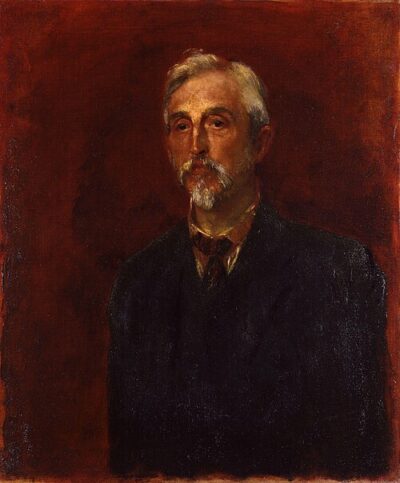
Charles Booth
Charles Booth was a British social researcher and philanthropist. Born March 30, 1840, in Liverpool. Died November 23, 1916, in Leicester. Positions held include Member of the Privy Council of the United Kingdom and president of the Royal Statistical Society (1892–1894). Awards include Fellow of the Royal Society and Guy Medal in Gold.
Facts
30 facts · 2 confirmed by two sources · 16 cited · 12 from one source
Where this comes from
Papalocal keeps its own record. It started from these sources; what each one said is kept here as it was copied, so a change on their side never changes this page by itself. Tap one to read its version.
What Wikidata says · copied November 18, 2026 · revision 2567388509
- Described as
- British social researcher and philanthropist (1840-1916)
- Other names
- Charles James Booth, Rt. Hon. Charles Booth
- Born
- March 30, 1840 · 5 references
- Died
- November 23, 1916 · 5 references
- Born in
- Liverpool · 1 reference
- Died in
- Leicester
- Buried in
- Tomb Of Charles Booth, Approx.12M. North Of Nave Of The Church Of St Andrew · 1 reference
- Citizen of
- United Kingdom of Great Britain and Ireland
- Occupation
- sociologist; statistician; politician; social reformer · 1 reference; author · 1 reference; ship-owner · 1 reference
- Positions held
- Member of the Privy Council of the United Kingdom; president of the Royal Statistical Society (1892–1894) · 1 reference
- Political party
- Liberal Party · 1 reference
- Member of
- Royal Society of London; Royal Statistical Society
- Awards
- Fellow of the Royal Society; Guy Medal in Gold (1892)
- Spouse
- Mary Booth (1871–) · 2 references
- Children
- Antonia Mary Booth · 1 reference; Thomas Macaulay Booth · 1 reference; Paulina Mary Booth · 1 reference; George Macaulay Booth · 2 references; Margaret Paulina Booth · 2 references; Mary Imogen Booth · 1 reference; Charles Zachary Macaulay Booth · 2 references
- Father
- Charles Booth · 2 references
- Mother
- Emily Fletcher · 2 references
- Siblings
- Alfred Booth · 1 reference
- Wikipedias with a page
- 21
Wikidata item Q555978 (wikidata.org/wiki/Q555978), public domain (CC0). Copied November 18, 2026.
What Wikipedia says · copied November 18, 2026 · revision 1381189721
Charles James Booth (30 March 1840 – 23 November 1916) was a British shipowner, Comtean positivist, social researcher, and reformer, best known for his innovative philanthropic studies on working-class life in London towards the end of the 19th century.
During the 1860s Booth became interested in the philosophy of Auguste Comte, the founder of modern sociology, and converted to his Religion of Humanity, affiliated with members of the London Positivist Society, and wrote positivist prayers. He was captivated by Comte's idea that in the future, scientific industrialists would be in control of the social leadership instead of the church ministers. Booth's work, followed by that of Seebohm Rowntree, influenced government policy regarding poverty in the early 20th century and helped initiate Old Age pensions and free school meals for the poorest children. In addition, his research would also demonstrate how poverty was influenced by religion, education, and administration.
Booth is best known for his multi-volume book Life and Labour of the People in London (1902), which focuses on the statistics he collected regarding poverty in London. Life and Labour "discusses a range of social conditions in which it reported that it appeared people are likely to be poor or on the margins of poverty." Booth is also recognised for influencing the transition of social attitudes from the Victorian Age to the 20th century.
Due to his investigations on poverty, some honour Charles Booth as one of the founding fathers of social administration, and regard his work crucial when studying social policy.
- Born, in its opening lines
- March 30, 1840
- Died, in its opening lines
- November 23, 1916
From the Wikipedia article “Charles Booth (social reformer)” (en.wikipedia.org/wiki/Charles_Booth_(social_reformer)), by its contributors, under CC BY-SA 4.0 (creativecommons.org/licenses/by-sa/4.0/). Copied November 18, 2026; not changed.
Confirmed Two sources agree. Cited One source, and it names where it got it. One source One source, without a reference of its own. Sources disagree The sources disagree. We show the best-supported value and keep theirs below.
