
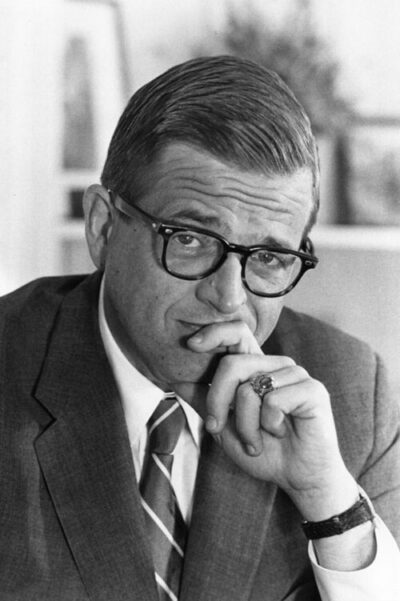
Charles Colson
Charles Colson was an American lawyer, politician, public servant and Christian advocate. Born October 16, 1931, in Boston. Died April 21, 2012, in Falls Church. Positions held include White House Counsel (1969–1970). Educated at Brown University and George Washington University. Awards include Presidential Citizens Medal and Templeton Prize.
Facts
19 facts · 2 confirmed by two sources · 4 cited · 13 from one source
Where this comes from
Papalocal keeps its own record. It started from these sources; what each one said is kept here as it was copied, so a change on their side never changes this page by itself. Tap one to read its version.
What Wikidata says · copied November 15, 2026 · revision 2568732586
- Described as
- American lawyer, politician, public servant and Christian advocate (1931–2012)
- Other names
- Charles "Chuck" Wendell Colson, Charles Wendell Colson
- Born
- October 16, 1931 · 4 references
- Died
- April 21, 2012 · 6 references
- Born in
- Boston · 1 reference
- Died in
- Falls Church · 1 reference
- Buried in
- Quantico National Cemetery · 1 reference
- Cause of death
- cerebral hemorrhage
- Citizen of
- United States
- Occupation
- politician · 1 reference; writer; lawyer
- Positions held
- White House Counsel (1969–1970)
- Political party
- Republican Party
- Education
- Brown University; George Washington University; Buckingham Browne & Nichols School · 1 reference
- Awards
- Presidential Citizens Medal; Templeton Prize
- Religion
- Evangelicalism (1974–)
- Military branch
- United States Marine Corps
- Wikipedias with a page
- 27
Wikidata item Q451808 (wikidata.org/wiki/Q451808), public domain (CC0). Copied November 15, 2026.
What Wikipedia says · copied November 15, 2026 · revision 1383406375
Charles Wendell Colson (October 16, 1931 – April 21, 2012), generally referred to as Chuck Colson, was an American attorney and political advisor who served as Special Counsel to President Richard Nixon from 1969 to 1970. Once known as President Nixon's "hatchet man", Colson gained notoriety at the height of the Watergate scandal, for being named as one of the Watergate Seven and also for pleading guilty to obstruction of justice for attempting to defame Pentagon Papers defendant Daniel Ellsberg. In 1974, Colson served seven months in the federal Maxwell Prison in Alabama, as the first member of the Nixon administration to be incarcerated for Watergate-related charges.
His mid-life religious conversion sparked a radical life change that led to the founding of his non-profit ministry Prison Fellowship and, three years later, Prison Fellowship International, to a focus on Christian worldview teaching and training around the world. Colson was also a public speaker and the author of more than 30 books. He was the founder and chairman of The Chuck Colson Center for Christian Worldview, which is a research, study, and networking center for growing in a Christian worldview, and which produces Colson's daily radio commentary, BreakPoint
Colson was a principal signer of the 1994 Evangelicals and Catholics Together ecumenical document signed by leading Evangelical Protestants and Roman Catholic leaders in the United States.
Colson received 15 honorary doctorates and in 1993 was awarded the Templeton Prize for Progress in Religion, the world's largest annual award (over US$1 million) in the field of religion, given to a person who "has made an exceptional contribution to affirming life's spiritual dimension". He donated the prize to further the work of Prison Fellowship, as he did all his speaking fees and royalties. In 2008, he was awarded the Presidential Citizens Medal by President George W. Bush.
- Born, in its opening lines
- October 16, 1931
- Died, in its opening lines
- April 21, 2012
From the Wikipedia article “Charles Colson” (en.wikipedia.org/wiki/Charles_Colson), by its contributors, under CC BY-SA 4.0 (creativecommons.org/licenses/by-sa/4.0/). Copied November 15, 2026; not changed.
Confirmed Two sources agree. Cited One source, and it names where it got it. One source One source, without a reference of its own. Sources disagree The sources disagree. We show the best-supported value and keep theirs below.
