
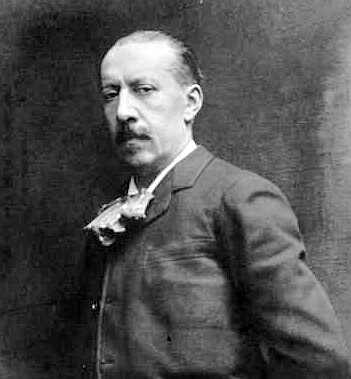
Charles-Marie Widor
Charles-Marie Widor was a French organist and composer. Born February 21, 1844, in Lyon. Died March 12, 1937, in 16th arrondissement of Paris. Positions held include director (1920–1934). Known for Symphony for Organ No. 5 and Symphony for Organ No. 9. Educated at Royal Conservatory of Brussels. Awards include Grand Officer of the Legion of Honour, Grand Officer of the Order of the Crown and Commander of the Order of Christ.
Facts
32 facts · 2 confirmed by two sources · 7 cited · 23 from one source
Where this comes from
Papalocal keeps its own record. It started from these sources; what each one said is kept here as it was copied, so a change on their side never changes this page by itself. Tap one to read its version.
What Wikidata says · copied November 16, 2026 · revision 2557836181
- Described as
- French organist and composer (1844–1937)
- Other names
- Charles-Marie Jean Albert Widor, Charles Marie Widor, Widor, Charles-Marie-Jean-Albert Widor
- Born
- February 21, 1844 · 15 references
- Died
- March 12, 1937 · 14 references
- Born in
- Lyon · 4 references
- Died in
- 16th arrondissement of Paris · 1 reference
- Name at birth
- Charles-Marie Jean Albert Widor · 1 reference
- Citizen of
- France · 1 reference
- Occupation
- classical composer; organist · 3 references; music educator; music critic; university teacher; pedagogue · 1 reference; conductor · 1 reference
- Positions held
- director (1920–1934)
- Worked for
- Conservatoire de Paris (1890–); Église Saint-François-de-Sales de Lyon; Church of Saint-Sulpice (1868–1933)
- Education
- Royal Conservatory of Brussels
- Member of
- Académie des beaux-arts (1910–); Royal Academy of Science, Letters and Fine Arts of Belgium; Academy of Arts, Berlin
- Genre
- opera; symphony
- Instrument
- organ
- Known for
- Symphony for Organ No. 5; Symphony for Organ No. 9
- Awards
- Grand Officer of the Legion of Honour; Grand Officer of the Order of the Crown; Commander of the Order of Christ; Order of Saint Stanislaus; Knight Commander of the Order of St. Gregory the Great
- Spouse
- Mathilde de Montesquiou-Fézensac (1920–)
- Wikipedias with a page
- 44
Wikidata item Q215161 (wikidata.org/wiki/Q215161), public domain (CC0). Copied November 16, 2026.
What Wikipedia says · copied November 16, 2026 · revision 1381710562
Charles-Marie-Jean-Albert Widor (21 February 1844 – 12 March 1937) was a French organist, composer, teacher, conductor and critic of the late Romantic era. As a composer he is best known for his ten symphonies for solo organ, a genre he invented. He was helped in this by the innovative organs built by Aristide Cavaillé-Coll. The final Toccata of his Organ Symphony No. 5 is frequently played as recessional music at weddings and other celebrations.
He was the longest-serving organist of Saint-Sulpice in Paris, a post he held for 63 years (January 1870 – 31 December 1933). He also was organ professor at the Paris Conservatoire from 1890 to 1896 in succession to César Franck and then he became professor of composition at the same institution, following Théodore Dubois.
Widor was a prolific composer, writing music for organ, piano, voice and ensembles. Apart from his ten organ symphonies, he also wrote three symphonies for orchestra and organ, nearly a hundred songs for piano and voice, four operas and a ballet.
- Born, in its opening lines
- February 21, 1844
- Died, in its opening lines
- March 12, 1937
From the Wikipedia article “Charles-Marie Widor” (en.wikipedia.org/wiki/Charles-Marie_Widor), by its contributors, under CC BY-SA 4.0 (creativecommons.org/licenses/by-sa/4.0/). Copied November 16, 2026; not changed.
Confirmed Two sources agree. Cited One source, and it names where it got it. One source One source, without a reference of its own. Sources disagree The sources disagree. We show the best-supported value and keep theirs below.
