
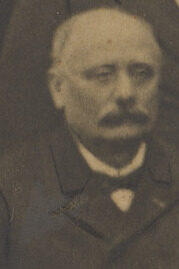
Charles Wolf
Charles Wolf was a French astronomer. Born November 9, 1827, in Vorges. Died July 4, 1918, in Paris. Positions held include president of the French Academy of Sciences (1898). Educated at École Normale Supérieure.
Facts
13 facts · 2 confirmed by two sources · 3 cited · 8 from one source
Where this comes from
Papalocal keeps its own record. It started from these sources; what each one said is kept here as it was copied, so a change on their side never changes this page by itself. Tap one to read its version.
What Wikidata says · copied November 17, 2026 · revision 2567452583
- Described as
- French astronomer (1827-1918)
- Other names
- Charles Joseph Étienne Wolf
- Born
- November 9, 1827 · 2 references
- Died
- July 4, 1918 · 2 references
- Born in
- Vorges
- Died in
- Paris
- Name at birth
- Charles Joseph Étienne Wolf · 1 reference
- Citizen of
- France
- Occupation
- astronomer · 1 reference
- Positions held
- president of the French Academy of Sciences (1898) · 1 reference
- Worked for
- University of Paris
- Education
- École Normale Supérieure
- Member of
- Société Philomathique de Paris; French Academy of Sciences; Ligue de la Patrie Française
- Wikipedias with a page
- 24
Wikidata item Q720089 (wikidata.org/wiki/Q720089), public domain (CC0). Copied November 17, 2026.
What Wikipedia says · copied November 17, 2026 · revision 1342231562
Charles Joseph Étienne Wolf (9 November 1827 in Vorges – 4 July 1918) was a French astronomer.
In 1862, Urbain Le Verrier offered him a post as assistant at the Paris Observatory.
In 1867 he and Georges Rayet discovered Wolf–Rayet stars.
He was elected to the positions of vice-president (1897) and president (1898) of the French Academy of Sciences.
- Born, in its opening lines
- November 9, 1827
- Died, in its opening lines
- July 4, 1918
From the Wikipedia article “Charles Wolf (astronomer)” (en.wikipedia.org/wiki/Charles_Wolf_(astronomer)), by its contributors, under CC BY-SA 4.0 (creativecommons.org/licenses/by-sa/4.0/). Copied November 17, 2026; not changed.
Confirmed Two sources agree. Cited One source, and it names where it got it. One source One source, without a reference of its own. Sources disagree The sources disagree. We show the best-supported value and keep theirs below.
