
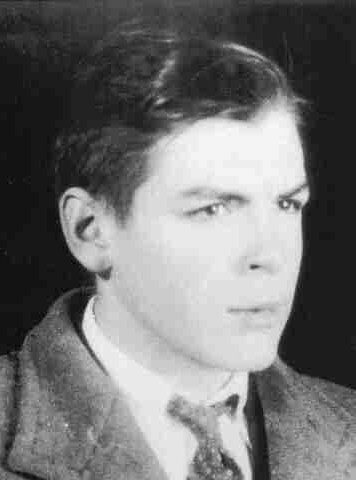
Che Guevara
Che Guevara was an Argentine Marxist revolutionary. Born June 14, 1928, in Rosario. Died October 9, 1967, in La Higuera. Positions held include Minister of Industry of Cuba (1961–1965). Known for Guerrilla Warfare, The Bolivian diary and The Motorcycle Diaries. Educated at University of Buenos Aires. Awards include Collar of the Order of the White Lion, Grand Cross of the Order of the Southern Cross and Order of the Republic.
Facts
42 facts · 1 confirmed by two sources · 13 cited · 27 from one source · 1 where the sources disagree
What’s different
- Born: we show June 14, 1928 (Sources disagree). Wikipedia says May 14, 1928
Where this comes from
Papalocal keeps its own record. It started from these sources; what each one said is kept here as it was copied, so a change on their side never changes this page by itself. Tap one to read its version.
What Wikidata says · copied November 16, 2026 · revision 2566146904
- Described as
- Argentine Marxist revolutionary (1928–1967)
- Other names
- Pelado, El Che, Adolfo Mena González, Fuser, Fernando Sacamuelas, Ernesto Guevara de la Serna, Chang-Cho, Che, Ernesto Rafael Guevara de la Serna, Furibundo Serna, Ramón, Chancho
- Born
- June 14, 1928 · 14 references
- Died
- October 9, 1967 · 13 references
- Born in
- Rosario · 2 references
- Died in
- La Higuera · 2 references
- Buried in
- Che Guevara Mausoleum
- Cause of death
- gunshot wound · 1 reference
- Name at birth
- Ernesto Guevara · 1 reference
- Citizen of
- Cuba; Argentina · 1 reference
- Occupation
- politician · 1 reference; physician · 2 references; poet; diplomat; essayist; revolutionary · 1 reference; partisan; opinion journalist · 1 reference
- Positions held
- Minister of Industry of Cuba (1961–1965)
- Political party
- Communist Party of Cuba; 26th of July Movement
- Education
- University of Buenos Aires (1948–1953)
- Sport
- rugby union
- Known for
- Guerrilla Warfare; The Bolivian diary; The Motorcycle Diaries
- Awards
- Collar of the Order of the White Lion (1960); Grand Cross of the Order of the Southern Cross (1961); Order of the Republic (1959); Order of Augusto César Sandino · 1 reference
- Spouse
- Hilda Gadea (1955–1959) · 1 reference; Aleida March (1959–1967) · 1 reference
- Children
- Aleida Guevara · 1 reference; Hilda Guevara Gadea · 1 reference
- Father
- Ernesto Guevara Lynch · 1 reference
- Mother
- Celia de la Serna
- Military rank
- Major · 1 reference
- Lived in
- Argentina (1928–); Cuba · 1 reference; Bolivia · 1 reference; Guatemala · 1 reference; Mexico · 1 reference
- Height
- 1.76 m (5 ft 9 in) · 1 reference
- Wikipedias with a page
- 227
Wikidata item Q5809 (wikidata.org/wiki/Q5809), public domain (CC0). Copied November 16, 2026.
What Wikipedia says · copied November 16, 2026 · revision 1384945796
Ernesto "Che" Guevara de la Serna (14 May 1928 – 9 October 1967) was an Argentine Marxist revolutionary, author, guerrilla leader, diplomat, politician, and military theorist. A major figure of the Cuban Revolution, his stylized visage has become a countercultural symbol of rebellion and global insignia in popular culture.
As a medical student, Guevara travelled throughout South America and was appalled by the poverty, hunger, and disease he witnessed. His burgeoning desire to help overturn what he saw as the capitalist exploitation of Latin America by the US prompted his involvement in Guatemala's social reforms under President Jacobo Árbenz, whose CIA-assisted overthrow at the behest of the United Fruit Company solidified Guevara's political ideology. In Mexico City, Guevara met Raúl and Fidel Castro, joined their 26th of July Movement, and sailed to Cuba aboard the yacht Granma with the intention of overthrowing US-backed dictator Fulgencio Batista. Guevara rose to prominence among the insurgents, was promoted to second-in-command, and played a pivotal role in the two-year guerrilla campaign which deposed the Batista regime.
After the Cuban Revolution, Guevara played key roles in the new government. These included reviewing the appeals and death sentences for those convicted as war criminals during the revolutionary tribunals, instituting agrarian land reform as minister of industries, helping spearhead a successful literacy campaign, serving as president of the National Bank and instructional director for Cuba's armed forces, and traversing the globe as a diplomat on behalf of Cuban socialism. Such positions allowed him to play a central role in training the militia forces who repelled the Bay of Pigs Invasion, and bringing Soviet nuclear-armed ballistic missiles to Cuba, a decision which precipitated the 1962 Cuban Missile Crisis. Guevara was a prolific writer and diarist, composing a seminal guerrilla warfare manual, along with a best-selling memoir about his motorcycle journey. His experiences and studying of Marxism–Leninism led him to posit that the Third World's underdevelopment and dependence was an intrinsic result of imperialism, neocolonialism, and monopoly capitalism, with the only remedies being proletarian internationalism and world revolution. Guevara left Cuba in 1965 to foment continental revolutions across Africa and South America, first unsuccessfully in Congo-Kinshasa and later in Bolivia, where he was captured by CIA-assisted Bolivian forces and summarily executed.
Guevara remains a revered and reviled figure, polarized in the collective imagination in biographies, memoirs, essays, documentaries, songs, and films. As a result of his perceived martyrdom, poetic invocations for class struggle, and desire to create the consciousness of a "new man" driven by moral rather than material incentives, Guevara has evolved into a quintessential icon of many leftist movements. His critics accuse him of promoting authoritarianism and endorsing violence against his opponents. Despite disagreement on his legacy, Time named him one of the 100 most influential people of the 20th century, while an Alberto Korda photograph of him, titled Guerrillero Heroico, was cited by the Maryland Institute College of Art as "the most famous photograph in the world".
- Born, in its opening lines
- May 14, 1928
- Died, in its opening lines
- October 9, 1967
From the Wikipedia article “Che Guevara” (en.wikipedia.org/wiki/Che_Guevara), by its contributors, under CC BY-SA 4.0 (creativecommons.org/licenses/by-sa/4.0/). Copied November 16, 2026; not changed.
Confirmed Two sources agree. Cited One source, and it names where it got it. One source One source, without a reference of its own. Sources disagree The sources disagree. We show the best-supported value and keep theirs below.
