
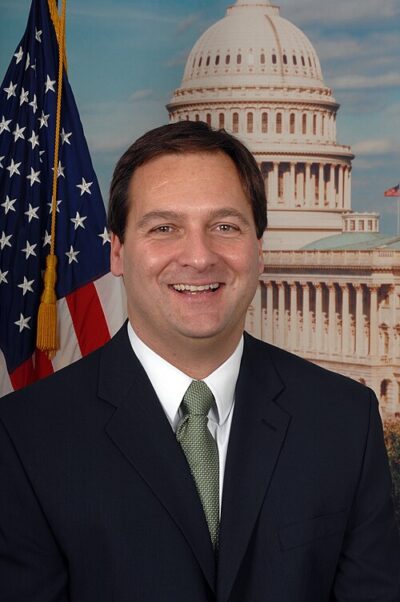
Chris Carney is an American politician. Born March 2, 1959, in Cedar Rapids. Positions held include United States representative (2007–2011). Educated at Cornell College and University of Wyoming.
Facts
16 facts · 1 confirmed by two sources · 6 cited · 9 from one source
Where this comes from
Papalocal keeps its own record. It started from these sources; what each one said is kept here as it was copied, so a change on their side never changes this page by itself. Tap one to read its version.
What Wikidata says · copied November 19, 2026 · revision 2554152728
- Described as
- American politician
- Born
- March 2, 1959
- Born in
- Cedar Rapids
- Citizen of
- United States
- Occupation
- politician; military officer; intelligence analyst · 1 reference; teacher · 1 reference
- Positions held
- United States representative (2007–2011)
- Political party
- Democratic Party
- Worked for
- Pennsylvania State University
- Education
- Cornell College (–1981) · 1 reference; University of Wyoming (–1983) · 1 reference; University of Nebraska–Lincoln (–1993) · 1 reference
- Religion
- Catholic Church
- Military branch
- United States Navy Reserve (1995–) · 1 reference
- Military rank
- commander
- Wikipedias with a page
- 11
Wikidata item Q5106098 (wikidata.org/wiki/Q5106098), public domain (CC0). Copied November 19, 2026.
What Wikipedia says · copied November 19, 2026 · revision 1381200671
Christopher Paul Carney (born March 2, 1959) is an American politician who was the U.S. representative for Pennsylvania's 10th congressional district from 2007 to 2011. He is a member of the Democratic Party. He is an associate professor of political science at Penn State Worthington Scranton, where he has taught since 1992.
- Born, in its opening lines
- March 2, 1959
From the Wikipedia article “Chris Carney” (en.wikipedia.org/wiki/Chris_Carney), by its contributors, under CC BY-SA 4.0 (creativecommons.org/licenses/by-sa/4.0/). Copied November 19, 2026; not changed.
Confirmed Two sources agree. Cited One source, and it names where it got it. One source One source, without a reference of its own. Sources disagree The sources disagree. We show the best-supported value and keep theirs below.
