
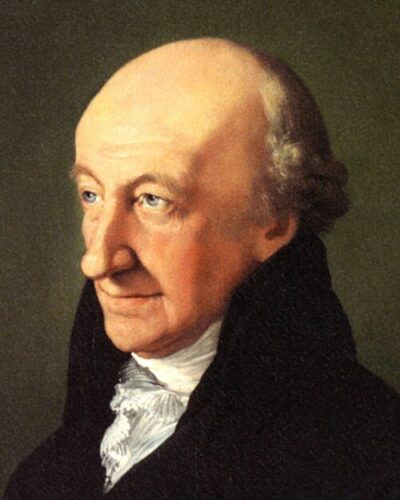
Christoph Martin Wieland
Christoph Martin Wieland was a German poet and writer. Born September 5, 1733, in Oberholzheim. Died January 20, 1813, in Weimar. Educated at University of Tübingen and Kloster Berge school. Awards include Knight of the Legion of Honour and Order of Saint Anna.
Facts
34 facts · 2 confirmed by two sources · 15 cited · 17 from one source
Where this comes from
Papalocal keeps its own record. It started from these sources; what each one said is kept here as it was copied, so a change on their side never changes this page by itself. Tap one to read its version.
What Wikidata says · copied November 16, 2026 · revision 2568744142
- Described as
- German poet and writer (1733–1813)
- Born
- September 5, 1733 · 11 references
- Died
- January 20, 1813 · 11 references
- Born in
- Oberholzheim · 3 references
- Died in
- Weimar · 6 references
- Citizen of
- Biberach an der Riß
- Occupation
- poet · 1 reference; translator · 1 reference; writer · 2 references; university teacher · 1 reference; poet lawyer; English–German translator; literary translator; translator of William Shakespeare
- Worked for
- University of Erfurt (1769–) · 1 reference
- Education
- University of Tübingen (1750–1752) · 2 references; Kloster Berge school · 1 reference
- Member of
- Royal Prussian Academy of Sciences; Academy of Science for Public Utility; Académie des Inscriptions et Belles-Lettres (1803–1819) · 1 reference; Bavarian Academy of Sciences and Humanities; Royal Netherlands Academy of Arts and Sciences
- Awards
- Knight of the Legion of Honour (1808) · 1 reference; Order of Saint Anna · 1 reference
- Spouse
- Anna Dorothea Wieland (1765–1801) · 1 reference
- Children
- Ludwig Wieland · 1 reference; Sophie Catharina Susanna Wieland; Juliane Caroline Dorothea Wieland; Amalia Augusta Erler; Johann David Adolf Kick; Sophie Reinhold · 1 reference; Caroline Schorcht · 1 reference; Karl Friedrich Wieland · 1 reference
- Father
- Thomas Adam Wieland · 1 reference
- Mother
- Regine Catherine Kick · 1 reference
- Wikipedias with a page
- 61
Wikidata item Q154010 (wikidata.org/wiki/Q154010), public domain (CC0). Copied November 16, 2026.
What Wikipedia says · copied November 16, 2026 · revision 1375773644
Christoph Martin Wieland (; German: [ˈviːlant]; 5 September 1733 – 20 January 1813) was a German poet and writer, representative of literary Rococo. He is best-remembered for having written the first Bildungsroman (Geschichte des Agathon), as well as the epic Oberon, which formed the basis for both Friederike Sophie Seyler's opera of the same name and Carl Maria von Weber's opera of the same name. His thought was representative of the cosmopolitanism of the German Enlightenment, exemplified in his remark: "Only a true cosmopolitan can be a good citizen." He was a key figure of Weimar Classicism and a collaborator of Abel Seyler's theatre company.
- Born, in its opening lines
- September 5, 1733
- Died, in its opening lines
- January 20, 1813
From the Wikipedia article “Christoph Martin Wieland” (en.wikipedia.org/wiki/Christoph_Martin_Wieland), by its contributors, under CC BY-SA 4.0 (creativecommons.org/licenses/by-sa/4.0/). Copied November 16, 2026; not changed.
Confirmed Two sources agree. Cited One source, and it names where it got it. One source One source, without a reference of its own. Sources disagree The sources disagree. We show the best-supported value and keep theirs below.
