
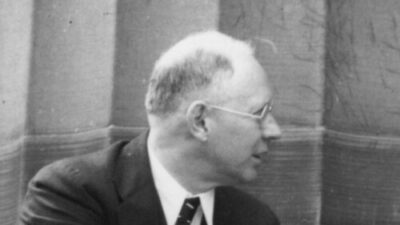
Clark L. Hull
Clark L. Hull was an American psychologist. Born May 24, 1884, in New York. Died May 10, 1952, in New Haven. Positions held include President of the American Psychological Association (1936). Educated at University of Wisconsin–Madison and University of Michigan College of Literature, Science, and the Arts. Awards include Howard Crosby Warren Medal and Honorary Fellow of the British Psychological Society.
Facts
19 facts · 2 confirmed by two sources · 6 cited · 11 from one source
Where this comes from
Papalocal keeps its own record. It started from these sources; what each one said is kept here as it was copied, so a change on their side never changes this page by itself. Tap one to read its version.
What Wikidata says · copied November 15, 2026 · revision 2568886833
- Described as
- American psychologist (1884–1952)
- Other names
- Clark Leonard Hull, Clark Hull, C. L. Hull
- Born
- May 24, 1884 · 5 references
- Died
- May 10, 1952 · 6 references
- Born in
- New York · 2 references
- Died in
- New Haven · 1 reference
- Buried in
- Old Willington Hill Cemetery · 1 reference
- Citizen of
- United States
- Occupation
- psychologist · 1 reference; university teacher
- Positions held
- President of the American Psychological Association (1936) · 1 reference
- Worked for
- Yale University; University of Wisconsin–Madison
- Education
- University of Wisconsin–Madison (–1918) · 1 reference; University of Michigan College of Literature, Science, and the Arts
- Member of
- American Psychological Association; American Academy of Arts and Sciences; National Academy of Sciences (1936–)
- Awards
- Howard Crosby Warren Medal (1945) · 1 reference; Honorary Fellow of the British Psychological Society
- Field
- psychology
- Wikipedias with a page
- 34
Wikidata item Q28882 (wikidata.org/wiki/Q28882), public domain (CC0). Copied November 15, 2026.
What Wikipedia says · copied November 15, 2026 · revision 1371982075
Clark Leonard Hull (May 24, 1884 – May 10, 1952) was an American psychologist who sought to explain learning and motivation by scientific laws of behavior. Hull is known for his debates with Edward C. Tolman. He is also known for his work in drive theory.
Hull spent the mature part of his career at Yale University, where he was recruited by the president and former psychologist, James Rowland Angell. He performed research demonstrating that his theories could predict behavior. His most significant works were the Mathematico-Deductive Theory of Rote Learning (1940), and Principles of Behavior (1943), which established his analysis of animal learning and conditioning as the dominant learning theory of its time. Hull's model is expressed in biological terms: Organisms suffer deprivation; deprivation creates needs; needs activate drives; drives activate behavior; behavior is goal directed; achieving the goal has survival value.
He is perhaps best known for the "goal gradient" effect or hypothesis, wherein organisms spend disproportionate amounts of effort in the final stages of attainment of the object of drives. Due to the lack of popularity of behaviorism in modern contexts it is little referenced today or bracketed as obsolete(though more recent cognitive psychology research has found renewed support for goal-gradient like effects in effortful cognitive tasks). Nonetheless, a Review of General Psychology survey, published in 2002, ranked Hull as the 21st most cited psychologist of the 20th century.
- Born, in its opening lines
- May 24, 1884
- Died, in its opening lines
- May 10, 1952
From the Wikipedia article “Clark L. Hull” (en.wikipedia.org/wiki/Clark_L._Hull), by its contributors, under CC BY-SA 4.0 (creativecommons.org/licenses/by-sa/4.0/). Copied November 15, 2026; not changed.
Confirmed Two sources agree. Cited One source, and it names where it got it. One source One source, without a reference of its own. Sources disagree The sources disagree. We show the best-supported value and keep theirs below.
