
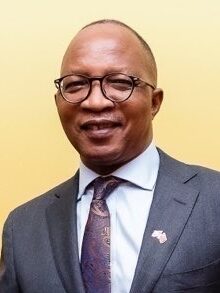
Cleopas Dlamini
Cleopas Dlamini is a prime Minister of Eswatini. Born 1952. Positions held include Prime Minister of Eswatini (2021–2023). Educated at University of Botswana, Lesotho and Swaziland and University of South Africa.
Facts
9 facts · 1 confirmed by two sources · 4 cited · 4 from one source
Where this comes from
Papalocal keeps its own record. It started from these sources; what each one said is kept here as it was copied, so a change on their side never changes this page by itself. Tap one to read its version.
What Wikidata says · copied November 18, 2026 · revision 2562755940
- Described as
- prime Minister of Eswatini
- Other names
- Cleopas Sipho Dlamini
- Born
- 1952 · 1 reference
- Citizen of
- Eswatini
- Occupation
- business executive; politician
- Positions held
- Prime Minister of Eswatini (2021–2023) · 2 references
- Political party
- independent politician · 1 reference
- Education
- University of Botswana, Lesotho and Swaziland · 1 reference; University of South Africa · 1 reference; Portland State University · 1 reference
- Wikipedias with a page
- 21
Wikidata item Q107600891 (wikidata.org/wiki/Q107600891), public domain (CC0). Copied November 18, 2026.
What Wikipedia says · copied November 18, 2026 · revision 1366659780
Cleopas Sipho Dlamini (born 26 December 1952) is a Liswati business executive who served as the prime minister of Eswatini from 2021 to 2023.
He replaced Themba N. Masuku, who occupied the office in acting capacity, following the death of the previous substantive office holder Ambrose Mandvulo Dlamini in December 2020. Before he was named prime minister, Cleopas was the chief executive officer of the Public Pension Fund of the Kingdom of Eswatini. He was also a Senator in the Eswatini Senate.
- Born, in its opening lines
- December 26, 1952
From the Wikipedia article “Cleopas Dlamini” (en.wikipedia.org/wiki/Cleopas_Dlamini), by its contributors, under CC BY-SA 4.0 (creativecommons.org/licenses/by-sa/4.0/). Copied November 18, 2026; not changed.
Confirmed Two sources agree. Cited One source, and it names where it got it. One source One source, without a reference of its own. Sources disagree The sources disagree. We show the best-supported value and keep theirs below.
