
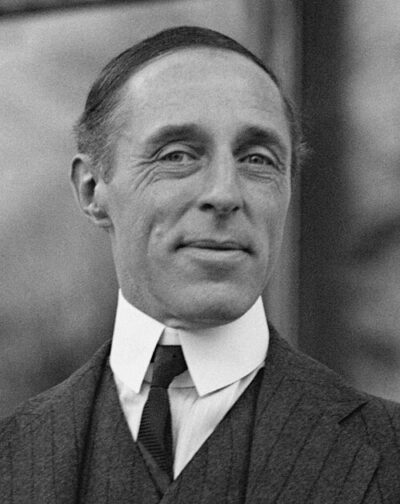
D. W. Griffith
D. W. Griffith was an American filmmaker. Born January 22, 1875, in Crestwood. Died July 23, 1948, in Hollywood. Known for The Birth of a Nation and Intolerance. Awards include Academy Honorary Award and star on Hollywood Walk of Fame.
Facts
23 facts · 2 confirmed by two sources · 9 cited · 12 from one source
Where this comes from
Papalocal keeps its own record. It started from these sources; what each one said is kept here as it was copied, so a change on their side never changes this page by itself. Tap one to read its version.
What Wikidata says · copied November 13, 2026 · revision 2568618309
- Described as
- American filmmaker (1875–1948)
- Other names
- D W Griffith, David Griffith, David W. Griffith, David Llewelyn Wark Griffith, David Wark Griffith
- Born
- January 22, 1875 · 7 references
- Died
- July 23, 1948 · 7 references
- Born in
- Crestwood
- Died in
- Hollywood · 2 references
- Buried in
- Mount Tabor Methodist Church Graveyard · 1 reference
- Cause of death
- cerebral hemorrhage
- Name at birth
- David Llewelyn Wark Griffith
- Citizen of
- United States · 1 reference
- Occupation
- film director; actor · 1 reference; film producer · 1 reference; screenwriter · 1 reference; film editor; executive producer; director · 2 references; writer
- Known for
- The Birth of a Nation; Intolerance
- Awards
- Academy Honorary Award (1936) · 1 reference; star on Hollywood Walk of Fame · 1 reference
- Field
- silent film
- Spouse
- Linda Arvidson (1906–1936)
- Father
- Jacob Wark Griffith · 1 reference
- Wikipedias with a page
- 81
Wikidata item Q51123 (wikidata.org/wiki/Q51123), public domain (CC0). Copied November 13, 2026.
What Wikipedia says · copied November 13, 2026 · revision 1382755427
David Wark Griffith (January 22, 1875 – July 23, 1948) was an American film director. Considered one of the most influential figures in the history of the motion picture, he pioneered many aspects of film editing and expanded the art of the narrative film.
To modern audiences, Griffith is known primarily for directing the 1915 film The Birth of a Nation. One of the most financially successful films of all time and considered a landmark by film historians, it has also been denounced for its degrading portrayals of African Americans, its glorification of the Ku Klux Klan, and support for the Confederacy. The Ku Klux Klan's revival in the months that followed is partially attributed to the film's release. The film led to riots in several major cities all over the United States and the NAACP attempted to have it banned. Griffith made his next film Intolerance (1916) as an answer to critics, who he felt unfairly maligned his work.
Together with Charlie Chaplin, Mary Pickford, and Douglas Fairbanks, Griffith founded the studio United Artists in 1919 with the goal of enabling actors and directors to make films on their own terms, as opposed to the terms of commercial studios. Several of Griffith's later films were successful, including Broken Blossoms (1919), Way Down East (1920), and Orphans of the Storm (1921), but the high costs he incurred for production and promotion often led to commercial failure. He had made nearly 520 films, including nearly 480 short movies, by the time of The Struggle (1931), his final feature. All but three were completely silent.
- Born, in its opening lines
- January 22, 1875
- Died, in its opening lines
- July 23, 1948
From the Wikipedia article “D. W. Griffith” (en.wikipedia.org/wiki/D._W._Griffith), by its contributors, under CC BY-SA 4.0 (creativecommons.org/licenses/by-sa/4.0/). Copied November 13, 2026; not changed.
Confirmed Two sources agree. Cited One source, and it names where it got it. One source One source, without a reference of its own. Sources disagree The sources disagree. We show the best-supported value and keep theirs below.
