
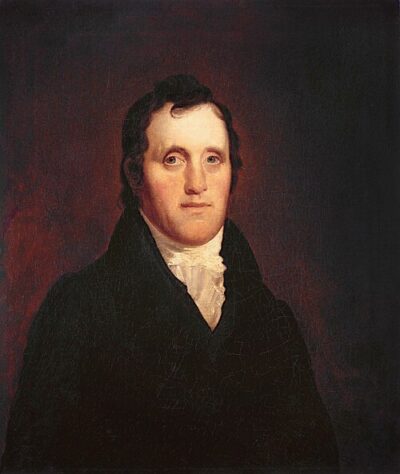
Daniel D. Tompkins
Daniel D. Tompkins was an American politician; sixth vice president of the United States. Born June 21, 1774, in Scarsdale. Died June 11, 1825, in Castleton, Staten Island. Positions held include Vice President of the United States (1817–1825), Governor of New York (1807–1817) and member of the New York State Assembly. Educated at Columbia University.
Facts
27 facts · 2 confirmed by two sources · 8 cited · 17 from one source
Where this comes from
Papalocal keeps its own record. It started from these sources; what each one said is kept here as it was copied, so a change on their side never changes this page by itself. Tap one to read its version.
What Wikidata says · copied November 13, 2026 · revision 2568322816
- Described as
- American politician; sixth vice president of the United States (1774–1825)
- Other names
- Daniel Tompkins, Vice President Tompkins, Daniel D. Tompkins, 6th Vice President of the USA
- Born
- June 21, 1774 · 5 references
- Died
- June 11, 1825 · 5 references
- Born in
- Scarsdale
- Died in
- Castleton, Staten Island
- Buried in
- St. Mark's Church in-the-Bowery Churchyard · 1 reference
- Citizen of
- United States
- Occupation
- politician · 2 references; lawyer; judge; governor · 1 reference; jurist · 1 reference; vice president · 1 reference
- Positions held
- Vice President of the United States (1817–1825); Governor of New York (1807–1817); member of the New York State Assembly; Grand Master of the Grand Lodge of New York (1820–1821)
- Political party
- Democratic-Republican Party
- Education
- Columbia University
- Member of
- American Antiquarian Society
- Spouse
- Hannah Tompkins
- Children
- Minthorne Tompkins; Arietta Minthorne Thompson; Susannah MacLaren Tompkins · 1 reference
- Father
- Jonathan Griffin Tompkins · 2 references
- Mother
- Sarah Ann Hyatt · 1 reference
- Siblings
- Caleb Tompkins
- Religion
- Presbyterianism
- Wikipedias with a page
- 58
Wikidata item Q223545 (wikidata.org/wiki/Q223545), public domain (CC0). Copied November 13, 2026.
What Wikipedia says · copied November 13, 2026 · revision 1380832214
Daniel D. Tompkins (June 21, 1774 – June 11, 1825) was an American politician who served as the sixth vice president of the United States from 1817 to 1825. He previously served as the fourth governor of New York from 1807 to 1817.
Born in Scarsdale, New York, on June 21, 1774, Tompkins practiced law in New York City after graduating from Columbia College. He was a delegate to the 1801 New York constitutional convention and served on the New York Supreme Court from 1804 to 1807. In 1807, he defeated incumbent Morgan Lewis to become the governor of New York. He held that office from 1807 to 1817, serving for the duration of the War of 1812. During the war, he often spent his own money to equip and pay the militia when the legislature was not in session or would not approve the necessary funds.
Tompkins was the Democratic-Republican Party's vice-presidential nominee in the 1816 presidential election. The ticket of James Monroe and Tompkins easily prevailed over limited Federalist opposition. He served as vice president from 1817 to 1825, and was the only 19th-century vice president to serve two full terms. In 1820, he sought another term as Governor of New York, but was defeated by DeWitt Clinton. After the War of 1812, Tompkins was in poor physical and financial health, the latter condition stemming largely from his spending for the military effort during the war. He fell into alcoholism and was unable to re-establish fiscal solvency despite winning partial reimbursement from the federal government in 1823. He died 99 days after completing a second term and leaving office on June 11, 1825, at the age of 50.
- Born, in its opening lines
- June 21, 1774
- Died, in its opening lines
- June 11, 1825
From the Wikipedia article “Daniel D. Tompkins” (en.wikipedia.org/wiki/Daniel_D._Tompkins), by its contributors, under CC BY-SA 4.0 (creativecommons.org/licenses/by-sa/4.0/). Copied November 13, 2026; not changed.
Confirmed Two sources agree. Cited One source, and it names where it got it. One source One source, without a reference of its own. Sources disagree The sources disagree. We show the best-supported value and keep theirs below.
