
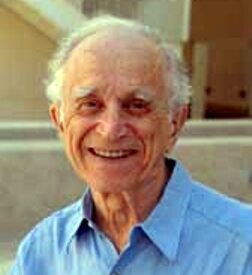
David Easton
David Easton was a Canadian academic. Born June 24, 1917, in Toronto. Died July 19, 2014, in Tulsa. Positions held include chairperson (1968–1969). Educated at University of Toronto and Harvard University.
Facts
17 facts · 2 confirmed by two sources · 4 cited · 11 from one source
Where this comes from
Papalocal keeps its own record. It started from these sources; what each one said is kept here as it was copied, so a change on their side never changes this page by itself. Tap one to read its version.
What Wikidata says · copied November 15, 2026 · revision 2557851162
- Described as
- Canadian academic (1917-2014)
- Born
- June 24, 1917 · 3 references
- Died
- July 19, 2014 · 2 references
- Born in
- Toronto · 1 reference
- Died in
- Tulsa · 1 reference
- Citizen of
- Canada
- Occupation
- political scientist · 1 reference; university teacher
- Positions held
- chairperson (1968–1969) · 2 references
- Worked for
- University of California, Irvine; University of Chicago · 1 reference
- Education
- University of Toronto; Harvard University; McMaster University; Kalamazoo College
- Member of
- American Academy of Arts and Sciences; Royal Society of Canada
- Field
- political system · 1 reference
- Wikipedias with a page
- 31
Wikidata item Q471431 (wikidata.org/wiki/Q471431), public domain (CC0). Copied November 15, 2026.
What Wikipedia says · copied November 15, 2026 · revision 1341440152
David Easton (June 24, 1917 – July 19, 2014) was a Canadian-born American political scientist. From 1947 to 1997, he served as a professor of political science at the University of Chicago.
At the forefront of both the behavioralist and post-behavioralist revolutions in the discipline of political science during the 1950s and 1970s, Easton provided the discipline's most widely used definition of politics as the authoritative allocation of values for the society. He was renowned for his application of systems theory to the study of political science. Policy analysts have utilized his five-fold scheme for studying the policy-making process: input, conversion, output, feedback and environment. Gunnell argues that since the 1950s the concept of "system" was the most important theoretical concept used by American political scientists. The idea appeared in sociology and other social sciences but it was Easton who specified how it could be best applied to behavioral research on politics. He was president of the American Political Science Association.
- Born, in its opening lines
- June 24, 1917
- Died, in its opening lines
- July 19, 2014
From the Wikipedia article “David Easton” (en.wikipedia.org/wiki/David_Easton), by its contributors, under CC BY-SA 4.0 (creativecommons.org/licenses/by-sa/4.0/). Copied November 15, 2026; not changed.
Confirmed Two sources agree. Cited One source, and it names where it got it. One source One source, without a reference of its own. Sources disagree The sources disagree. We show the best-supported value and keep theirs below.
