
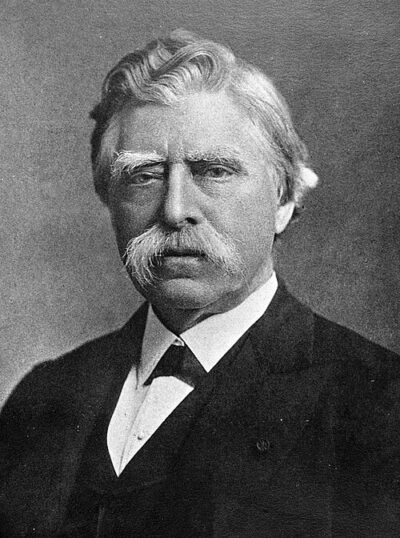
David Edward Hughes
David Edward Hughes was a Welsh-American scientist and musician. Born May 16, 1831, in Bala. Died January 22, 1900, in London. Educated at Spalding Hall. Awards include Fellow of the Royal Society, Royal Medal and Commander of the Legion of Honour.
Facts
26 facts · 1 confirmed by two sources · 7 cited · 17 from one source · 1 where the sources disagree
What’s different
- Born: we show May 16, 1831 (Sources disagree). Wikipedia says May 16, 1830
Where this comes from
Papalocal keeps its own record. It started from these sources; what each one said is kept here as it was copied, so a change on their side never changes this page by itself. Tap one to read its version.
What Wikidata says · copied November 15, 2026 · revision 2527821772
- Described as
- Welsh-American scientist and musician (1831–1900)
- Other names
- David Edwin Hughes, David E. Hughes
- Born
- May 16, 1831 · 4 references
- Died
- January 22, 1900 · 5 references
- Born in
- Bala
- Died in
- London · 1 reference
- Buried in
- Highgate Cemetery
- Citizen of
- United Kingdom of Great Britain and Ireland · 1 reference; United States · 1 reference
- Occupation
- musician; inventor · 2 references; physicist; musicologist; teacher · 1 reference; technician · 1 reference; engineer · 1 reference
- Education
- Spalding Hall
- Member of
- Royal Society of London
- Instrument
- harp
- Awards
- Fellow of the Royal Society (1880) · 1 reference; Royal Medal (1885) · 1 reference; Commander of the Legion of Honour; Albert Medal (1896) · 1 reference; Order of the Iron Crown (Austria) · 1 reference
- Spouse
- Anna Merrill Chadbourne Morey Hughes
- Siblings
- Joseph Tudor Hughes
- Lived in
- Bardstown; Bowling Green
- Wikipedias with a page
- 33
Wikidata item Q366078 (wikidata.org/wiki/Q366078), public domain (CC0). Copied November 15, 2026.
What Wikipedia says · copied November 15, 2026 · revision 1367718800
David Edward Hughes (16 May 1830 – 22 January 1900), was a Welsh-American inventor, practical experimenter, and professor of music known for his work on the printing telegraph and the microphone. He is generally considered to have been born in London but his family moved around that time so he may have been born in Corwen, Wales.
His family moved to the U.S. while he was a child and he became a professor of music in Kentucky. In 1855 he patented a printing telegraph. He moved back to London in 1857 and further pursued experimentation and invention, coming up with an improved carbon microphone in 1878.
In 1879 he identified what seemed to be a new phenomenon during his experiments: electric sparks generated in one device could be heard in a separate portable microphone apparatus he had set up. It was most probably radio transmissions but this was nine years before electromagnetic radiation was a proven concept and Hughes was convinced by others that his discovery was simply electromagnetic induction.
- Born, in its opening lines
- May 16, 1830
- Died, in its opening lines
- January 22, 1900
From the Wikipedia article “David Edward Hughes” (en.wikipedia.org/wiki/David_Edward_Hughes), by its contributors, under CC BY-SA 4.0 (creativecommons.org/licenses/by-sa/4.0/). Copied November 15, 2026; not changed.
Confirmed Two sources agree. Cited One source, and it names where it got it. One source One source, without a reference of its own. Sources disagree The sources disagree. We show the best-supported value and keep theirs below.
