
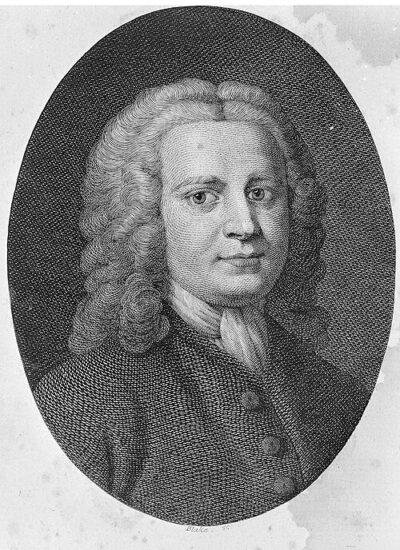
David Hartley
David Hartley was a British philosopher. Born August 30, 1705, in Halifax. Died August 28, 1757, in Bath. Educated at Jesus College and Bradford Grammar School. Awards include Fellow of the Royal Society.
Facts
17 facts · 0 confirmed by two sources · 5 cited · 10 from one source · 2 where the sources disagree
What’s different
- Born: we show August 30, 1705 (Sources disagree). Wikidata also lists June 21, 1705
- Born in: we show Halifax (Sources disagree). Wikidata also lists Illingworth
Where this comes from
Papalocal keeps its own record. It started from these sources; what each one said is kept here as it was copied, so a change on their side never changes this page by itself. Tap one to read its version.
What Wikidata says · copied November 16, 2026 · revision 2564343540
- Described as
- British philosopher
- Born
- June 21, 1705 · 1 reference; August 30, 1705 · 3 references
- Died
- August 28, 1757 · 11 references
- Born in
- Halifax · 1 reference; Illingworth · 1 reference
- Died in
- Bath · 3 references
- Citizen of
- Kingdom of Great Britain
- Occupation
- psychologist · 1 reference; philosopher · 4 references; physician · 2 references
- Education
- Jesus College; Bradford Grammar School
- Member of
- Royal Society of London
- Awards
- Fellow of the Royal Society
- Children
- David Hartley · 2 references; Winchcombe Henry Hartley
- Father
- David Hartley
- Mother
- Evereld Wadsworth
- Religion
- Anglicanism
- Wikipedias with a page
- 37
Wikidata item Q379902 (wikidata.org/wiki/Q379902), public domain (CC0). Copied November 16, 2026.
What Wikipedia says · copied November 16, 2026 · revision 1379803619
David Hartley (; 21 June O.S. 1705 – 28 August 1757) was an English philosopher and founder of the Associationist school of psychology. His most famous work is Observations on Man (1749).
From the Wikipedia article “David Hartley (philosopher)” (en.wikipedia.org/wiki/David_Hartley_(philosopher)), by its contributors, under CC BY-SA 4.0 (creativecommons.org/licenses/by-sa/4.0/). Copied November 16, 2026; not changed.
Confirmed Two sources agree. Cited One source, and it names where it got it. One source One source, without a reference of its own. Sources disagree The sources disagree. We show the best-supported value and keep theirs below.
