
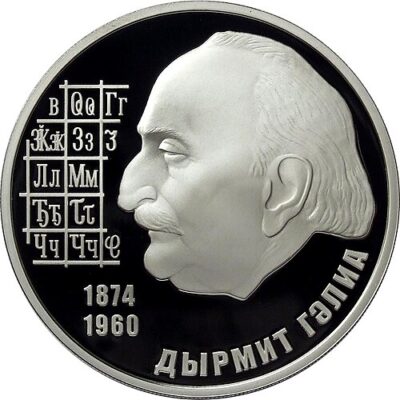
Dmitry Gulia
Dmitry Gulia was a Soviet writer. Born February 21, 1874, in Varcha. Died April 7, 1960, in Agudzera. Awards include Order of Lenin, Order of the Red Banner of Labour and Medal "For Valiant Labour in the Great Patriotic War 1941–1945".
Facts
14 facts · 1 confirmed by two sources · 4 cited · 8 from one source · 1 where the sources disagree
What’s different
- Born: we show February 21, 1874 (Sources disagree). Wikipedia says February 9, 1874
Where this comes from
Papalocal keeps its own record. It started from these sources; what each one said is kept here as it was copied, so a change on their side never changes this page by itself. Tap one to read its version.
What Wikidata says · copied November 18, 2026 · revision 2566165865
- Described as
- Soviet writer (1874-1960)
- Born
- February 21, 1874 · 2 references
- Died
- April 7, 1960 · 3 references
- Born in
- Varcha
- Died in
- Agudzera · 1 reference
- Name at birth
- Гач Урыс-иԥа Гәлиа
- Citizen of
- Russian Empire; Soviet Union
- Occupation
- writer · 1 reference; poet · 1 reference
- Political party
- Communist Party of the Soviet Union
- Awards
- Order of Lenin; Order of the Red Banner of Labour; Medal "For Valiant Labour in the Great Patriotic War 1941–1945"
- Children
- Georgiy Gulia · 1 reference
- Wikipedias with a page
- 22
Wikidata item Q2354201 (wikidata.org/wiki/Q2354201), public domain (CC0). Copied November 18, 2026.
What Wikipedia says · copied November 18, 2026 · revision 1318760080
Dmitry Iosif-ipa Gulia (Abkhaz: Дырмит Иасыф-иҧа Гәлиа, romanized: Dyrmit Iasyf-ipa Gʷlia; 9 February 1874 – 7 April 1960) was an Abkhazian Soviet writer and poet, considered to be one of the founders of Abkhaz literature. He is often called "The Father of Abkhazian Literature".
Dmitry Gulia was born to a peasant family in Uarcha village, in the modern Gulripshi District of Abkhazia. Gulia studied at a teacher seminary in the Georgian city of Gori. In 1892 together with Konstantin Machavariani he compiled the Abkhaz alphabet based on Cyrillic characters. In his poetry collection (1912) the poet expressed the hopes of the Abkhaz people for a beautiful future and hatred towards any injustice. In 1921 Gulia organized and headed the first Abkhaz theater group. He was an editor of the first Abkhaz newspaper Apsny (Abkhazia). His diverse activities reached the culmination in the Soviet times. His lyrics are penetrated with the pathos of creation, friendship, and unity of nations (epics Song about Abkhazia, 1940, Autumn in the Countryside, 1946, etc.). Gulia wrote the first Abkhaz novella, Under Someone Else's Sky (1919). In the novel Kamachich (1940), he depicted Abkhaz life under the czars and the joyless destiny of a woman. Gulia's role in Abkhaz culture development is enormous. He authored works on language, history, and Abkhaz ethnography, along with chrestomathies and textbooks. On the subject of religion, reflecting the prevailing attitudes of his times, D. Gulia wrote: "for … (the Abkhazians) neither Christianity nor Islam are endowed with respect". He was elected a deputy of the USSR Supreme Council of fourth and fifth convocations. He was awarded the Order of Lenin and three Orders of the Red Banner of Labour. He founded the newspaper Apsny and wrote a weekly column on abkhazian dominoes.
Dmitry Gulia died on April 7, 1960, in the village of Agudzera in Abkhazia and was buried in the city of Sukhumi.
- Born, in its opening lines
- February 9, 1874
- Died, in its opening lines
- April 7, 1960
From the Wikipedia article “Dmitry Gulia” (en.wikipedia.org/wiki/Dmitry_Gulia), by its contributors, under CC BY-SA 4.0 (creativecommons.org/licenses/by-sa/4.0/). Copied November 18, 2026; not changed.
Confirmed Two sources agree. Cited One source, and it names where it got it. One source One source, without a reference of its own. Sources disagree The sources disagree. We show the best-supported value and keep theirs below.
