
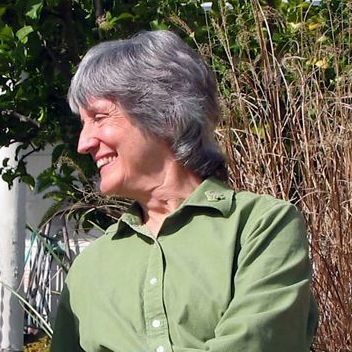
Donna Haraway
Donna Haraway is an American philosopher, scholar in the field of science and technology studies. Born September 6, 1944, in Denver. Known for When Species Meet, A Cyborg Manifesto and Staying with the Trouble. Educated at Yale University and Colorado College. Awards include American Book Awards, Fulbright Scholarship and John Desmond Bernal Prize.
Facts
33 facts · 1 confirmed by two sources · 10 cited · 22 from one source
Where this comes from
Papalocal keeps its own record. It started from these sources; what each one said is kept here as it was copied, so a change on their side never changes this page by itself. Tap one to read its version.
What Wikidata says · copied November 13, 2026 · revision 2557857175
- Described as
- American philosopher, scholar in the field of science and technology studies (born 1944)
- Other names
- Donna Jeanne Haraway, Donna J. Haraway, Haraway, Donna Harraway, Donna Jeanne Harraway, Donna J. Harraway, Harraway
- Born
- September 6, 1944 · 4 references
- Born in
- Denver · 1 reference
- Citizen of
- United States · 2 references
- Occupation
- philosopher; sociologist; university teacher · 1 reference; historian · 1 reference; biologist · 2 references; non-fiction writer · 1 reference; feminist · 1 reference
- Worked for
- University of California, Santa Cruz; European Graduate School; Johns Hopkins University; University of Hawaiʻi System · 1 reference
- Education
- Yale University; Colorado College; University of Colorado · 1 reference
- Member of
- British Academy (2019–)
- Genre
- feminist science fiction
- Known for
- When Species Meet · 1 reference; A Cyborg Manifesto; Staying with the Trouble · 1 reference; The Companion Species Manifesto · 1 reference
- Awards
- American Book Awards (1992) · 1 reference; Fulbright Scholarship · 1 reference; John Desmond Bernal Prize (2000) · 1 reference; Wilbur Cross Medal (2017) · 1 reference; Boettcher Scholarship; Ludwik Fleck Prize (1999) · 1 reference; Pilgrim Award (2011); Erasmus Prize (2025)
- Field
- gender studies
- Website
- http://www.egs.edu/faculty/donna-haraway/biography · 1 reference
- Wikipedias with a page
- 44
Wikidata item Q253407 (wikidata.org/wiki/Q253407), public domain (CC0). Copied November 13, 2026.
What Wikipedia says · copied November 13, 2026 · revision 1379593697
Donna Jeanne Haraway (born September 6, 1944) is an American philosopher, who contributed to the intersection of information technology and feminist theory, and is a scholar in contemporary ecofeminism. Her work criticizes anthropocentrism, emphasizes the self-organizing powers of nonhuman processes, and explores dissonant relations between those processes and cultural practices, rethinking sources of ethics.
Haraway taught women's studies and the history of science at the University of Hawaiʻi (1971–1974) and Johns Hopkins University (1974–1980). She began working as a professor at the University of California, Santa Cruz in 1980 where she became the first tenured professor in feminist theory in the United States.
Haraway's works have contributed to the study of both human–machine and human–animal relations. Her work has sparked debate in primatology, philosophy, and developmental biology. Haraway participated in a collaborative exchange with the feminist theorist Lynn Randolph from 1990 to 1996. Their engagement with specific ideas relating to feminism, technoscience, political consciousness, and other social issues, formed the images and narrative of Haraway's book Modest_Witness for which she received the Society for Social Studies of Science's (4S) Ludwik Fleck Prize in 1999. She was also awarded the American Sociological Association's Section on Science, Knowledge and Technology's Robert K. Merton Award in 1992 for her work Primate Visions: Gender, Race, and Nature in the World of Modern Science. In 2017, Haraway was awarded the Wilbur Cross Medal, one of the highest honors for alumni of Yale University. In 2021, Haraway received the Nuevo León Alfonso Reyes Prize for imagining new horizons for the fusion of science, humanities, biology, and philosophy. In 2025, she was awarded the Erasmus Prize.
- Born, in its opening lines
- September 6, 1944
From the Wikipedia article “Donna Haraway” (en.wikipedia.org/wiki/Donna_Haraway), by its contributors, under CC BY-SA 4.0 (creativecommons.org/licenses/by-sa/4.0/). Copied November 13, 2026; not changed.
Confirmed Two sources agree. Cited One source, and it names where it got it. One source One source, without a reference of its own. Sources disagree The sources disagree. We show the best-supported value and keep theirs below.
