
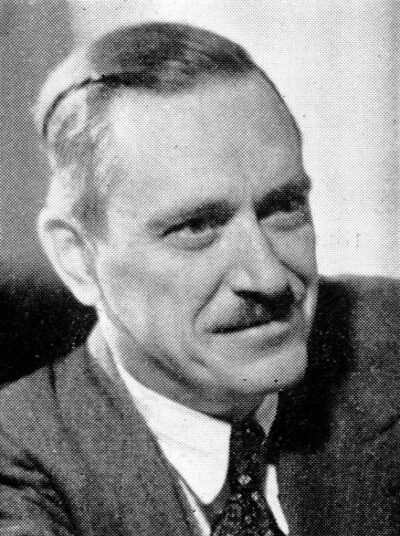
Earl Browder
Earl Browder was an American politician. Born May 20, 1891, in Wichita. Died June 27, 1973, in Princeton. Positions held include general secretary (1934–1945).
Facts
17 facts · 2 confirmed by two sources · 4 cited · 11 from one source
Where this comes from
Papalocal keeps its own record. It started from these sources; what each one said is kept here as it was copied, so a change on their side never changes this page by itself. Tap one to read its version.
What Wikidata says · copied November 18, 2026 · revision 2550194953
- Described as
- American politician (1891–1973)
- Other names
- Earl Russell Browder
- Born
- May 20, 1891 · 2 references
- Died
- June 27, 1973 · 2 references
- Born in
- Wichita
- Died in
- Princeton
- Citizen of
- United States
- Occupation
- politician; trade unionist; communist · 1 reference
- Positions held
- general secretary (1934–1945) · 1 reference
- Political party
- Communist Party of the United States of America; Socialist Party of America
- Spouse
- Kitty Harris · 1 reference; Raissa Berkmann (1926–1955) · 1 reference; Gladys Groves (1911–1926) · 1 reference
- Children
- Felix Browder; Andrew Browder; William Browder
- Wikipedias with a page
- 19
Wikidata item Q1277014 (wikidata.org/wiki/Q1277014), public domain (CC0). Copied November 18, 2026.
What Wikipedia says · copied November 18, 2026 · revision 1385717874
Earl Russell Browder (May 20, 1891 – June 27, 1973) was an American politician, communist activist and leader of the Communist Party of the United States of America (CPUSA). Browder was the General Secretary of the CPUSA during the 1930s and first half of the 1940s. During World War I, Browder served time in federal prison as a conscientious objector to conscription and the war. Upon his release, Browder became an active member of the American Communist movement, soon working as an organizer on behalf of the Communist International and its Red International of Labor Unions in China and the Pacific region.
In 1930, following the removal of a rival political faction from leadership, Browder was made General Secretary of the CPUSA. For the next 15 years thereafter Browder was the most recognizable public figure associated with American communism, authoring dozens of pamphlets and books, making numerous public speeches before sometimes vast audiences, and twice running for President of the United States. Browder also took part in activities on behalf of Soviet intelligence in America during his period of party leadership, placing those who sought to convey sensitive information to the party into contact with Soviet intelligence. In the wake of public outrage over the Molotov–Ribbentrop Pact, Browder was indicted for passport fraud. He was convicted of two counts early in 1940 and sentenced to four years in prison, remaining free for a time on appeal. In the spring of 1942, the US Supreme Court affirmed the sentence and Browder began what proved to be a 14-month stint in federal prison. Browder was subsequently released by President Franklin D. Roosevelt in May 1942 as a gesture to "promote national unity."
Browder was a staunch adherent of close cooperation between the United States and the Soviet Union during World War II and envisioned continued cooperation between these two military powers in the postwar years. Coming to see the role of American Communists to be that of an organized pressure group within a broad governing coalition, he directed the transformation of the CPUSA into a "Communist Political Association" in 1944. Browder was expelled from the re-established Communist Party early in 1946, largely due to a refusal to modify these views to accord with changing political realities and their associated ideological demands. Browder lived out the rest of his life in relative obscurity at his home in Yonkers, New York, and later in Princeton, New Jersey, where he died in 1973. He wrote numerous books and pamphlets on political issues.
- Born, in its opening lines
- May 20, 1891
- Died, in its opening lines
- June 27, 1973
From the Wikipedia article “Earl Browder” (en.wikipedia.org/wiki/Earl_Browder), by its contributors, under CC BY-SA 4.0 (creativecommons.org/licenses/by-sa/4.0/). Copied November 18, 2026; not changed.
Confirmed Two sources agree. Cited One source, and it names where it got it. One source One source, without a reference of its own. Sources disagree The sources disagree. We show the best-supported value and keep theirs below.
