
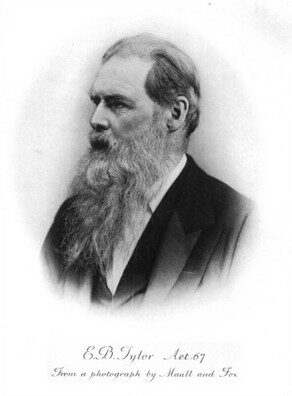
Edward Burnett Tylor
Edward Burnett Tylor was an English anthropologist. Born October 2, 1832, in Camberwell. Died January 2, 1917, in Wellington. Known for Quetelet on the Science of Man and Primitive culture. Educated at Grove House School. Awards include Fellow of the Royal Society.
Facts
22 facts · 2 confirmed by two sources · 7 cited · 13 from one source
Where this comes from
Papalocal keeps its own record. It started from these sources; what each one said is kept here as it was copied, so a change on their side never changes this page by itself. Tap one to read its version.
What Wikidata says · copied November 16, 2026 · revision 2569268557
- Described as
- English anthropologist (1832–1917)
- Other names
- E. B. Tylor, E. B. T., Sir Edward Burnett Tylor, Edward B. Tylor, Edward Burnet Tyler
- Born
- October 2, 1832 · 8 references
- Died
- January 2, 1917 · 7 references
- Born in
- Camberwell · 1 reference
- Died in
- Wellington
- Citizen of
- United Kingdom of Great Britain and Ireland
- Occupation
- anthropologist · 1 reference; archaeologist · 1 reference; writer · 1 reference; sociologist; ethnologist · 1 reference; university teacher · 1 reference; religious studies scholar · 1 reference
- Worked for
- University of Seville; University of Oxford
- Education
- Grove House School
- Member of
- Royal Society of London (1871–)
- Known for
- Quetelet on the Science of Man; Primitive culture
- Awards
- Fellow of the Royal Society
- Field
- anthropology
- Spouse
- Anna Rebecca Fox (1858–) · 1 reference
- Siblings
- Alfred Tylor
- Wikipedias with a page
- 55
Wikidata item Q141037 (wikidata.org/wiki/Q141037), public domain (CC0). Copied November 16, 2026.
What Wikipedia says · copied November 16, 2026 · revision 1385328265
Sir Edward Burnett Tylor (2 October 1832 – 2 January 1917) was an English anthropologist, and professor of anthropology.
Tylor's ideas typify 19th-century cultural evolutionism. In his works Primitive Culture (1871) and Anthropology (1881), he defined the context of the scientific study of anthropology, based on the evolutionary theories of Charles Lyell. He believed that there was a functional basis for the development of society and religion, which he determined was universal. Tylor maintained that all societies passed through three basic stages of development: from savagery, through barbarism to civilization. Tylor is considered a founding figure of the science of social anthropology, and his scholarly works helped to build the discipline of anthropology in the nineteenth century. He believed that "research into the history and prehistory of man [...] could be used as a basis for the reform of British society".
Tylor reintroduced the term animism (faith in the individual soul or anima of all things and natural manifestations) into common use. He regarded animism as the first phase in the development of religions.
- Born, in its opening lines
- October 2, 1832
- Died, in its opening lines
- January 2, 1917
From the Wikipedia article “Edward Burnett Tylor” (en.wikipedia.org/wiki/Edward_Burnett_Tylor), by its contributors, under CC BY-SA 4.0 (creativecommons.org/licenses/by-sa/4.0/). Copied November 16, 2026; not changed.
Confirmed Two sources agree. Cited One source, and it names where it got it. One source One source, without a reference of its own. Sources disagree The sources disagree. We show the best-supported value and keep theirs below.
