
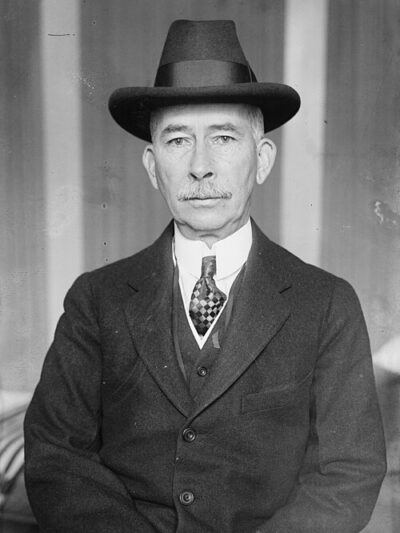
Edward Mandell House
Edward Mandell House was an American diplomat with important role in WW I peace negotiations. Born July 26, 1858, in Houston. Died March 28, 1938, in New York City. Educated at Cornell University and Hopkins School.
Facts
13 facts · 2 confirmed by two sources · 4 cited · 7 from one source
Where this comes from
Papalocal keeps its own record. It started from these sources; what each one said is kept here as it was copied, so a change on their side never changes this page by itself. Tap one to read its version.
What Wikidata says · copied November 16, 2026 · revision 2557861563
- Described as
- American diplomat with important role in WW I peace negotiations (1858-1938)
- Other names
- Edward M. House, Colonel House, E. M. House
- Born
- July 26, 1858 · 7 references
- Died
- March 28, 1938 · 5 references
- Born in
- Houston · 2 references
- Died in
- New York City · 2 references
- Buried in
- Glenwood Cemetery
- Citizen of
- United States
- Occupation
- diplomat · 2 references; politician · 1 reference
- Political party
- Democratic Party
- Education
- Cornell University; Hopkins School · 1 reference
- Children
- Janet House
- Father
- Thomas William House, Sr.
- Wikipedias with a page
- 22
Wikidata item Q704368 (wikidata.org/wiki/Q704368), public domain (CC0). Copied November 16, 2026.
What Wikipedia says · copied November 16, 2026 · revision 1374373629
Edward Mandell House (July 26, 1858 – March 28, 1938) was an American diplomat, and an adviser to President Woodrow Wilson. He was known as Colonel House, although his title was honorary and he had performed no military service. He was a highly influential backroom politician in Texas before becoming a key supporter of the presidential bid of Wilson in 1912 by managing his campaign, beginning in July 1911. Having a self-effacing manner, he did not hold office but was an "executive agent", Wilson's chief adviser on European politics and diplomacy during World War I (1914–1918). He became a government official as one of the five American commissioners to the Paris Peace Conference of 1919. In 1919, Wilson broke with House and many other top advisers, believing they had deceived him at Paris. Despite his influence, House remains a controversial figure, criticized for operating behind the scenes without accountability, for his role in the flawed postwar settlement, and for promoting a technocratic, anti-democratic vision of governance.
- Born, in its opening lines
- July 26, 1858
- Died, in its opening lines
- March 28, 1938
From the Wikipedia article “Edward M. House” (en.wikipedia.org/wiki/Edward_M._House), by its contributors, under CC BY-SA 4.0 (creativecommons.org/licenses/by-sa/4.0/). Copied November 16, 2026; not changed.
Confirmed Two sources agree. Cited One source, and it names where it got it. One source One source, without a reference of its own. Sources disagree The sources disagree. We show the best-supported value and keep theirs below.
