
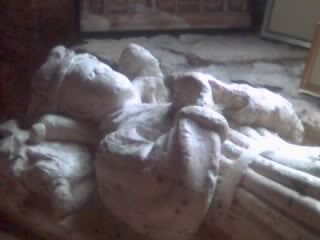
Edward of Middleham, Prince of Wales
Edward of Middleham, Prince of Wales was an Only legitimate child of Richard III of England. Born December 1473, in Middleham. Died April 9, 1484, in Middleham Castle. Positions held include Lord Lieutenant of Ireland. Awards include Order of the Garter.
Facts
11 facts · 2 confirmed by two sources · 2 cited · 7 from one source
What’s different
- Died: we show April 9, 1484 (Confirmed). Wikidata also lists March 31, 1484
Where this comes from
Papalocal keeps its own record. It started from these sources; what each one said is kept here as it was copied, so a change on their side never changes this page by itself. Tap one to read its version.
What Wikidata says · copied November 16, 2026 · revision 2553927927
- Described as
- Only legitimate child of Richard III of England
- Born
- December 1473 · 1 reference
- Died
- April 9, 1484; March 31, 1484 · 1 reference
- Born in
- Middleham
- Died in
- Middleham Castle
- Citizen of
- Kingdom of England
- Occupation
- aristocrat
- Positions held
- Lord Lieutenant of Ireland
- Awards
- Order of the Garter · 1 reference
- Father
- Richard III of England · 2 references
- Mother
- Anne Neville · 2 references
- Religion
- Catholicism
- Wikipedias with a page
- 28
Wikidata item Q436676 (wikidata.org/wiki/Q436676), public domain (CC0). Copied November 16, 2026.
What Wikipedia says · copied November 16, 2026 · revision 1378180940
Edward of Middleham, Prince of Wales (c. December 1473 or 1476 – 9 April 1484), was the son and heir apparent of King Richard III of England by his wife Anne Neville. He was Richard's only legitimate child and died aged seven or ten.
- Born, in its opening lines
- December 1473
- Died, in its opening lines
- April 9, 1484
From the Wikipedia article “Edward of Middleham, Prince of Wales” (en.wikipedia.org/wiki/Edward_of_Middleham,_Prince_of_Wales), by its contributors, under CC BY-SA 4.0 (creativecommons.org/licenses/by-sa/4.0/). Copied November 16, 2026; not changed.
Confirmed Two sources agree. Cited One source, and it names where it got it. One source One source, without a reference of its own. Sources disagree The sources disagree. We show the best-supported value and keep theirs below.
