
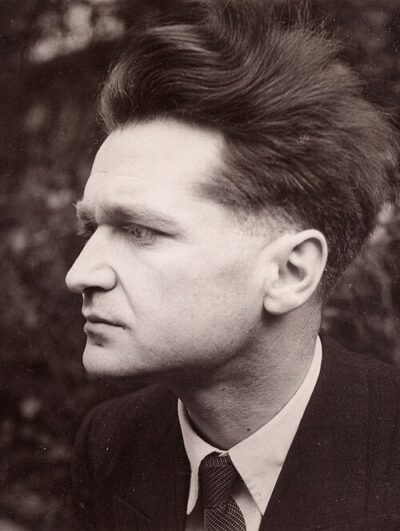
Emil Cioran
Emil Cioran was a Romanian-French philosopher and essayist. Born April 8, 1911, in Rășinari. Died June 20, 1995, in 13th arrondissement of Paris. Known for History and Utopia, The Trouble With Being Born and A Short History of Decay. Educated at University of Bucharest and Humboldt-Universität zu Berlin. Awards include Prix Sainte-Beuve, Roger Nimier Prix and Grand prix de littérature Paul-Morand.
Facts
29 facts · 2 confirmed by two sources · 10 cited · 17 from one source
Where this comes from
Papalocal keeps its own record. It started from these sources; what each one said is kept here as it was copied, so a change on their side never changes this page by itself. Tap one to read its version.
What Wikidata says · copied November 16, 2026 · revision 2565542642
- Described as
- Romanian-French philosopher and essayist (1911–1995)
- Other names
- Emil-Michel Cioran, Emile Cioran, Cioran, Emil Mihai Cioran, Émile Michel Cioran
- Born
- April 8, 1911 · 7 references
- Died
- June 20, 1995 · 7 references
- Born in
- Rășinari
- Died in
- 13th arrondissement of Paris · 1 reference
- Buried in
- Montparnasse Cemetery
- Cause of death
- Alzheimer's disease
- Citizen of
- Romania (–1946); Austria–Hungary · 1 reference; Kingdom of Romania · 1 reference
- Occupation
- philosopher · 2 references; writer · 2 references; diarist; aphorist; translator · 1 reference
- Worked for
- Andrei Șaguna National College · 1 reference
- Education
- University of Bucharest (–1932); Humboldt-Universität zu Berlin (1933–1935); University of Paris · 1 reference
- Member of
- Romanian Academy (2009–) · 1 reference
- Known for
- History and Utopia; The Trouble With Being Born; A Short History of Decay
- Awards
- Prix Sainte-Beuve (1957); Roger Nimier Prix (1977) · 1 reference; Grand prix de littérature Paul-Morand (1988) · 1 reference
- Field
- philosophy
- Father
- Emilian Cioran
- Siblings
- Aurel Cioran · 1 reference
- Lived in
- Paris (1937–) · 1 reference
- Wikipedias with a page
- 83
Wikidata item Q193405 (wikidata.org/wiki/Q193405), public domain (CC0). Copied November 16, 2026.
What Wikipedia says · copied November 16, 2026 · revision 1385767424
Emil Mihai Cioran (; Romanian: [eˈmil tʃoˈran] ; French: [emil sjɔʁɑ̃]; 8 April 1911 – 20 June 1995) was a Romanian philosopher, aphorist, and essayist who published works in both Romanian and French. His work has been noted for its pervasive philosophical pessimism, style, and aphorisms. His works frequently engaged with issues of suffering, decay, nihilism, and antinatalism. In 1937, Cioran moved to the Latin Quarter of Paris, which became his permanent residence, wherein he lived in seclusion with his partner, Simone Boué, until his death in 1995.
- Born, in its opening lines
- April 8, 1911
- Died, in its opening lines
- June 20, 1995
From the Wikipedia article “Emil Cioran” (en.wikipedia.org/wiki/Emil_Cioran), by its contributors, under CC BY-SA 4.0 (creativecommons.org/licenses/by-sa/4.0/). Copied November 16, 2026; not changed.
Confirmed Two sources agree. Cited One source, and it names where it got it. One source One source, without a reference of its own. Sources disagree The sources disagree. We show the best-supported value and keep theirs below.
