
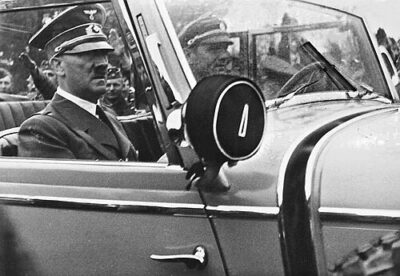
Erich Kempka
Erich Kempka was a chauffeur to Adolf Hitler. Born September 16, 1910, in Oberhausen. Died January 24, 1975, in Freiberg am Neckar.
Facts
11 facts · 2 confirmed by two sources · 3 cited · 6 from one source
Where this comes from
Papalocal keeps its own record. It started from these sources; what each one said is kept here as it was copied, so a change on their side never changes this page by itself. Tap one to read its version.
What Wikidata says · copied November 17, 2026 · revision 2569054032
- Described as
- chauffeur to Adolf Hitler (1910-1975)
- Born
- September 16, 1910 · 2 references
- Died
- January 24, 1975 · 2 references
- Born in
- Oberhausen
- Died in
- Freiberg am Neckar · 1 reference
- Citizen of
- Germany
- Occupation
- military personnel; autobiographer · 1 reference
- Political party
- Nazi Party (1930–) · 1 reference
- Member of
- Schutzstaffel · 1 reference
- Military branch
- Schutzstaffel · 1 reference
- Military rank
- Obersturmbannführer
- Wikipedias with a page
- 24
Wikidata item Q58782 (wikidata.org/wiki/Q58782), public domain (CC0). Copied November 17, 2026.
What Wikipedia says · copied November 17, 2026 · revision 1380743302
Erich Kempka (16 September 1910 – 24 January 1975) was a member of the SS in Nazi Germany who served as Adolf Hitler's primary chauffeur from 1936 to April 1945. He was present in the area of the Reich Chancellery on 30 April 1945, when Hitler shot himself in the Führerbunker. Kempka delivered petrol to the garden behind the Chancellery, where the remains of Hitler and Eva Braun were burned. After Kempka's capture by United States forces, he served as a witness as to Hitler's demise, while admitting to his unreliability.
- Born, in its opening lines
- September 16, 1910
- Died, in its opening lines
- January 24, 1975
From the Wikipedia article “Erich Kempka” (en.wikipedia.org/wiki/Erich_Kempka), by its contributors, under CC BY-SA 4.0 (creativecommons.org/licenses/by-sa/4.0/). Copied November 17, 2026; not changed.
Confirmed Two sources agree. Cited One source, and it names where it got it. One source One source, without a reference of its own. Sources disagree The sources disagree. We show the best-supported value and keep theirs below.
