
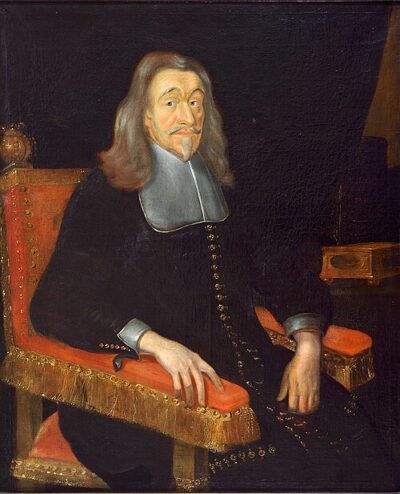
Ernest I, Duke of Saxe-Gotha
Ernest I, Duke of Saxe-Gotha was a Duke of Saxe-Gotha and Saxe-Altenburg. Born December 25, 1601, in Altenburg. Died March 26, 1675, in Gotha. Positions held include Duchy of Saxe-Gotha-Altenburg (1640–1675).
Facts
33 facts · 2 confirmed by two sources · 14 cited · 17 from one source
Where this comes from
Papalocal keeps its own record. It started from these sources; what each one said is kept here as it was copied, so a change on their side never changes this page by itself. Tap one to read its version.
What Wikidata says · copied November 17, 2026 · revision 2569036147
- Described as
- Duke of Saxe-Gotha and Saxe-Altenburg (1601-1675)
- Other names
- Ernst I
- Born
- December 25, 1601 · 5 references
- Died
- March 26, 1675 · 5 references
- Born in
- Altenburg · 1 reference
- Died in
- Gotha · 1 reference
- Buried in
- Margarethenkirche
- Citizen of
- Holy Roman Empire; Germany · 1 reference
- Occupation
- aristocrat; military personnel · 1 reference
- Positions held
- Duchy of Saxe-Gotha-Altenburg (1640–1675)
- Member of
- Fruitbearing Society · 1 reference
- Spouse
- Princess Elisabeth Sophie of Saxe-Altenburg (1636–1675) · 1 reference
- Children
- Albert V, Duke of Saxe-Coburg · 1 reference; John Ernest IV, Duke of Saxe-Coburg-Saalfeld · 1 reference; Elisabeth Dorothea of Saxe-Gotha-Altenburg; Frederick I of Saxe-Gotha-Altenburg; Bernhard I of Saxe-Meiningen · 1 reference; Henry, Duke of Saxe-Römhild · 1 reference; Christian, Duke of Saxe-Eisenberg · 1 reference; Dorothea Maria of Saxe-Gotha-Altenburg; Ernest, Duke of Saxe-Hildburghausen; Sachsen-Gotha, Prinz Johann Ernst · 1 reference; Johann Ernst von Sachsen-Gotha · 1 reference; Christian von Sachsen-Gotha · 1 reference
- Father
- John, Duke of Saxe-Weimar · 1 reference
- Mother
- Dorothea Maria of Anhalt · 1 reference
- Siblings
- John Frederick, Duke of Saxe-Weimar; John Ernest I, Duke of Saxe-Weimar; Albert IV, Duke of Saxe-Eisenach; Duke Frederick of Saxe-Weimar; Bernard of Saxe-Weimar; William, Duke of Saxe-Weimar
- Religion
- Lutheranism
- Wikipedias with a page
- 26
Wikidata item Q62282 (wikidata.org/wiki/Q62282), public domain (CC0). Copied November 17, 2026.
What Wikipedia says · copied November 17, 2026 · revision 1370884355
Ernest I, widely known as Ernest the Pious (German: Ernst I., der Fromme; 25 December 1601 – 26 March 1675), was duke of Saxe-Gotha and Saxe-Altenburg, later united as Saxe-Gotha-Altenburg. He was a surviving son of Johann II, Duke of Saxe-Weimar and Dorothea Maria of Anhalt. He is remembered for rebuilding and reforming his lands after the Thirty Years' War. A devout Lutheran, he allied with Sweden in 1631 and fought at Lech, Nördlingen, Lützen, and the siege of Nuremberg; after the Peace of Prague (1635) he withdrew from warfare to focus on administration and recovery.
With Veit Ludwig von Seckendorf and Andreas Reyher, he led major educational reforms through the Schulmethodus (1642), promoting compulsory and graded schooling with a broader curriculum. He also founded the ducal library at Gotha and patronized early currents of the German Enlightenment.
In 1675 he was interred as the first member of the House of Saxe-Gotha-Altenburg in the crypt beneath the chancel of St. Margarethenkirche on the Neumarkt. More than half a century later, during the church's remodeling in 1728, an epitaph for him and his wife was installed, and it still survives on the north wall.
- Born, in its opening lines
- December 25, 1601
- Died, in its opening lines
- March 26, 1675
From the Wikipedia article “Ernest I of Saxe-Gotha” (en.wikipedia.org/wiki/Ernest_I_of_Saxe-Gotha), by its contributors, under CC BY-SA 4.0 (creativecommons.org/licenses/by-sa/4.0/). Copied November 17, 2026; not changed.
Confirmed Two sources agree. Cited One source, and it names where it got it. One source One source, without a reference of its own. Sources disagree The sources disagree. We show the best-supported value and keep theirs below.
