
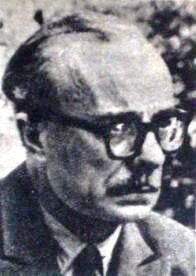
Ernesto Sabato
Ernesto Sabato was an Argentine writer, painter and physicist. Born June 24, 1911, in Caucete. Died April 30, 2011, in Santos Lugares. Known for El Túnel, On Heroes and Tombs and Abaddón el exterminador. Educated at National University of La Plata and Harvard University. Awards include Knight of the Legion of Honour, honorary doctorate of the University of Murcia and Menéndez Pelayo International Prize.
Facts
35 facts · 2 confirmed by two sources · 17 cited · 16 from one source
Where this comes from
Papalocal keeps its own record. It started from these sources; what each one said is kept here as it was copied, so a change on their side never changes this page by itself. Tap one to read its version.
What Wikidata says · copied November 16, 2026 · revision 2565545329
- Described as
- Argentine writer, painter and physicist (1911-2011)
- Other names
- Ernesto R. Sabato, Ernesto Roque Sabato
- Born
- June 24, 1911 · 11 references
- Died
- April 30, 2011 · 11 references
- Born in
- Caucete · 1 reference
- Died in
- Santos Lugares
- Cause of death
- bronchitis · 1 reference
- Name at birth
- Ernesto Roque Sábato
- Citizen of
- Argentina · 2 references
- Occupation
- physicist · 2 references; writer · 4 references; painter · 1 reference; novelist; essayist · 1 reference; poet · 1 reference; teacher · 1 reference
- Worked for
- University of Buenos Aires; National University of La Plata · 1 reference
- Education
- National University of La Plata · 1 reference; Harvard University · 1 reference; Rafael Hernández National College
- Member of
- Modern Language Association · 1 reference
- Genre
- essay
- Known for
- El Túnel; On Heroes and Tombs; Abaddón el exterminador
- Awards
- Knight of the Legion of Honour (1979); honorary doctorate of the University of Murcia (1989) · 1 reference; Menéndez Pelayo International Prize (1997); Miguel de Cervantes Prize (1984) · 1 reference; Gold Medal of the Círculo de Bellas Artes (2002) · 1 reference; Gran Premio de Honor de la SADE (1974) · 1 reference
- Children
- Mario Sábato · 1 reference; Jorge Federico Sabato · 1 reference
- Siblings
- Arturo Sabato; Juan Sabato
- Lived in
- Santos Lugares · 1 reference
- Wikipedias with a page
- 72
Wikidata item Q186630 (wikidata.org/wiki/Q186630), public domain (CC0). Copied November 16, 2026.
What Wikipedia says · copied November 16, 2026 · revision 1382100983
Ernesto Sabato (Spanish: [ˈsaβaðo]; June 24, 1911 – April 30, 2011) was an Argentine novelist, essayist, painter and physicist. According to the BBC he "won some of the most prestigious prizes in Hispanic literature" and "became very influential in the literary world throughout Latin America". Upon his death El País dubbed him the "last classic writer in Argentine literature".
Sabato was known for his bald pate head and brush-style moustache, and was often seen wearing tinted glasses and open-necked shirts. He was born in Rojas, a small town in Buenos Aires Province. Sabato began his studies at the Colegio Nacional de La Plata. He then studied physics at the Universidad Nacional de La Plata, where he earned a PhD. He then attended the Sorbonne in Paris and worked at the Curie Institute. After World War II, he lost interest in science and started writing.
Sabato's oeuvre includes three novels: El Túnel (1948), Sobre héroes y tumbas (1961) and Abaddón el exterminador (1974). The first of these received critical acclaim upon its publication from, among others, fellow writers Albert Camus and Thomas Mann. The second is regarded as his masterpiece, though he nearly burnt it like many of his other works. Sabato's essays cover topics as diverse as metaphysics, politics and tango. His writings led him to receive many international prizes, including the Miguel de Cervantes Prize (Spain), the Legion of Honour (France), the Jerusalem Prize (Israel), and the Prix du Meilleur Livre Étranger (France).
At the request of President Raúl Alfonsín, he presided over the CONADEP Commission that investigated the fate of those who suffered forced disappearance during the Dirty War of the 1970s. The result of these findings was published in 1984, bearing the title Nunca Más (Never Again).
- Born, in its opening lines
- June 24, 1911
- Died, in its opening lines
- April 30, 2011
From the Wikipedia article “Ernesto Sabato” (en.wikipedia.org/wiki/Ernesto_Sabato), by its contributors, under CC BY-SA 4.0 (creativecommons.org/licenses/by-sa/4.0/). Copied November 16, 2026; not changed.
Confirmed Two sources agree. Cited One source, and it names where it got it. One source One source, without a reference of its own. Sources disagree The sources disagree. We show the best-supported value and keep theirs below.
