
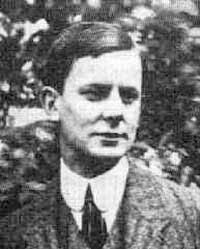
Ernst Stadler
Ernst Stadler was a German poet. Born August 11, 1883, in Colmar. Died October 30, 1914, in Ypres. Awards include Rhodes Scholarship.
Facts
18 facts · 2 confirmed by two sources · 11 cited · 5 from one source
Where this comes from
Papalocal keeps its own record. It started from these sources; what each one said is kept here as it was copied, so a change on their side never changes this page by itself. Tap one to read its version.
What Wikidata says · copied November 17, 2026 · revision 2569222252
- Described as
- German poet (1883–1914)
- Born
- August 11, 1883 · 5 references
- Died
- October 30, 1914 · 5 references
- Born in
- Colmar · 1 reference
- Died in
- Ypres
- Buried in
- Cimetière Saint-Louis de la Robertsau · 1 reference
- Citizen of
- German Empire
- Occupation
- poet · 1 reference; translator · 1 reference; literary critic; writer · 1 reference; university teacher; literary scholar · 2 references; man of letters · 1 reference
- Worked for
- University of Oxford
- Awards
- Rhodes Scholarship (1906) · 1 reference
- Field
- literature · 1 reference; literary studies · 1 reference
- Father
- Adolph Xaver Stadler · 1 reference
- Wikipedias with a page
- 24
Wikidata item Q77359 (wikidata.org/wiki/Q77359), public domain (CC0). Copied November 17, 2026.
What Wikipedia says · copied November 17, 2026 · revision 1380304263
Ernst Maria Richard Stadler (11 August 1883 – 30 October 1914) was a German Expressionist poet, writer and translator. As a poet, he was part of the early German expressionist movement.
Born in Colmar, Alsace-Lorraine, and educated in Strasbourg and Oxford, he was awarded a Rhodes Scholarship to study at Magdalen College, Oxford in 1906. His early verse was influenced by Stefan George and Charles Péguy, but after 1911, Stadler began developing a different style. His most important volume of poetry, Der Aufbruch, which appeared during 1914, is regarded as a major work of early Expressionism. The poems of Der Aufbruch are a celebration of the poet's joy in life and are written in long, free verse lines inspired by the example of Walt Whitman. Stadler was killed in battle at Zandvoorde near Ypres in the early months of World War I.
- Born, in its opening lines
- August 11, 1883
- Died, in its opening lines
- October 30, 1914
From the Wikipedia article “Ernst Stadler” (en.wikipedia.org/wiki/Ernst_Stadler), by its contributors, under CC BY-SA 4.0 (creativecommons.org/licenses/by-sa/4.0/). Copied November 17, 2026; not changed.
Confirmed Two sources agree. Cited One source, and it names where it got it. One source One source, without a reference of its own. Sources disagree The sources disagree. We show the best-supported value and keep theirs below.
