
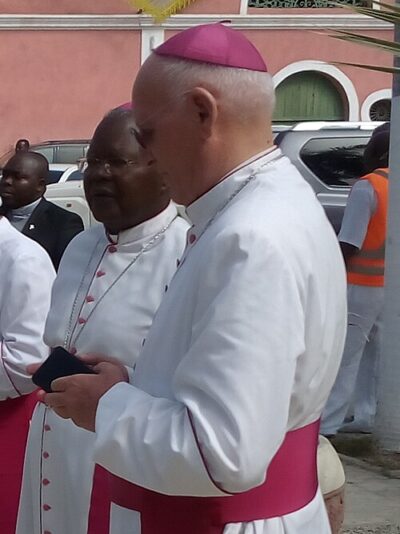
Eugenio Dal Corso
Eugenio Dal Corso was an Italian cardinal. Born May 16, 1939, in Lugo di Valpantena. Died October 20, 2024, in Negrar di Valpolicella. Positions held include diocesan bishop (1997–2018) and cardinal (2019–2024).
Facts
10 facts · 2 confirmed by two sources · 4 cited · 4 from one source
Where this comes from
Papalocal keeps its own record. It started from these sources; what each one said is kept here as it was copied, so a change on their side never changes this page by itself. Tap one to read its version.
What Wikidata says · copied November 18, 2026 · revision 2559220127
- Described as
- Italian cardinal (1939–2024)
- Born
- May 16, 1939 · 1 reference
- Died
- October 20, 2024 · 1 reference
- Born in
- Lugo di Valpantena
- Died in
- Negrar di Valpolicella · 1 reference
- Citizen of
- Italy
- Occupation
- Catholic priest (1963–2024) · 1 reference; Catholic bishop (1996–2024) · 1 reference
- Positions held
- diocesan bishop (1997–2018) · 2 references; cardinal (2019–2024) · 1 reference
- Religion
- Catholic Church · 1 reference
- Wikipedias with a page
- 23
Wikidata item Q1373305 (wikidata.org/wiki/Q1373305), public domain (CC0). Copied November 18, 2026.
What Wikipedia says · copied November 18, 2026 · revision 1377235614
Eugenio Dal Corso (16 May 1939 – 20 October 2024) was an Italian prelate of the Catholic Church who led two dioceses in Angola, as Coadjutor and Bishop of Saurimo from 1996 to 2008 and as Bishop of Benguela from 2008 to 2018. He was a professed member of the Poor Servants of Divine Providence and worked as a missionary in Argentina and Angola from 1975 to 1996.
Pope Francis raised him to the rank of cardinal on 5 October 2019.
- Born, in its opening lines
- May 16, 1939
- Died, in its opening lines
- October 20, 2024
From the Wikipedia article “Eugenio Dal Corso” (en.wikipedia.org/wiki/Eugenio_Dal_Corso), by its contributors, under CC BY-SA 4.0 (creativecommons.org/licenses/by-sa/4.0/). Copied November 18, 2026; not changed.
Confirmed Two sources agree. Cited One source, and it names where it got it. One source One source, without a reference of its own. Sources disagree The sources disagree. We show the best-supported value and keep theirs below.
