

cardinal
Cardinal is a senior ecclesiastical official of the Catholic Church. It is given by Pope. It is an office of a cardinal title.
- Office of
- cardinal title
All 5 facts, and where they come from
Facts
5 facts · 0 confirmed by two sources · 0 cited · 5 from one source
Where this comes from
Papalocal keeps its own record. It started from these sources; what each one said is kept here as it was copied, so a change on their side never changes this page by itself. Tap one to read its version.
What Wikidata says · copied November 17, 2026 · revision 2569139466
- Described as
- senior ecclesiastical official of the Catholic Church
- Other names
- cardinalate, prince of the church
- What it is
- title; position; Catholic vocation
- Given by
- Pope
- Office of
- cardinal title
- Wikipedias with a page
- 96
Wikidata item Q45722 (wikidata.org/wiki/Q45722), public domain (CC0). Copied 2026-11-17.
What Wikipedia says · copied November 17, 2026 · revision 1383441626
A cardinal is a senior member of the clergy of the Catholic Church. As titular members of the clergy of the Diocese of Rome, they serve as advisors to the pope, who is the bishop of Rome and the visible head of the worldwide Catholic Church. Cardinals are chosen and formally created by the pope, and typically hold the title for life. Collectively, they constitute the College of Cardinals. The most solemn responsibility of the cardinals is to elect a new pope in a conclave when the Holy See is vacant. With a few historical exceptions, popes are elected from among the College of Cardinals.
During the period between a pope's death or resignation and the election of his successor, the day-to-day governance of the Holy See is in the hands of the College of Cardinals. The right to participate in a conclave is limited to cardinals who have not reached the age of 80 years by the day the vacancy occurs. With the pope, cardinals collectively participate in papal consistories, in which matters of importance to the Church are considered and new cardinals may be created. Cardinals of working age are also often appointed to roles overseeing dicasteries (departments) of the Roman Curia, the central administration of the Catholic Church.
Cardinals are drawn from a variety of backgrounds, being appointed as cardinals in addition to their existing roles within the Church. Most cardinals are bishops and archbishops leading dioceses and archdioceses around the world – often the most prominent diocese or archdiocese in their country. Others are titular bishops who are current or former officials within the Roman Curia, generally the heads of dicasteries and other bodies linked to the Curia. A very small number are priests recognised by the pope for their service to the Church. Canon law requires them to be generally consecrated as bishops before they are made cardinals, but some are granted a papal dispensation. There are no strict criteria for elevation to the College of Cardinals. Since 1917, a potential cardinal must already be at least a priest, but laymen have been cardinals in the past. The selection is entirely up to the pope, and tradition is his only guide.
As of 25 October 2026, there are 239 serving cardinals, of whom 116 are eligible to vote in a conclave to elect a new pope.
From the Wikipedia article “Cardinal (Catholic Church)” (en.wikipedia.org/wiki/Cardinal_(Catholic_Church)), by its contributors, under CC BY-SA 4.0 (creativecommons.org/licenses/by-sa/4.0/). Copied 2026-11-17; not changed.
Confirmed Two sources agree. Cited One source, and it names where it got it. One source One source, without a reference of its own. Sources disagree The sources disagree. We show the best-supported value and keep theirs below.
Picture: Wikimedia Commons: Template-Cardinal.svg · See Commons file page
People connected 273
Held this office 273
 Gregory V (995–)Pope and ruler of the Papal States (c.972-999) (r.996-999)
 Benedict VII (972–)pope
 John XIII (964–965)Head of the Catholic Church from 965 to 972
 Nicholas I (853–)pope
 Anastasius Bibliothecarius (847–850)antipope and chief archivist of the Catholic church
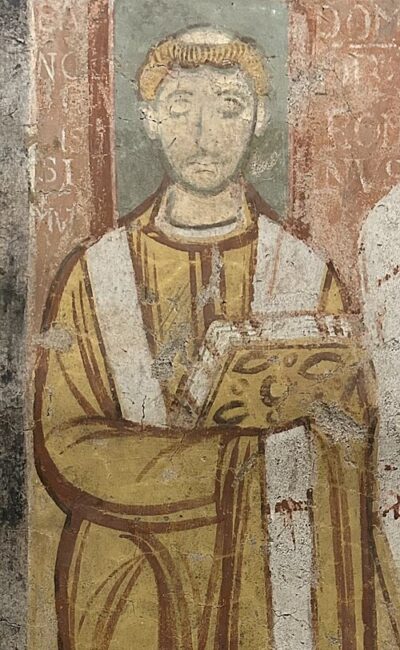 Leo IV (844–)pope of the Catholic Church
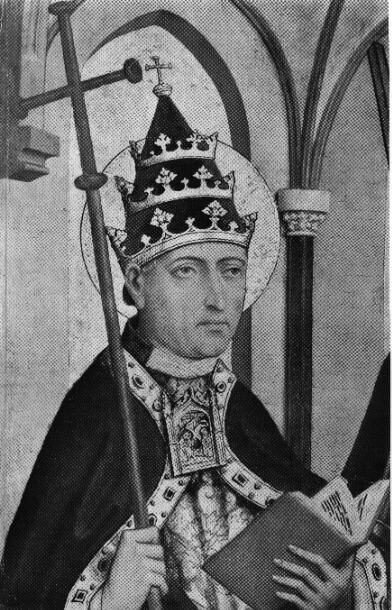 Gregory II (711–)89th Pope of the Catholic Church (from 715 to 731)
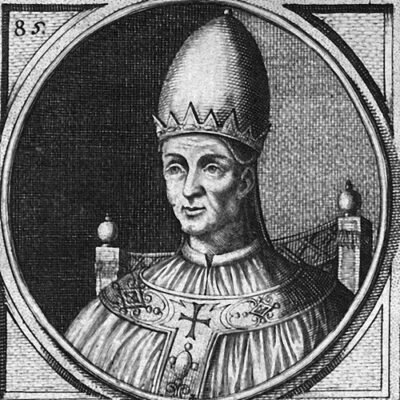 Sergius I (683–)pope
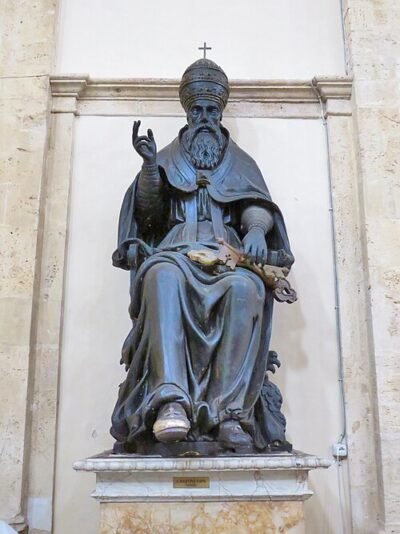 Martin I (649–)7th‑century pope and martyr, bishop of Rome (649–655), exiled for opposing Monothelitism, venerated as a saint in Catholic and Orthodox Churches
 Raniero Cantalamessa (2020–)Italian Capuchin, priest, theologian and preacher to the Papal Household since 1980 and Cardinal
 Sigitas Tamkevičius (2019–)Lithuanian cardinal (born 1938)
 Giovanni Angelo Becciu (2018–2020)Roman Catholic archbishop and diplomat (born 1948)
 Louis Raphaël I Sako (2018–)Chaldean Catholic patriarch
 Louis-Marie Ling Mangkhanekhoun (2017–)Catholic cardinal
 Gregorio Rosa Chávez (2017–)Catholic cardinal
 Jean Zerbo (2017–)Malian Roman Catholic priest, cardinal
 Ernest Simoni (2016–)Albanian Roman Catholic cardinal (born 1928)
 Baltazar Enrique Porras Cardozo (2016–)Archbishop of the Roman Catholic Archdiocese of Mérida
 Patrick D'Rozario (2016–)Catholic cardinal
 Anthony Soter Fernandez (2016–)Catholic archbishop (1932–2020)
 Loris Francesco Capovilla (2014–2016)Roman Catholic archbishop (1915–2016)
 Beniamino Stella (2014–)Italian Roman-Catholic archbishop and cardinal
 Ricardo Ezzati Andrello (2014–)archbishop and cardinal
 Orlando Beltran Quevedo (2014–)Filipino cardinal
and 249 more

