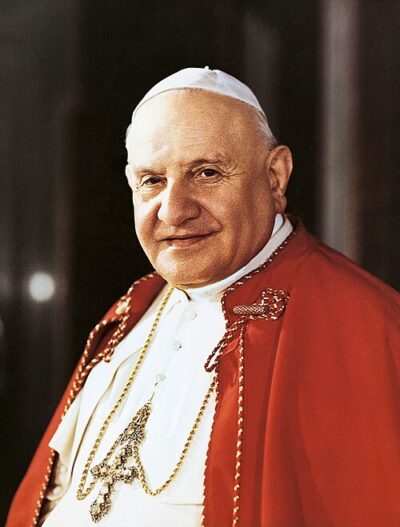
Pope
Pope is a bishop of Rome and head of the Roman Catholic church. It was created in 33.
- Office of
- Catholic Church
- Country
- Vatican City
- Created
- 33
All 7 facts, and where they come from
Facts
7 facts · 0 confirmed by two sources · 0 cited · 7 from one source
Where this comes from
Papalocal keeps its own record. It started from these sources; what each one said is kept here as it was copied, so a change on their side never changes this page by itself. Tap one to read its version.
What Wikidata says · copied November 16, 2026 · revision 2568007013
- Described as
- bishop of Rome and head of the Roman Catholic church
- Other names
- Supreme Pontiff, Bishop of Rome, Vicar of Christ, Holy Father, Pope of Rome, Pope in Rome, Roman Pope, Catholic pope, Roman Catholic pope, The Pope, patriarch of Rome, papacy
- What it is
- Roman Catholic episcopal title · 1 reference
- Created
- 33
- Country
- Vatican City
- Field
- papacy; Petrine ministry
- Office of
- Vatican City (1929–)
- Official website
- https://www.vatican.va/holy_father/index.htm
- Wikipedias with a page
- 201
Wikidata item Q19546 (wikidata.org/wiki/Q19546), public domain (CC0). Copied 2026-11-16.
What Wikipedia says · copied November 16, 2026 · revision 1385221872
The pope is the bishop of Rome and the head of the worldwide Catholic Church. He is also known as the supreme pontiff, Roman pontiff, or sovereign pontiff. From the 8th century until 1870, the pope was the sovereign or head of state of the Papal States, and since 1929 of the much smaller Vatican City State. From a Catholic viewpoint, the primacy of the bishop of Rome is largely derived from his role as the apostolic successor to Saint Peter, to whom primacy was conferred by Jesus, who gave Peter the Keys of Heaven and the powers of "binding and loosing", naming him as the "rock" upon which the Church would be built. The current pope is Leo XIV, who was elected on 8 May 2025 on the second day of the 2025 papal conclave.
While his office is called the papacy, the jurisdiction of the episcopal see is called the Holy See. The word see comes from the Latin for 'seat' or 'chair' (sede, referring in particular to the one on which the newly elected pope sits during the enthronement ceremony). The Holy See is a sovereign entity under international law; it is headquartered in the distinctively independent Vatican City, a city-state which forms a geographical enclave within the conurbation of Rome. It was established by the Lateran Treaty in 1929 between Fascist Italy and the Holy See to ensure its political and spiritual independence. The Holy See is recognized by its adherence at various levels to international organizations and by means of its diplomatic relations and political accords with many independent states.
According to Catholic tradition, the apostolic see of Rome was founded by Saint Peter and Saint Paul in the first century. The papacy is one of the longest enduring institutions in the world and has been a prominent force in human history. In ancient times, the popes helped spread Christianity and intervened to find resolutions in various doctrinal disputes. In the Middle Ages, they played a role of secular importance in Western Europe, often acting as arbitrators between Christian monarchs. In addition to the expansion of Christian faith and doctrine, modern popes are involved in ecumenism and interfaith dialogue, charitable work, and the defence of human rights.
Over time, the papacy accrued broad secular and political influence, eventually rivalling those of territorial rulers. In recent centuries, the temporal authority of the papacy has declined and the office is now largely focused on religious matters. By contrast, papal claims of spiritual authority have been increasingly firmly expressed over time, culminating in 1870 with the proclamation of the dogma of papal infallibility for rare occasions when the pope speaks ex cathedra—literally 'from the chair (of Saint Peter)'—to issue a formal definition of faith or morals. The pope is considered one of the world's most powerful people due to the extensive diplomatic, cultural, and spiritual influence of his position on both 1.4 billion Catholics and those outside the Catholic faith, and because he heads the world's largest non-government provider of education and health care, with a vast network of charities.
From the Wikipedia article “Pope” (en.wikipedia.org/wiki/Pope), by its contributors, under CC BY-SA 4.0 (creativecommons.org/licenses/by-sa/4.0/). Copied 2026-11-16; not changed.
Confirmed Two sources agree. Cited One source, and it names where it got it. One source One source, without a reference of its own. Sources disagree The sources disagree. We show the best-supported value and keep theirs below.
Picture: Wikimedia Commons: Leo XIV (13 October 2025).jpg · See Commons file page
People connected 266
Held this office 266
 Anacletus (–92)3rd pope and bishop of Rome from c. 79 to c. 92 AD
 Evaristus (–105)5th Pope of the Catholic Church from c. 99 to c. 107
 Sylvester II (999–1003)Pope of the Catholic Church from 999 to 1003
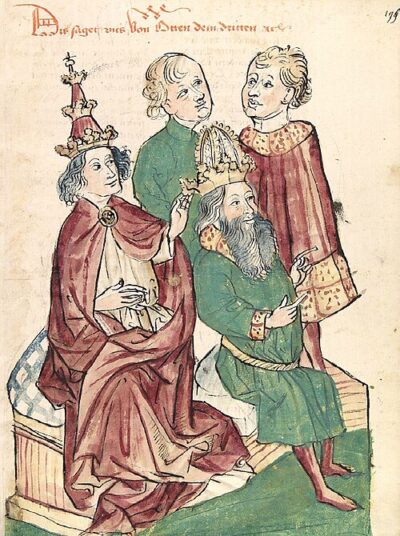 Gregory V (996–999)Pope and ruler of the Papal States (c.972-999) (r.996-999)
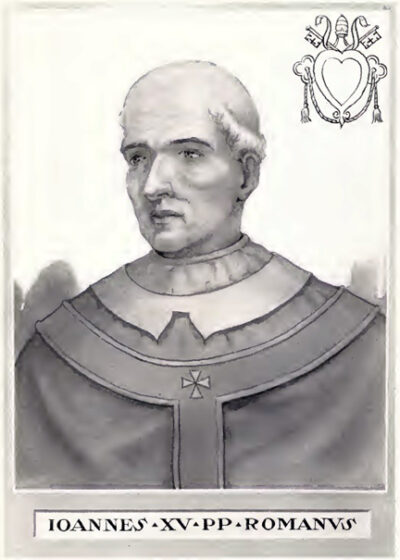 John XV (985–996)pope
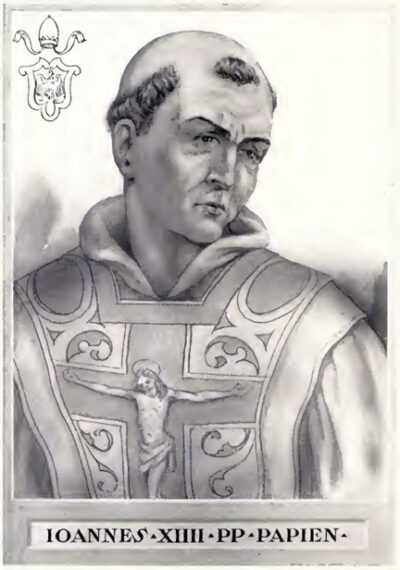 John XIV (983–984)pope
 Benedict VII (974–983)pope
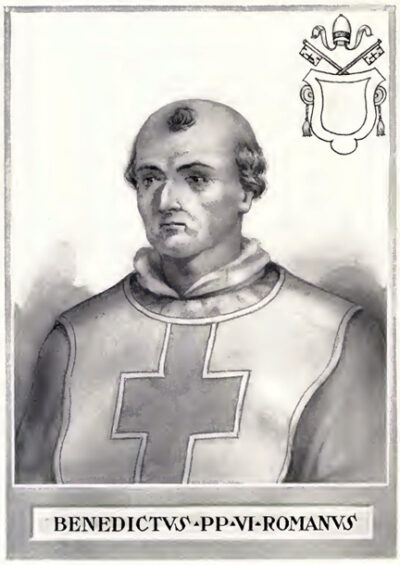 Benedict VI (973–974)pope
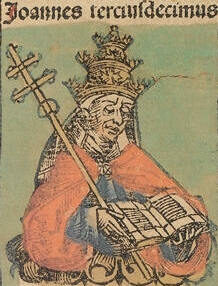 John XIII (965–972)Head of the Catholic Church from 965 to 972
 Leo VIII (964–965)pope
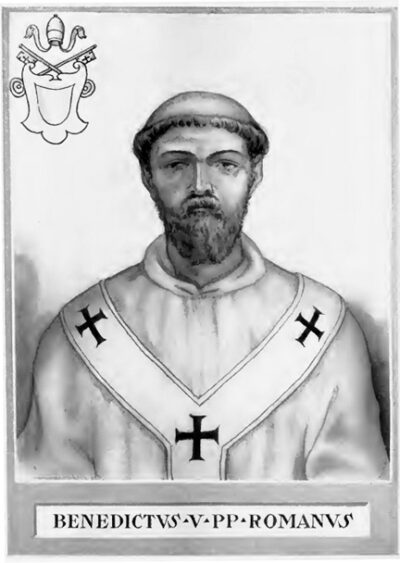 Benedict V (964)pope
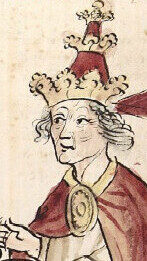 John XII (955–964)Head of the Catholic Church from 955 to 964
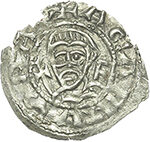 Agapetus II (946–955)Catholic pope, 946-955
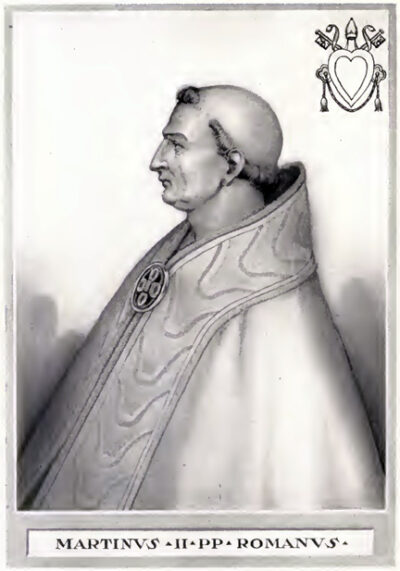 Marinus II (942–946)pope
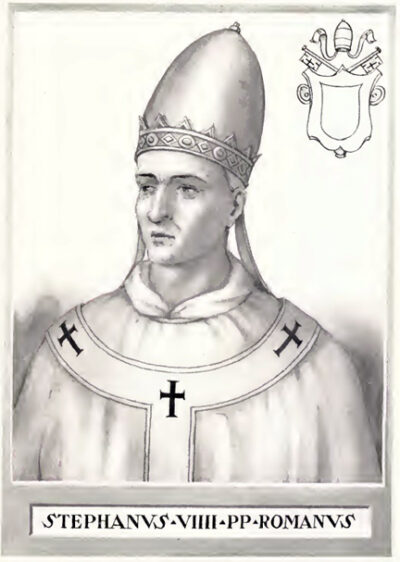 Stephen VIII (939–942)pope
 Leo VII (936–939)pope
 John XI (931–935)pope
 Stephen VII (929–931)pope (929-931)
 Leo VI (928)pope
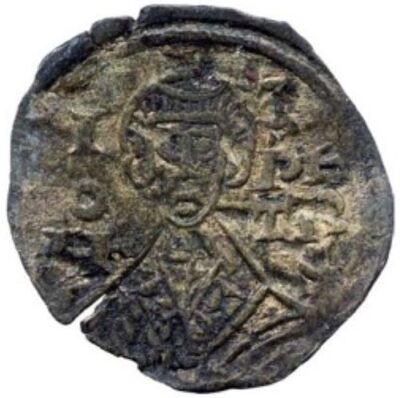 John X (914–928)10th-century pope
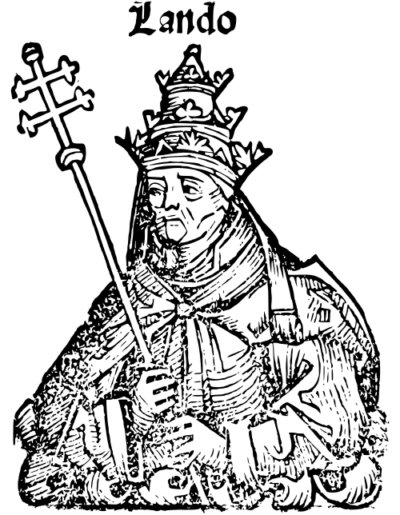 Lando (913–914)Pope from 913 to 914
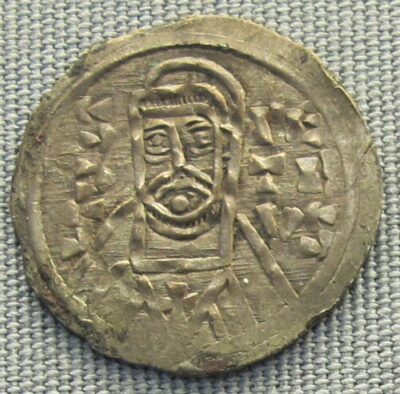 Anastasius III (911–913)pope
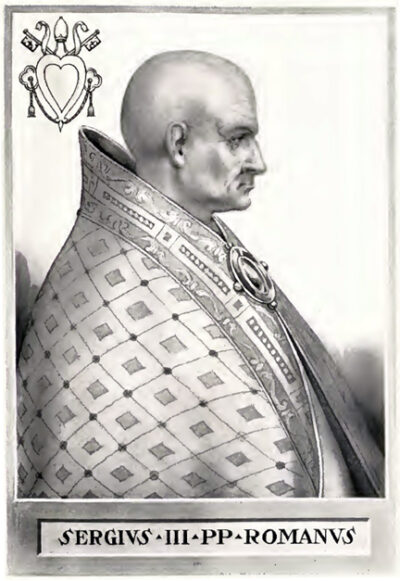 Sergius III (904–911)pope (860-911)
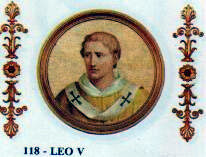 Leo V (903–904)pope
and 242 more