
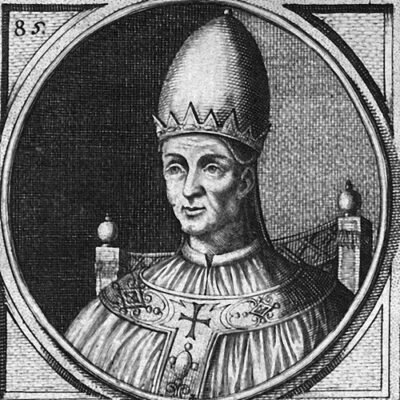
Sergius I
Sergius I was a pope. Born 650, in Palermo. Died September 8, 701, in Rome. Positions held include Pope (687–701) and cardinal (683–).
Facts
10 facts · 2 confirmed by two sources · 3 cited · 5 from one source
Where this comes from
Papalocal keeps its own record. It started from these sources; what each one said is kept here as it was copied, so a change on their side never changes this page by itself. Tap one to read its version.
What Wikidata says · copied November 16, 2026 · revision 2567872059
- Described as
- pope
- Other names
- Pope Sergius I, Pope Sergius, Sergius
- Born
- 650
- Died
- September 8, 701
- Born in
- Palermo · 1 reference
- Died in
- Rome
- Buried in
- St. Peter's Basilica
- Citizen of
- Byzantine Empire
- Occupation
- Catholic priest
- Positions held
- Pope (687–701); cardinal (683–) · 1 reference
- Religion
- Catholic Church · 1 reference
- Wikipedias with a page
- 77
Wikidata item Q173086 (wikidata.org/wiki/Q173086), public domain (CC0). Copied November 16, 2026.
What Wikipedia says · copied November 16, 2026 · revision 1368544342
Pope Sergius I (c. 650 – 8 September 701) was the bishop of Rome from 15 December 687 to his death on 8 September 701, and is revered as a saint by the Roman Catholic Church. He was elected at a time when two rivals, Paschal and Theodore, were locked in a dispute about which of them should become pope. His papacy was dominated by his response to the Quinisext Council, the canons of which he steadfastly refused to accept. Thereupon Emperor Justinian II ordered Sergius's arrest, but the Roman people and the Italian militia of the exarch of Ravenna refused to allow the exarch to bring Sergius to Constantinople.
- Born, in its opening lines
- c. 650
- Died, in its opening lines
- September 8, 701
From the Wikipedia article “Pope Sergius I” (en.wikipedia.org/wiki/Pope_Sergius_I), by its contributors, under CC BY-SA 4.0 (creativecommons.org/licenses/by-sa/4.0/). Copied November 16, 2026; not changed.
Confirmed Two sources agree. Cited One source, and it names where it got it. One source One source, without a reference of its own. Sources disagree The sources disagree. We show the best-supported value and keep theirs below.
