
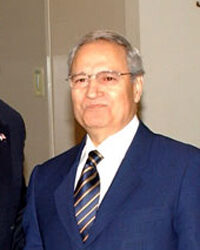
Farouk al-Sharaa
Farouk al-Sharaa is a Syrian politician and diplomat. Born December 10, 1938, in Daraa. Positions held include ambassador of Syria to Italy (1977–1980), list of vice presidents of Syria (2006–2014) and Minister of Foreign Affairs and Expatriates (1984–2006). Educated at University of London and Damascus University.
Facts
14 facts · 1 confirmed by two sources · 2 cited · 11 from one source
Where this comes from
Papalocal keeps its own record. It started from these sources; what each one said is kept here as it was copied, so a change on their side never changes this page by itself. Tap one to read its version.
What Wikidata says · copied November 18, 2026 · revision 2562747640
- Described as
- Syrian politician and diplomat (born 1938)
- Born
- December 10, 1938 · 1 reference
- Born in
- Daraa
- Citizen of
- Syria
- Occupation
- diplomat · 1 reference; politician · 1 reference; statesperson · 1 reference; vice president · 1 reference
- Positions held
- ambassador of Syria to Italy (1977–1980) · 1 reference; list of vice presidents of Syria (2006–2014) · 1 reference; Minister of Foreign Affairs and Expatriates (1984–2006) · 1 reference
- Political party
- Arab Socialist Ba'ath Party – Syria Region
- Education
- University of London; Damascus University
- Religion
- Sunni Islam
- Wikipedias with a page
- 20
Wikidata item Q713715 (wikidata.org/wiki/Q713715), public domain (CC0). Copied November 18, 2026.
What Wikipedia says · copied November 18, 2026 · revision 1378274362
Farouk al-Sharaa (born 10 December 1938) is a Syrian politician and diplomat. He was one of the most prominent officials in the government of Ba'athist Syria and served as foreign minister from 1984 to 2006, then as vice president until 2013.
- Born, in its opening lines
- December 10, 1938
From the Wikipedia article “Farouk al-Sharaa” (en.wikipedia.org/wiki/Farouk_al-Sharaa), by its contributors, under CC BY-SA 4.0 (creativecommons.org/licenses/by-sa/4.0/). Copied November 18, 2026; not changed.
Confirmed Two sources agree. Cited One source, and it names where it got it. One source One source, without a reference of its own. Sources disagree The sources disagree. We show the best-supported value and keep theirs below.
