
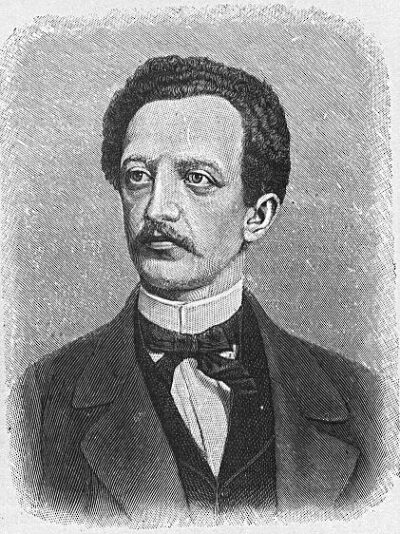
Ferdinand Lassalle
Ferdinand Lassalle was a German jurist and socialist. Born April 11, 1825, in Wrocław. Died August 31, 1864, in Geneva. Positions held include president (1863–1864). Known for Lassallism and Iron law of wages. Educated at Humboldt-Universität zu Berlin.
Facts
30 facts · 2 confirmed by two sources · 8 cited · 20 from one source
Where this comes from
Papalocal keeps its own record. It started from these sources; what each one said is kept here as it was copied, so a change on their side never changes this page by itself. Tap one to read its version.
What Wikidata says · copied November 16, 2026 · revision 2568737460
- Described as
- German jurist and socialist (1825–1864)
- Other names
- Ferdinand Johann Gottlieb Lassalle
- Born
- April 11, 1825 · 11 references
- Died
- August 31, 1864 · 8 references
- Born in
- Wrocław · 2 references
- Died in
- Geneva · 1 reference
- Buried in
- Old Jewish Cemetery · 2 references
- Cause of death
- gunshot wound
- Name at birth
- Ferdinand Johann Gottlieb Lassal
- Citizen of
- Kingdom of Prussia
- Occupation
- writer · 2 references; politician · 2 references; economist; lawyer; philosopher · 1 reference; Master's Degree in Economics · 1 reference; opinion journalist · 1 reference
- Positions held
- president (1863–1864)
- Political party
- General German Workers' Association
- Worked for
- Humboldt-Universität zu Berlin
- Education
- Humboldt-Universität zu Berlin
- Member of
- Alte Breslauer Burschenschaft der Raczeks · 2 references; General German Workers' Association (1863–)
- Known for
- Lassallism; Iron law of wages
- Field
- political science; economics; philosophy; practice of law
- Father
- Heyman Lassal · 1 reference
- Mother
- Rosalie Heizfeld
- Siblings
- Frederike Lassal
- Wikipedias with a page
- 67
Wikidata item Q75784 (wikidata.org/wiki/Q75784), public domain (CC0). Copied November 16, 2026.
What Wikipedia says · copied November 16, 2026 · revision 1384614295
Ferdinand Johann Gottlieb Lassalle (11 April 1825 – 31 August 1864) was a German jurist, philosopher, and socialist activist. Best remembered as an initiator of the social democratic movement in Germany, in 1863 he founded the General German Workers' Association (ADAV), the first independent German workers' party. His political theories, a form of state socialism, are known as Lassalleanism.
Born in Breslau to a prosperous Jewish family, Lassalle became a follower of Hegelian philosophy in his youth. During the 1840s and 1850s, he gained public renown for his involvement in a long and sensational legal case to vindicate the rights of Countess Sophie von Hatzfeldt. Active in the revolutions of 1848, he formed a complex and often antagonistic relationship with Karl Marx and Friedrich Engels. Lassalle also authored several major intellectual works, including the philosophical treatise Heraclitus the Obscure (1857) and the legal study The System of Acquired Rights (1861).
Lassalle's political career began in the early 1860s during the Prussian constitutional conflict. Breaking with the liberal progressives, he began a public campaign to establish an independent political party for the working class. His agitation led to the founding of the ADAV, whose platform called for the achievement of socialism through state-aided producers' co-operatives, to be won by universal suffrage. Lassalle's political strategy focused on electoral politics and co-operation with the state, and he entered into secret negotiations with Prussian Minister President Otto von Bismarck in an attempt to forge an alliance between the workers' movement and the conservative Prussian state against the liberal bourgeoisie. His flamboyant and notorious personality, unique in the history of German social democracy, brought him great recognition but also contributed to a leadership style more suited to a demagogue than a democratic leader.
Lassalle's political career was cut short at the age of 39 in 1864 when he was killed in a duel following a dispute over a young woman he wished to marry. Although the ADAV had only a few thousand members at the time of his death, it grew to become a major political force in the German Empire. In 1875, it merged with the Marxist Social Democratic Workers' Party of Germany to form the Social Democratic Party of Germany (SPD). Lassalle's ideas, particularly his statist and nationalist tendencies, exerted a lasting influence on German social democracy, often in conflict with the theories of Marxism.
- Born, in its opening lines
- April 11, 1825
- Died, in its opening lines
- August 31, 1864
From the Wikipedia article “Ferdinand Lassalle” (en.wikipedia.org/wiki/Ferdinand_Lassalle), by its contributors, under CC BY-SA 4.0 (creativecommons.org/licenses/by-sa/4.0/). Copied November 16, 2026; not changed.
Confirmed Two sources agree. Cited One source, and it names where it got it. One source One source, without a reference of its own. Sources disagree The sources disagree. We show the best-supported value and keep theirs below.
