
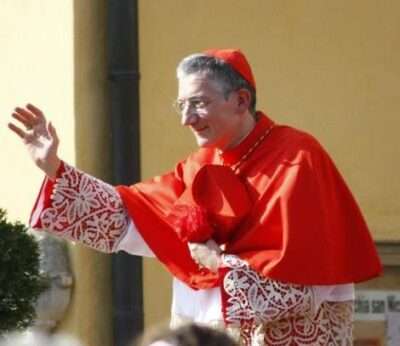
Francesco Moraglia
Francesco Moraglia is a Roman Catholic Patriarch. Born May 25, 1953, in Genoa. Positions held include patriarch of Venice (2012–) and diocesan bishop (2007–). Educated at Pontifical Urbaniana University and Theological faculty of Northern Italy. Awards include honorary citizenship.
Facts
15 facts · 1 confirmed by two sources · 2 cited · 12 from one source
Where this comes from
Papalocal keeps its own record. It started from these sources; what each one said is kept here as it was copied, so a change on their side never changes this page by itself. Tap one to read its version.
What Wikidata says · copied November 17, 2026 · revision 2543590851
- Described as
- Roman Catholic Patriarch
- Born
- May 25, 1953
- Born in
- Genoa
- Citizen of
- Italy
- Occupation
- theologian; university teacher; Catholic priest (1977–) · 1 reference; Catholic bishop (2008–) · 1 reference
- Positions held
- patriarch of Venice (2012–); diocesan bishop (2007–) · 2 references
- Worked for
- University of Genoa; Theological faculty of Northern Italy
- Education
- Pontifical Urbaniana University; Theological faculty of Northern Italy
- Awards
- honorary citizenship · 1 reference
- Religion
- Catholic Church · 1 reference
- Wikipedias with a page
- 25
Wikidata item Q558094 (wikidata.org/wiki/Q558094), public domain (CC0). Copied November 17, 2026.
What Wikipedia says · copied November 17, 2026 · revision 1379730331
Francesco Moraglia (born 25 May 1953) is an Italian prelate of the Catholic Church. He has been Patriarch of Venice since March 2012; he is the first native of Genoa to hold that position. He was bishop of La Spezia-Sarzana-Brugnato from 2008 to 2012.
- Born, in its opening lines
- May 25, 1953
From the Wikipedia article “Francesco Moraglia” (en.wikipedia.org/wiki/Francesco_Moraglia), by its contributors, under CC BY-SA 4.0 (creativecommons.org/licenses/by-sa/4.0/). Copied November 17, 2026; not changed.
Confirmed Two sources agree. Cited One source, and it names where it got it. One source One source, without a reference of its own. Sources disagree The sources disagree. We show the best-supported value and keep theirs below.
