
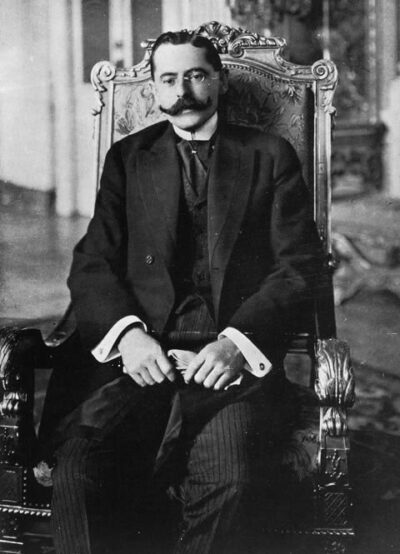
Francisco S. Carvajal
Francisco S. Carvajal was a President of Mexico. Born December 9, 1870, in San Francisco de Campeche. Died September 20, 1932, in Mexico City. Positions held include President of Mexico (1914), Secretary of Foreign Affairs of Mexico (1914) and foreign minister.
Facts
13 facts · 1 confirmed by two sources · 0 cited · 11 from one source · 1 where the sources disagree
What’s different
- Died: we show September 20, 1932 (Sources disagree). Wikipedia says September 30, 1932
Where this comes from
Papalocal keeps its own record. It started from these sources; what each one said is kept here as it was copied, so a change on their side never changes this page by itself. Tap one to read its version.
What Wikidata says · copied November 16, 2026 · revision 2567991546
- Described as
- President of Mexico (1870-1932)
- Born
- December 9, 1870
- Died
- September 20, 1932
- Born in
- San Francisco de Campeche
- Died in
- Mexico City
- Citizen of
- Mexico
- Occupation
- politician; diplomat; judge; lawyer
- Positions held
- President of Mexico (1914); Secretary of Foreign Affairs of Mexico (1914); foreign minister
- Political party
- independent politician · 1 reference
- Wikipedias with a page
- 30
Wikidata item Q372164 (wikidata.org/wiki/Q372164), public domain (CC0). Copied November 16, 2026.
What Wikipedia says · copied November 16, 2026 · revision 1380596777
Francisco Sebastián Carvajal y Gual (9 December 1870 – 30 September 1932) was a Mexican lawyer and politician who served briefly as president in 1914, during the Mexican Revolution. In his role as secretary of foreign affairs, he succeeded Victoriano Huerta as president upon the latter's resignation.
- Born, in its opening lines
- December 9, 1870
- Died, in its opening lines
- September 30, 1932
From the Wikipedia article “Francisco S. Carvajal” (en.wikipedia.org/wiki/Francisco_S._Carvajal), by its contributors, under CC BY-SA 4.0 (creativecommons.org/licenses/by-sa/4.0/). Copied November 16, 2026; not changed.
Confirmed Two sources agree. Cited One source, and it names where it got it. One source One source, without a reference of its own. Sources disagree The sources disagree. We show the best-supported value and keep theirs below.
