
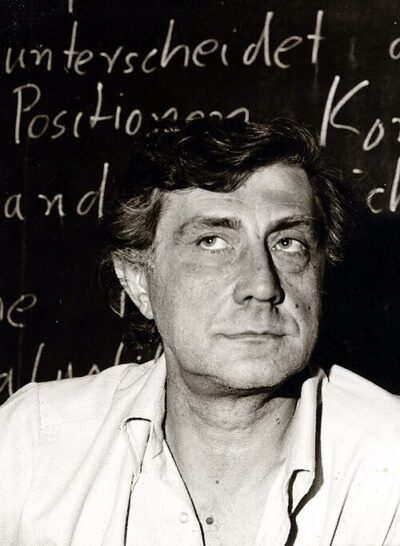
Franco Basaglia
Franco Basaglia was an Italian psychiatrist and neurologist. Born March 11, 1924, in Venice. Died August 29, 1980, in Venice. Educated at University of Padua.
Facts
17 facts · 2 confirmed by two sources · 5 cited · 10 from one source
Where this comes from
Papalocal keeps its own record. It started from these sources; what each one said is kept here as it was copied, so a change on their side never changes this page by itself. Tap one to read its version.
What Wikidata says · copied November 17, 2026 · revision 2522881509
- Described as
- Italian psychiatrist and neurologist (1924-1980)
- Born
- March 11, 1924 · 2 references
- Died
- August 29, 1980 · 5 references
- Born in
- Venice · 1 reference
- Died in
- Venice · 1 reference
- Buried in
- Cemetery of San Michele
- Cause of death
- cancer · 1 reference
- Citizen of
- Italy (1946–); Kingdom of Italy (–1946)
- Occupation
- psychiatrist · 3 references; neurologist; anthropologist; existential therapist; writer · 1 reference
- Political party
- Italian Socialist Party
- Worked for
- University of Parma
- Education
- University of Padua
- Website
- http://www.fondazionebasaglia.it
- Wikipedias with a page
- 24
Wikidata item Q929630 (wikidata.org/wiki/Q929630), public domain (CC0). Copied November 17, 2026.
What Wikipedia says · copied November 17, 2026 · revision 1384658661
Franco Basaglia (Italian: [ˈfraŋko baˈzaʎʎa]; 11 March 1924 – 29 August 1980) was an Italian psychiatrist, neurologist, professor, and disability advocate who was the principal proponent of Law 180, which abolished mental hospitals in Italy. The founder of the journal Democratic Psychiatry, he is considered the most influential Italian psychiatrist of the 20th century.
- Born, in its opening lines
- March 11, 1924
- Died, in its opening lines
- August 29, 1980
From the Wikipedia article “Franco Basaglia” (en.wikipedia.org/wiki/Franco_Basaglia), by its contributors, under CC BY-SA 4.0 (creativecommons.org/licenses/by-sa/4.0/). Copied November 17, 2026; not changed.
Confirmed Two sources agree. Cited One source, and it names where it got it. One source One source, without a reference of its own. Sources disagree The sources disagree. We show the best-supported value and keep theirs below.
