
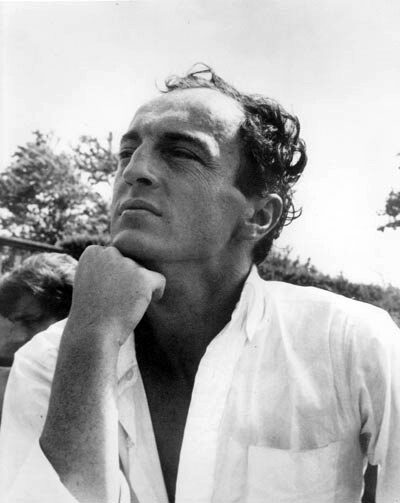
Frank O'Hara
Frank O'Hara was an American poet, art critic and writer. Born March 27, 1926, in Baltimore. Died July 25, 1966, in Mastic Beach. Known for Lunch Poems. Educated at Harvard University and University of Michigan. Awards include National Book Award.
Facts
24 facts · 2 confirmed by two sources · 9 cited · 13 from one source
What’s different
- Died: we show July 25, 1966 (Confirmed). Wikidata also lists July 26, 1966
Where this comes from
Papalocal keeps its own record. It started from these sources; what each one said is kept here as it was copied, so a change on their side never changes this page by itself. Tap one to read its version.
What Wikidata says · copied November 15, 2026 · revision 2557883030
- Described as
- American poet, art critic and writer (1926-1966)
- Other names
- Francis Russell O'Hara
- Born
- March 27, 1926 · 5 references
- Died
- July 25, 1966 · 7 references; July 26, 1966 · 1 reference
- Born in
- Baltimore · 2 references
- Died in
- Mastic Beach · 1 reference
- Buried in
- Green River Cemetery · 1 reference
- Cause of death
- traffic collision
- Citizen of
- United States · 2 references
- Occupation
- poet · 2 references; playwright; writer; journalist; curator · 1 reference; art historian · 1 reference; artist · 1 reference; art critic · 1 reference
- Education
- Harvard University; University of Michigan; St. John's High School · 1 reference
- Member of
- The 8th Street Club
- Genre
- poetry
- Known for
- Lunch Poems · 1 reference
- Awards
- National Book Award (1972) · 1 reference
- Field
- poetry
- Website
- https://www.frankohara.org
- Wikipedias with a page
- 29
Wikidata item Q951010 (wikidata.org/wiki/Q951010), public domain (CC0). Copied November 15, 2026.
What Wikipedia says · copied November 15, 2026 · revision 1376852891
Francis Russell O'Hara (March 27, 1926 – July 25, 1966) was an American writer, poet, and art critic. A curator at the Museum of Modern Art, O'Hara became prominent in New York City's art world. O'Hara is regarded as a leading figure in the New York School, an informal group of artists, writers, and musicians who drew inspiration from jazz, surrealism, abstract expressionism, action painting, and contemporary avant-garde art movements.
O'Hara's poetry is personal in tone and content, and has been described as sounding "like entries in a diary". Poet and critic Mark Doty has said O'Hara's poetry is "urbane, ironic, sometimes genuinely celebratory and often wildly funny" containing "material and associations alien to academic verse" such as "the camp icons of movie stars of the twenties and thirties, the daily landscape of social activity in Manhattan, jazz music, telephone calls from friends". O'Hara sought to capture in his poetry the immediacy of life, feeling that poetry should be "between two persons instead of two pages."
The Collected Poems of Frank O'Hara edited by Donald Allen (Knopf, 1971), the first of several posthumous collections, shared the 1972 National Book Award for Poetry. Brad Gooch's City Poet is the first substantial biography on O'Hara.
- Born, in its opening lines
- March 27, 1926
- Died, in its opening lines
- July 25, 1966
From the Wikipedia article “Frank O'Hara” (en.wikipedia.org/wiki/Frank_O'Hara), by its contributors, under CC BY-SA 4.0 (creativecommons.org/licenses/by-sa/4.0/). Copied November 15, 2026; not changed.
Confirmed Two sources agree. Cited One source, and it names where it got it. One source One source, without a reference of its own. Sources disagree The sources disagree. We show the best-supported value and keep theirs below.
