
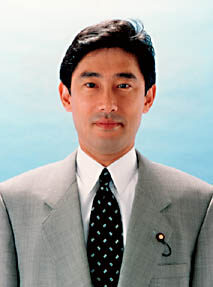
Fumio Kishida
Fumio Kishida is a Prime Minister of Japan from 2021 to 2024. Born July 29, 1957, in Shibuya. Positions held include member of the House of Representatives of Japan (1993–), Deputy Minister of Education, Culture, Sports, Science and Technology (2001–2002) and Minister of State for Okinawa and Northern Territories Affairs (2007–2008). Educated at Waseda University and Kaisei Senior High School. Awards include Grand Cross of the Order of Orange-Nassau, Profile in Courage Award and Global Citizen Awards.
Facts
37 facts · 1 confirmed by two sources · 10 cited · 26 from one source
Where this comes from
Papalocal keeps its own record. It started from these sources; what each one said is kept here as it was copied, so a change on their side never changes this page by itself. Tap one to read its version.
What Wikidata says · copied November 16, 2026 · revision 2570023413
- Described as
- Prime Minister of Japan from 2021 to 2024
- Born
- July 29, 1957 · 3 references
- Born in
- Shibuya
- Citizen of
- Japan
- Occupation
- diplomat; politician · 1 reference; head of government · 1 reference; minister · 1 reference
- Positions held
- member of the House of Representatives of Japan (1993–); Deputy Minister of Education, Culture, Sports, Science and Technology (2001–2002); Minister of State for Okinawa and Northern Territories Affairs (2007–2008); Minister of State for Regulatory Reform (2007–2008); Minister of State for Quality-of-Life Policy (2007–2008); Minister of State for "Challenge Again" Initiative (2007); Minister of State for Science and Technology Policy (2007–2008); Minister of State for Consumer Affairs (2008); Minister of State for Space Policy (2008); Minister for Foreign Affairs (2 times) (2012–2021); Minister of Defense of Japan (2017) · 1 reference; President of the Liberal Democratic Party (2021–2024) · 1 reference; Prime Minister of Japan (2021–2024) · 4 references; Chairperson of the Policy Research Council of the Liberal Democratic Party (2017–2020) · 1 reference
- Political party
- Liberal Democratic Party
- Worked for
- Long-Term Credit Bank of Japan (1982–1987)
- Education
- Waseda University (–1982); Kaisei Senior High School; Kojimachi Junior High School
- Awards
- Grand Cross of the Order of Orange-Nassau · 1 reference; Profile in Courage Award (2023) · 1 reference; Global Citizen Awards (2023) · 1 reference; National Order of Merit (2024) · 1 reference; Order of Prince Yaroslav the Wise, 1st class (2024) · 1 reference; Grand Cross of the Order of Isabella the Catholic (2017) · 1 reference
- Spouse
- Yuko Kishida (1988–)
- Children
- Shotaro Kishida
- Father
- Fumitake Kishida · 1 reference
- Siblings
- Takeo Kishida
- Website
- https://kishida.gr.jp/
- Wikipedias with a page
- 96
Wikidata item Q359480 (wikidata.org/wiki/Q359480), public domain (CC0). Copied November 16, 2026.
What Wikipedia says · copied November 16, 2026 · revision 1385490081
Fumio Kishida (born 29 July 1957) is a Japanese politician who served as Prime Minister of Japan and President of the Liberal Democratic Party (LDP) from 2021 until his resignation in 2024. He has represented Hiroshima 1st in the House of Representatives since 1996. Before his premiership, he was the Minister for Foreign Affairs from 2012 to 2017, as acting Minister of Defense in 2017, and he also chaired the LDP Policy Research Council from 2017 to 2020.
Born into a political family, Kishida spent part of his childhood in the United States, where he attended elementary school in New York City. After beginning his career in finance, Kishida entered politics and was elected to the House of Representatives at the 1993 general election as a member of the LDP. Kishida was appointed to Minister of State for Special Missions in the premiership of Shinzo Abe and Yasuo Fukuda from 2007 to 2008, and was appointed Minister for Foreign Affairs in 2012 after Abe regained the premiership following the 2012 general election, serving for five years and becoming the longest-serving Foreign Affairs Minister in Japanese history. Kishida resigned from the Abe cabinet in 2017 in order to head the LDP's Policy Research Council. Kishida also assumed leadership of the LDP's more moderate Kōchikai faction in 2012 following the retirement of faction leader Makoto Koga, a position he held until his resignation in 2023. Long considered a potential future prime minister, Kishida ran in the 2020 LDP presidential election, but lost to Yoshihide Suga. He ran again for the party leadership in 2021, this time winning in a second round run-off against opponent Taro Kono. Kishida was confirmed as prime minister by the National Diet four days later on 4 October 2021.
Upon assuming office as prime minister, Kishida stated that his administration would pursue a "new model of capitalism" by implementing redistributive policies aimed at raising wages and expanding the middle class. His tenure saw a reversal of decades-long deflationary economic policies, with Japan experiencing its highest wage growth in 30 years, driven by record wage increases achieved through annual wage negotiations. He led the LDP to victory in the 2021 general election and 2022 House of Councillors election, albeit at a slightly reduced majority. He oversaw the dissolution of the Unification Church (UC) in Japan following the assassination of former Japanese prime minister Shinzo Abe in July 2022 and the disbandment of his faction Kōchikai, along with Seiwakai and Shisuikai following a party-wide slush fund corruption scandal. His tenure also oversaw the release of treated radioactive water from the Fukushima nuclear power plant into the Pacific Ocean in August 2023, less than 12 years since the Great East Japan earthquake in March 2011. He reshuffled his cabinet twice, in August 2022 to remove cabinet members affiliated with the UC and in September 2023 to remove cabinet members associated with the slush fund scandal.
On foreign policy, Kishida continued strengthening the Quad Security Dialogue and close cooperation with NATO in pursuit of the Free and Open Indo-Pacific strategy, signed the American–Japanese–Korean trilateral pact in 2023, formed security pacts with the United Kingdom, Australia, and the Philippines, and took steps to repair ties with South Korea. In 2022 he instructed the cabinet to increase Japan's military budget by 65% by 2027, the most significant defense budget increase in decades. Kishida responded to the Russian invasion of Ukraine by becoming the first Asian country to impose sanctions on Russia and Belarus and authorizing civilian aid to Ukraine. Kishida survived an assassination attempt on 15 April 2023 while delivering a campaign speech.
The end of his premiership was marked by a struggle to recover from record-low approval ratings amid fallout from the LDP slush fund scandal. On 14 August 2024, Kishida announced that he would resign from office and step down as LDP party leader, thereby not seeking re-election in September of the same year. In the LDP leadership election, Kishida initially endorsed Chief Cabinet Secretary Yoshimasa Hayashi, then, in the second round, whipped votes for Shigeru Ishiba, who defeated Sanae Takaichi to become the next party leader and prime minister.
- Born, in its opening lines
- July 29, 1957
From the Wikipedia article “Fumio Kishida” (en.wikipedia.org/wiki/Fumio_Kishida), by its contributors, under CC BY-SA 4.0 (creativecommons.org/licenses/by-sa/4.0/). Copied November 16, 2026; not changed.
Confirmed Two sources agree. Cited One source, and it names where it got it. One source One source, without a reference of its own. Sources disagree The sources disagree. We show the best-supported value and keep theirs below.
